
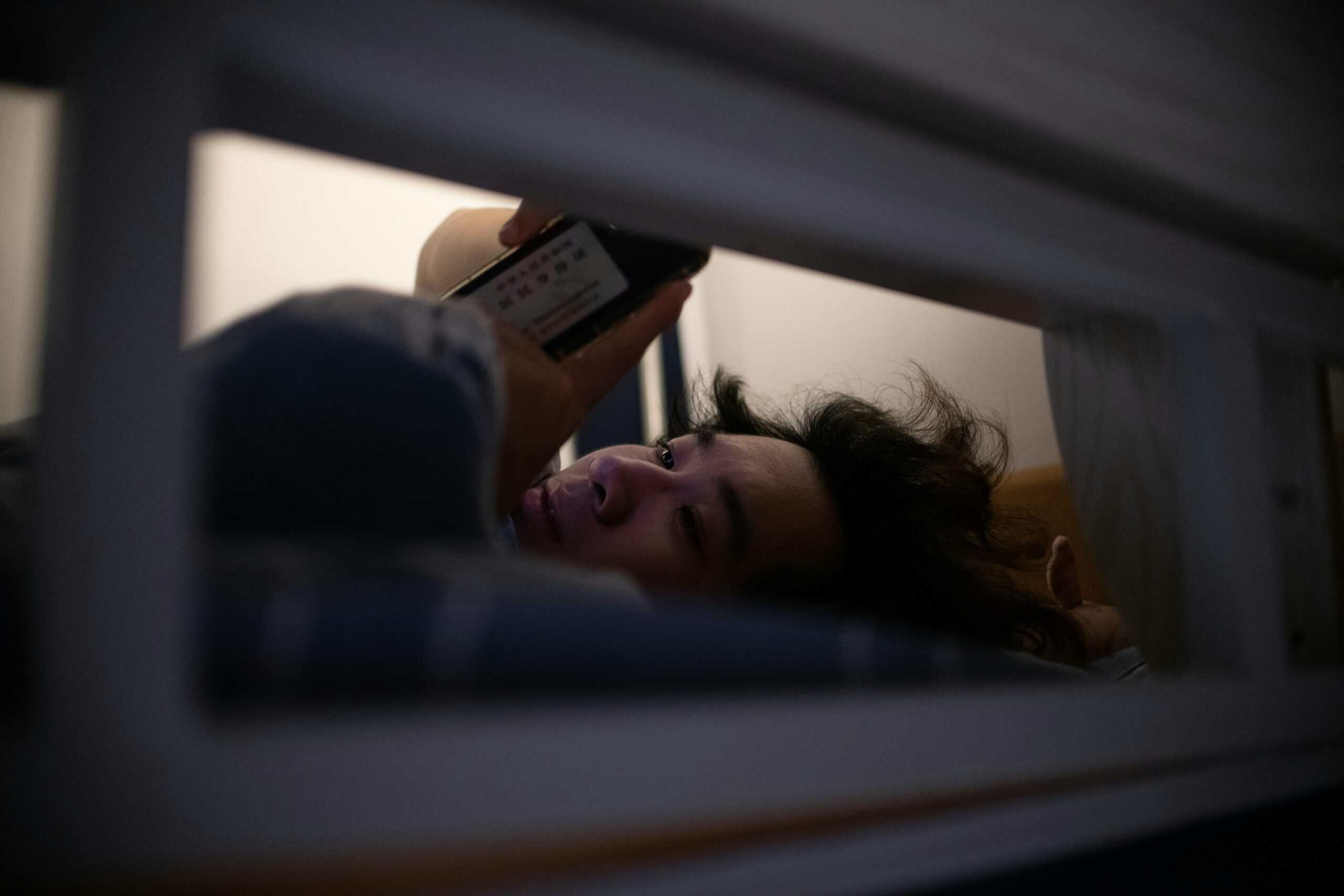
Teenagers fall asleep later because the circadian rhythm shifts later during adolescence, so the body’s sleep signal arrives one to three hours after it did in childhood. Parents who ask why do teenagers fall asleep so late are looking at a timing change, not a discipline problem. The clock moved, and the teen did not choose to move it.
The delay is a predictable change of puberty. It begins in the early teen years, deepens through the middle teens, and eases in the early twenties. Because the cause is timing, resetting a sleep schedule works better when it targets the clock rather than the bedtime.
Medical Disclaimer
This article offers general information about adolescent sleep timing. It is not medical advice and it cannot diagnose anything. A clinician should guide diagnosis and treatment for any sleep problem that worries you.
Quick Answer
During adolescence the internal clock drifts later, so the evening sleep signal arrives one to three hours after it used to. A teen who says they are not tired at 10pm is often accurate. Consistent wake times and bright morning light pull the clock earlier more reliably than an enforced earlier bedtime.
| What parents see | What is actually happening | What helps |
|---|---|---|
| Wide awake at midnight | The evening sleep signal has not arrived. The body is still in its alert window. | Move the whole clock earlier over weeks. One early bedtime order changes nothing. |
| Impossible to wake for school | The alarm lands in the middle of the teen’s biological night. | Open the blinds first, then talk. Light reaches the clock faster than nagging. |
| Sleeping until noon on weekends | The body is repaying sleep the school week removed. | Allow catch up, but cap the lie in near two hours past the school wake time. |
| Irritable and blunt in the morning | Short sleep hits mood regulation first. | Keep morning talk brief. Save decisions for later in the day. |
| Falling asleep in class | The biological night is still running during first period. | Read it as a timing signal, not laziness. Track the pattern for a week. |
| A second wind at 9pm | Alertness rises in the hours before a delayed sleep signal. | Dim the house during that window. Bright rooms extend the second wind. |
| Insisting they are not tired at all | They often are not, because sleep pressure and the clock are out of step. | Believe the report. Then work on wake time instead of bedtime. |
A translation table for the most common adolescent sleep complaints.
Why do teenagers fall asleep so late? Inside the circadian shift
The circadian rhythm is the roughly twenty four hour timer that sets when the body feels alert and when it feels sleepy. During adolescence that timer drifts later, a change researchers call a phase delay. The American Academy of Sleep Medicine treats the delay as a normal feature of adolescent development.
The drift usually appears around ages twelve to fourteen and peaks in the late teens. After that it slowly reverses. Most people settle into an earlier pattern again during their twenties.
Two systems set sleep timing, and both change. The brain clock shifts later, and sleep pressure builds more slowly across the evening. Together they push real sleepiness past the old childhood bedtime.
Why can a teenager not just decide to sleep earlier?
Sleep is not a voluntary action, so a decision cannot start it. A person can lie down on command, but the transition into sleep depends on signals the conscious mind does not control. Without those signals, lying in the dark just produces a longer wait.
This is the part misread most often at home. An earlier bedtime with an unchanged body clock creates time awake in bed, not extra sleep. Over weeks, that frustration teaches a teen to associate the bed with lying awake.
None of this makes bedtimes pointless. A bedtime works once the clock has moved to meet it. The Cleveland Clinic frames adolescent sleep timing as something to work with gradually rather than override.
Why does evening light push the clock even later?
Light is the main input the circadian system uses to set itself. Bright light late in the evening tells the clock that the day is still running, which pushes the sleep signal back. Early morning light does the opposite.
That makes the last two hours before bed the highest value window to change. A brightly lit kitchen can undo a careful routine in ten minutes. Dimming overhead light and keeping the bedroom genuinely dark removes a signal that argues for staying up.
Color matters less than brightness and duration, though it is not irrelevant. Comparisons of warmer light versus blue light at night can help a household pick lamps. The simpler rule is a dimmer evening.
Are screens and caffeine why teenagers fall asleep so late?
Screens and caffeine are inputs into a delay that would happen anyway. Removing every device would not return an adolescent clock to a childhood schedule, because the underlying shift is developmental. Both can still make the delay worse.
With screens, engagement often outweighs light. A group chat or a competitive game raises alertness in a way a dim room cannot cancel. Guides on how screens affect sleep separate those two effects, which helps a household decide what to change first.
Caffeine has a long tail, so an afternoon drink can still be active at bedtime. Clearance rates vary widely between individuals. The Mayo Clinic advises limiting caffeine well before bedtime for anyone who struggles to fall asleep.
A cutoff time beats a total ban, and early afternoon is a reasonable start. Energy drinks and some sodas count too. Naming devices as the villain has a cost, because it implies the teen created the problem.
Why do late nights and long weekend lie ins widen the gap?
Weekday early rises and weekend late rises create two schedules inside one week. Researchers call the pattern social jetlag, because the body experiences something like crossing time zones every weekend. Sleeping until noon on Saturday shifts the clock later, so Monday arrives harder than the Monday before.
The cycle then feeds itself. A brutal Monday leads to short weekday nights, which increases the pull toward a long Sunday lie in. Each week the gap widens.
The fix is not to cut catch up sleep, which serves a real purpose. It is to bound it. Keeping the weekend wake time within about two hours of the school wake time preserves recovery without dragging the clock back.
What actually shifts a body clock earlier?
Wake time is the stronger lever, not bedtime. A consistent wake time paired with bright light soon after waking gives the circadian system a daily anchor. Bedtime then follows on its own as sleepiness starts arriving earlier.
Outdoor light in the first hour after waking is the strongest version of this. Indoor lighting is far dimmer than daylight, even when it feels bright. Ten to twenty minutes near a window beats an hour under a ceiling light.
Expect a gradual move, roughly fifteen to thirty minutes every few days. Comfort matters more than most families assume, since a bed that runs hot adds friction at the wrong moment. Reviewing bedding built for teen and dorm rooms removes one small obstacle.
What this explanation cannot tell you
A normal adolescent delay and a diagnosable sleep disorder can look identical from the outside. Delayed sleep phase disorder, insomnia, restless legs, and sleep apnea all produce late nights and impossible mornings. The National Institute of Neurological Disorders and Stroke treats circadian rhythm disorders as recognized conditions with their own care paths.
Mood and sleep run in both directions, and association is not causation. Short sleep can lower mood, and low mood can wreck sleep timing. Neither observation shows which started first in a particular teen.
So a light and schedule explanation has limits. Persistent trouble that damages school performance, mood, or daytime function deserves a clinician’s assessment rather than stricter rules. Consequences at home cannot fix a condition that needs evaluation.
How much of this resolves on its own?
Most of it does. The phase delay is developmental, so it unwinds as the brain finishes maturing in the late teens and early twenties. Many young adults find that earlier mornings stop feeling impossible without deliberate effort.
That does not make the teen years something to wait out. The Centers for Disease Control and Prevention has flagged adolescent sleep loss as a public health concern, given its links to mood, learning, and driving safety. Reducing the damage now still matters.
The reasonable goal is a smaller gap, not a childhood bedtime. Consistent wake times, morning light, a bounded weekend lie in, and a dim evening usually shrink it.
For further reading, the Sleep Research Society publishes accessible material on adolescent sleep timing. Households working on comfort can compare mattress options suited to teenagers, since a growing body changes what feels supportive. Families who want structure can build a wind down routine that holds, and anyone stuck with late screens may find glasses that filter evening light worth a look.
Sources
- American Academy of Sleep Medicine
- Sleep Research Society
- Centers for Disease Control and Prevention
- National Institute of Neurological Disorders and Stroke
- Mayo Clinic
- Cleveland Clinic
Frequently Asked Questions
Why do teenagers fall asleep so late even when they wake up early?
Because the circadian clock and sleep pressure work as separate systems. An early wake time increases tiredness, yet it does not move the evening sleep signal, so a teen can feel wrecked all day and still lie awake at 11pm. Shifting the clock takes repeated early wake times plus morning light over one to two weeks.
Is the late sleep pattern a phase or a habit?
It is mostly a developmental phase with a habit layer on top. The delay comes from puberty and shows up across cultures and households, while evening light, late caffeine, and long weekend lie ins stretch it further. Removing those habits shrinks the delay but never erases the biological part.
Does an earlier bedtime help at all?
An earlier bedtime helps only after the clock has moved to meet it. Enforced on its own, it mostly produces time awake in bed and nightly arguments. Start with a consistent wake time and morning light instead, and an earlier bedtime becomes easy once genuine sleepiness arrives sooner.
How long does it take to shift a teen’s sleep schedule?
Plan on one to three weeks for a meaningful shift, moving roughly fifteen to thirty minutes every few days. Faster jumps usually collapse within a week. Consistency matters more than step size, and one very late weekend night can undo several days of careful progress.
Should weekend sleeping in be stopped completely?
No, because catch up sleep serves a real purpose after a short week. The problem is the size of the shift rather than the extra sleep itself. Keeping the weekend wake time within about two hours of the school wake time preserves recovery while limiting the Monday morning penalty.
Are teenagers who stay up late just being defiant?
Usually not. A teen who reports no sleepiness at 10pm is typically describing their body accurately, because the sleep signal has not arrived. Treating that report as an excuse ends the useful conversation, while working on wake time and morning light addresses the cause.
When should I see a doctor about this?
Consider an assessment when late sleep persists despite consistent wake times and morning light, or when it harms school performance, mood, or daytime safety. Loud snoring, gasping during sleep, leg discomfort at night, or falling asleep while driving all warrant prompt attention. A clinician can distinguish a normal delay from a treatable sleep disorder.
