
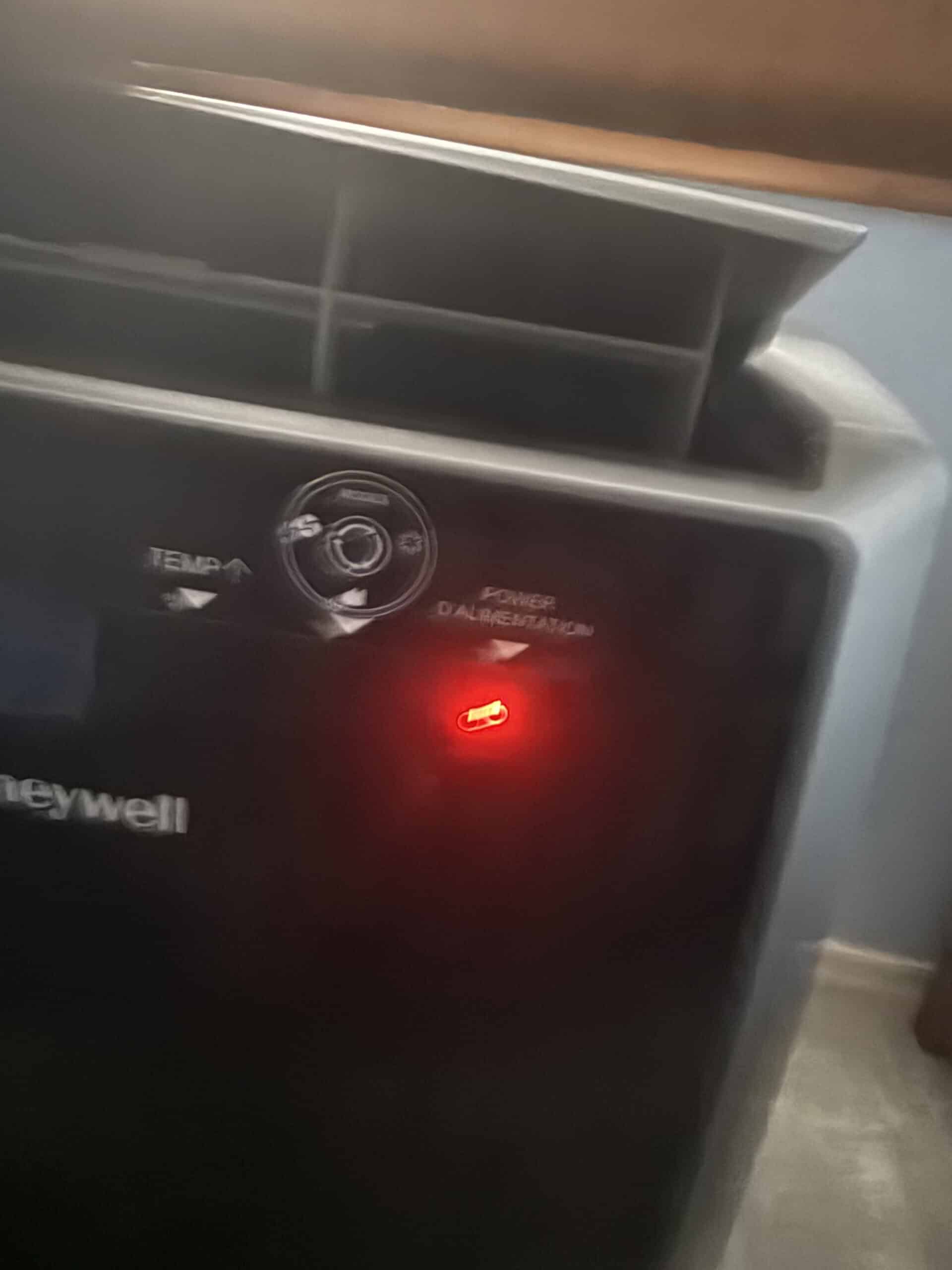
Start with the mode. A portable AC blowing room-temperature air is frequently running in fan or dry mode rather than cool, and on units with touch panels that setting gets changed by accident more often than anyone expects.
Mine is solid through hot nights and the couple of times something seemed off, it was me. The panel is touch sensitive, I knocked it without realizing, and it had come off cool. That is worth checking before anything else. Our roundup of bedroom air conditioners covers the units.
Quick Answer
Check the mode first, then the filter, then the exhaust hose. Those three cover most cases, and the mode is the one people skip because they assume they never touched it.
Causes in Order of Likelihood
| Cause | What is happening |
|---|---|
| Wrong mode selected | Fan or dry mode moves air without cooling |
| Thermostat already satisfied | Compressor off, fan still running |
| Dirty filter | Restricted airflow, coil cannot transfer heat |
| Exhaust hose leaking or kinked | Heat comes back into the room |
| Single-hose negative pressure | Warm air pulled in from elsewhere |
| Low refrigerant or failed compressor | The genuine fault, and the rarest |
Touch Panels Get Bumped
Capacitive touch controls have no physical detent, which means a brush against the panel registers as a press.
That happens when something leans on the unit, when you reach past it in the dark, or when you move it slightly and catch the top.
The result is a machine that looks like it is running normally, with a display lit and a fan blowing, while doing nothing to the temperature.
That is what happened to mine on the couple of occasions something seemed wrong. I hit the panel by accident and it came off cool.
Checking the mode takes two seconds and rules out the most common cause of this complaint. Many units also have a child lock that prevents exactly this. Our note on where to put a portable AC covers placement.
Fan Mode Versus Cool Mode
Cool runs the compressor
The only mode that actually lowers temperature.
Fan just moves air
Feels like a breeze and changes nothing on a thermometer.
Dry runs dehumidification
Some cooling as a side effect, not the main job.
Auto decides for itself
Which can mean the fan running with the compressor off.
The Thermostat May Be Satisfied
A portable AC set to a target temperature stops the compressor once the room reaches it, and the fan frequently keeps running.
Air coming out then is room temperature rather than cold, which reads as a failure when it is the unit behaving correctly.
The reason it surprises people at night is that a bedroom cools naturally after dark, so the setpoint gets reached more easily than it did during the day.
Setting the target lower confirms it. If the compressor kicks in and cold air returns, nothing was wrong.
Some units also cycle the fan on and off with the compressor, which makes the pattern more obvious. Our note on what a portable AC costs overnight covers cycling.
Single-Hose Units Fight Themselves
A single-hose portable AC pulls air from the room to cool its condenser and pushes that air outside through the exhaust.
That air has to be replaced, and it gets replaced by outside air drawn in through gaps around windows and doors.
The result is negative pressure in the room and a steady trickle of warm outside air arriving to offset the cooling.
Mine is single hose and it handles hot nights fine, so this is a limitation rather than a fault. It means the unit works harder in a leaky room than in a sealed one.
Sealing the window kit properly and closing the door make a measurable difference for exactly this reason. Our note on single hose versus dual hose covers the difference.
The Exhaust Hose Is a Common Culprit
Everything the unit removes from the room leaves through that hose, and any of it that escapes on the way out comes straight back.
Hoses get kinked behind furniture, work loose at the window kit, or develop gaps where the connector meets the unit.
The hose itself also radiates heat along its length, which is why insulation wraps exist and why a long run of uninsulated hose warms the room it passes through.
Keeping the hose short and straight matters more than people assume, and manufacturers generally specify a maximum length for a reason.
A hose that feels hot along its whole length is doing exactly what it should. A room that feels warm near the hose is telling you it needs insulating. Our roundup of hoses and insulation wraps covers that.
Airflow Problems Look Like Cooling Problems
A clogged filter restricts air across the evaporator coil, and a coil that cannot transfer heat cannot cool the air passing over it.
Output feels weak and warm even though the compressor is running normally, which is why filter cleaning is the standard first suggestion in every manual.
Severely restricted airflow can also freeze the coil, and a frozen coil blocks airflow completely until it thaws.
Ice on the coil is visible through the intake grille on most units and is unmistakable once you look.
Filters need cleaning far more often than people do it, particularly in dusty conditions. Our roundup of filters and replacements covers upkeep.
Drainage and Humidity
Portable ACs remove water from the air, and where that water goes affects operation.
Units with a tank stop cooling when the tank fills, which is a common cause of a machine that worked earlier and does not now.
Mine runs on continuous drain, which removes that failure mode entirely since the water leaves as fast as it collects.
A blocked or kinked drain line on a continuous setup produces the same result as a full tank, so the hose wants checking if cooling stops suddenly.
High humidity also means the unit spends more of its capacity removing water and less lowering temperature, which is why the same machine feels weaker on a humid night. Our note on draining continuously covers the setup.
What to Check, In Order
The mode
Cool rather than fan, dry, or auto. Touch panels get bumped.
The setpoint
Lower it and see whether the compressor starts.
The filter
Restricted airflow stops the coil transferring heat.
The hose and window seal
Kinks, gaps, and loose connectors all return heat to the room.
Common Mistakes to Avoid
Assuming you never changed the mode
Touch panels register a brush as a press, and mine has come off cool that way.
Ignoring the filter
It needs cleaning far more often than most people do it.
Running a long or kinked hose
Manufacturers specify a maximum length because the hose radiates heat.
Expecting a single-hose unit to seal itself
It pulls replacement air in from outside. Sealing the room is part of the job.
Recommended Reading
See our roundup of window kits and seals, our note on how long a portable AC lasts, our note on whether portable ACs are too loud for sleep, and a note on cooling a bedroom for better sleep.
Portable AC Warm Air FAQ
Why is my portable AC blowing warm air?
Most often the mode. Fan and dry modes move air without running the compressor. Check that before anything else, especially on units with touch controls.
Does yours do this?
It handles hot nights fine. The couple of times something seemed off, I had knocked the touch panel by accident and it had come off cool.
Why would the mode change on its own?
It does not. Capacitive touch panels register a brush as a press, so reaching past the unit or moving it slightly can change the setting without you noticing.
What if the mode is right?
Check whether the thermostat is satisfied by lowering the setpoint. Then the filter, then the exhaust hose and window seal.
Why does it feel weaker on humid nights?
The unit spends more of its capacity removing water from the air and less lowering the temperature, so the same machine cools less.
Does a single hose cause this?
It limits performance rather than causing warm air. The unit pulls replacement air in from outside, so a leaky room offsets some of the cooling.
Could the hose be the problem?
Yes. Kinks, gaps at the window kit, and loose connectors all send heat back into the room. Long uninsulated runs radiate heat along their length.
When is it actually broken?
When the mode is right, the setpoint is low, the filter is clean, the hose is sealed, and it still will not cool. That points at refrigerant or the compressor.
