
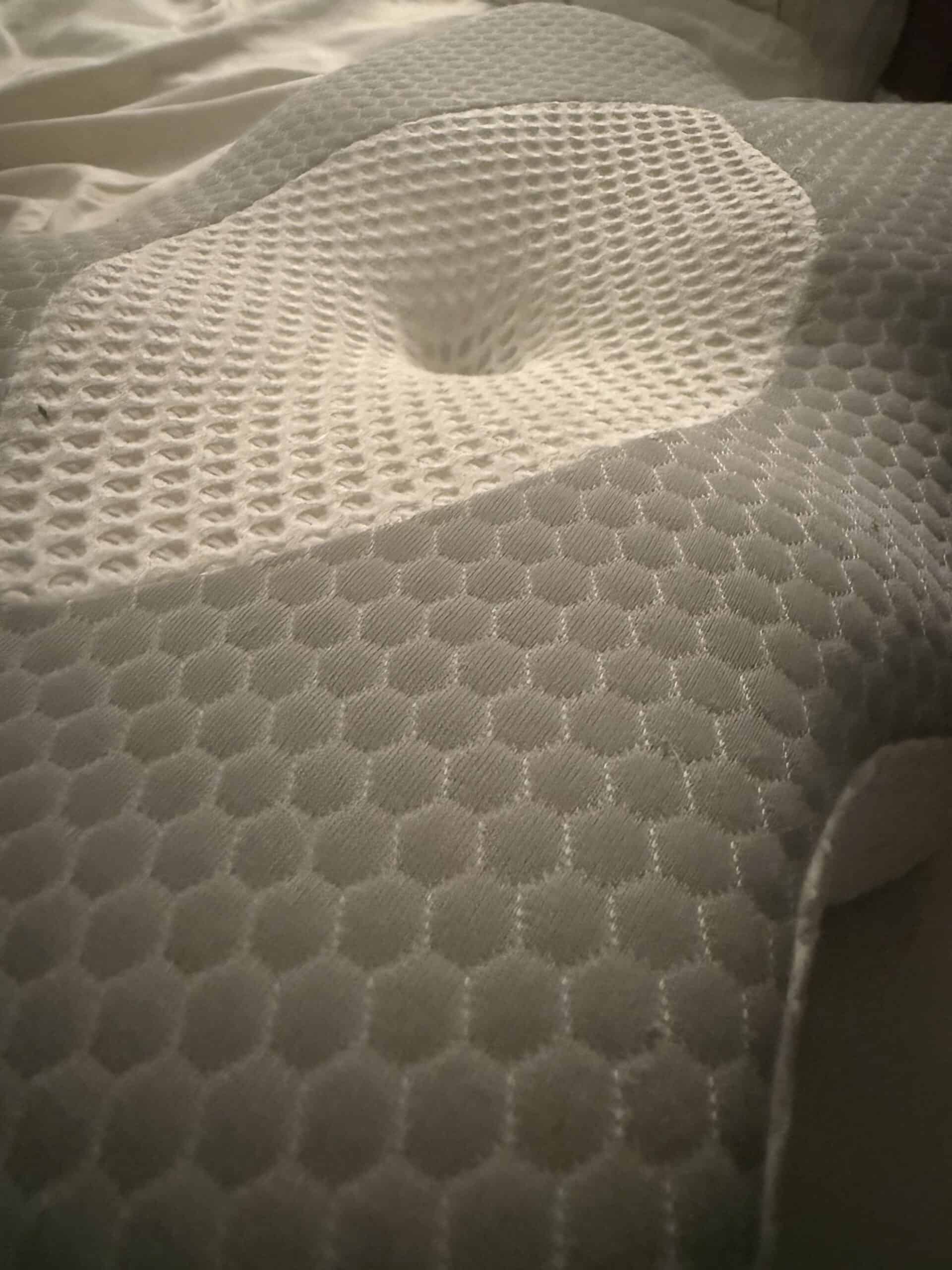
Yes. Firmness is what makes a contour work, since a soft one collapses under the weight of a head and stops holding any shape at all. A cervical pillow that feels plush is usually not doing the job it was bought for.
Mine is very firm and I like that about it. I have used a fixed contour pillow for around two years, during the day rather than for sleeping, and the firmness is the first thing anyone notices about it.
A Quick Note
This covers pillow construction rather than medical advice. Neck pain that persists or worsens, and any numbness or tingling into the arms, needs a doctor rather than a different pillow.
Quick Answer
Firm is correct and it is not the same as hard. The pillow should resist compression enough to hold your head in position all night, while still yielding slightly to the shape of your neck. If it feels like a block, the height is more likely wrong than the density.
Why Firmness Is Structural
| Density | What happens under a head |
|---|---|
| Soft | Contour flattens, no support remains |
| Medium | Partial collapse over a few hours |
| Firm | Holds shape, supports through the night |
| Very firm | Holds shape, may feel harsh to some |
The whole point of a contour is that it fills the gap under your neck consistently through the night. A material that compresses fully under load simply cannot do that for more than a few minutes at a time.
A human head weighs somewhere around ten to twelve pounds, and that load sits on a fairly small area continuously for hours. Soft foam underneath that gives way early and then stays given way for the rest of the night.
Firm Against Hard
These get confused and the difference matters when judging whether yours is right.
Firm means the material resists compression while still contouring slightly to the shape pressing into it. You sink a little and then stop.
Hard means effectively no yield at all, which creates pressure points at the back of the head and the base of the skull. That is a genuine comfort problem rather than something adjustment will fix.
Most complaints about cervical pillows being too hard turn out to be height problems. A pillow too tall for you pushes the head forward, and that discomfort gets read as excessive firmness, covered in how long it takes to adjust to a cervical pillow.
Two Years With a Very Firm One
Mine is at the firm end and that suits me. I would not want a softer version of it, since the support is the reason I have it.
The thing I would change is height rather than density. I wish it were slightly taller, which is a fit issue and not a firmness one, and those are easy to conflate.
Firmness also holds up considerably better over time. Two years in it is still the same pillow it was on day one, where a softer foam would have compressed permanently well before now.
It does get warm against my neck over a session, which is partly a consequence of density since firmer foam is usually denser and denser foam holds more heat, covered in using a cervical pillow while working in bed.
That is the honest trade you make with firm contoured foam. Support and durability on the one side, heat retention and an adjustment period on the other.
Materials and How They Behave
High-density memory foam
The most common. Firm, holds shape for years, softens with body heat, and retains warmth more than most alternatives.
Latex
Firm with more immediate bounce rather than slow sink. Cooler than memory foam and generally more expensive.
Gel-infused foam
Similar firmness to memory foam with somewhat better heat handling. The difference is real and smaller than marketing implies.
Shredded fill
Adjustable and softer, and the contour is less defined because loose fill moves. Suits people who find molded contours too rigid, covered in cervical pillows.
How to Tell Height From Density
Since most firmness complaints are height problems in disguise, working out which you have saves buying the wrong replacement.
Lie on it and have someone look at you from the side, or take a photo. Your nose and chin should sit roughly level with your chest, and your head should not be tilted up or pushed down.
Chin pressing toward your chest means too tall. That produces tension at the back of the neck that people describe as the pillow being hard, when the pillow is simply too high.
Head tipped back with a gap under the neck means too short. That feels less like hardness and more like the pillow not doing anything.
If alignment looks correct and it still feels harsh, that is a density issue and a softer material is the answer rather than a different height.
Pressure specifically at the back of the skull rather than through the neck also points at density, since that is the point taking the most direct load.
When Firm Is Wrong for You
Some people genuinely do not get on with rigid support at all, and persisting past three weeks of consistent discomfort is not a useful thing to do.
Very light people compress a firm pillow less than heavier people do, so the same pillow effectively behaves harder for them than it does for somebody else.
Existing neck conditions can make firm support uncomfortable rather than helpful, and that is a conversation to have with a doctor or physiotherapist rather than a purchasing decision to work out alone.
And side sleepers on a firm mattress get less shoulder sink, which changes the gap the pillow needs to fill and can make a firm contour feel wrong, covered in choosing a pillow for your sleep position.
Does It Soften With Use?
Slightly, and not as much as people hope during the adjustment period.
Memory foam softens with body heat during each session and returns to its original density once cool, so that is a temporary change rather than a permanent one.
Genuine permanent softening means the foam is breaking down, which is the end of the pillow’s useful life rather than it becoming more comfortable.
Waiting for a too-firm pillow to soften into comfort is generally a mistake. If it is still wrong after three weeks it will be just as wrong at six weeks, covered in pillows for neck pain.
Related Reading
- cervical pillows
- adjusting to one
- when to use one
- pillows for neck pain
- pillows by sleep position
- waking with a stiff neck
Frequently Asked Questions
Are cervical pillows supposed to be firm?
Yes. Firmness is what lets a contour hold its shape under the weight of a head. A soft contour collapses and stops providing the support it was designed for.
What is the difference between firm and hard?
Firm resists compression while still yielding slightly to your shape. Hard gives nothing, which creates pressure points at the back of the head.
Mine feels too hard, what is wrong?
Usually the height rather than the density. A pillow too tall pushes your head forward, and that discomfort commonly gets read as excessive firmness.
Will it soften over time?
Only slightly. Memory foam softens with body heat during use and returns to its density once cool, and permanent softening means the foam is breaking down.
Should I wait for it to break in?
Not beyond about three weeks. A pillow that is wrong at three weeks will still be wrong at six, and the fit is the problem rather than the newness.
Is a firmer pillow better for neck pain?
Not automatically. Correct height matters more than density, and firm support is uncomfortable for some people with existing neck conditions.
How do I tell if it is height or density?
Check your alignment from the side. Chin toward the chest means too tall, a gap under the neck means too short. Correct alignment that still feels harsh is a density issue.
Why does a firm pillow get warmer?
Firmer foam is usually denser, and denser material holds more heat. Gel-infused and latex options handle it somewhat better than standard memory foam.
Sources
- Sleep Foundation. Best Pillows for Neck Pain. https://www.sleepfoundation.org/best-pillows/best-pillow-for-neck-pain
- American Academy of Sleep Medicine. Healthy Sleep Habits. https://sleepeducation.org/healthy-sleep/healthy-sleep-habits/
- National Institute of Neurological Disorders and Stroke. Neck Pain. https://www.ninds.nih.gov/health-information/disorders/neck-pain
