
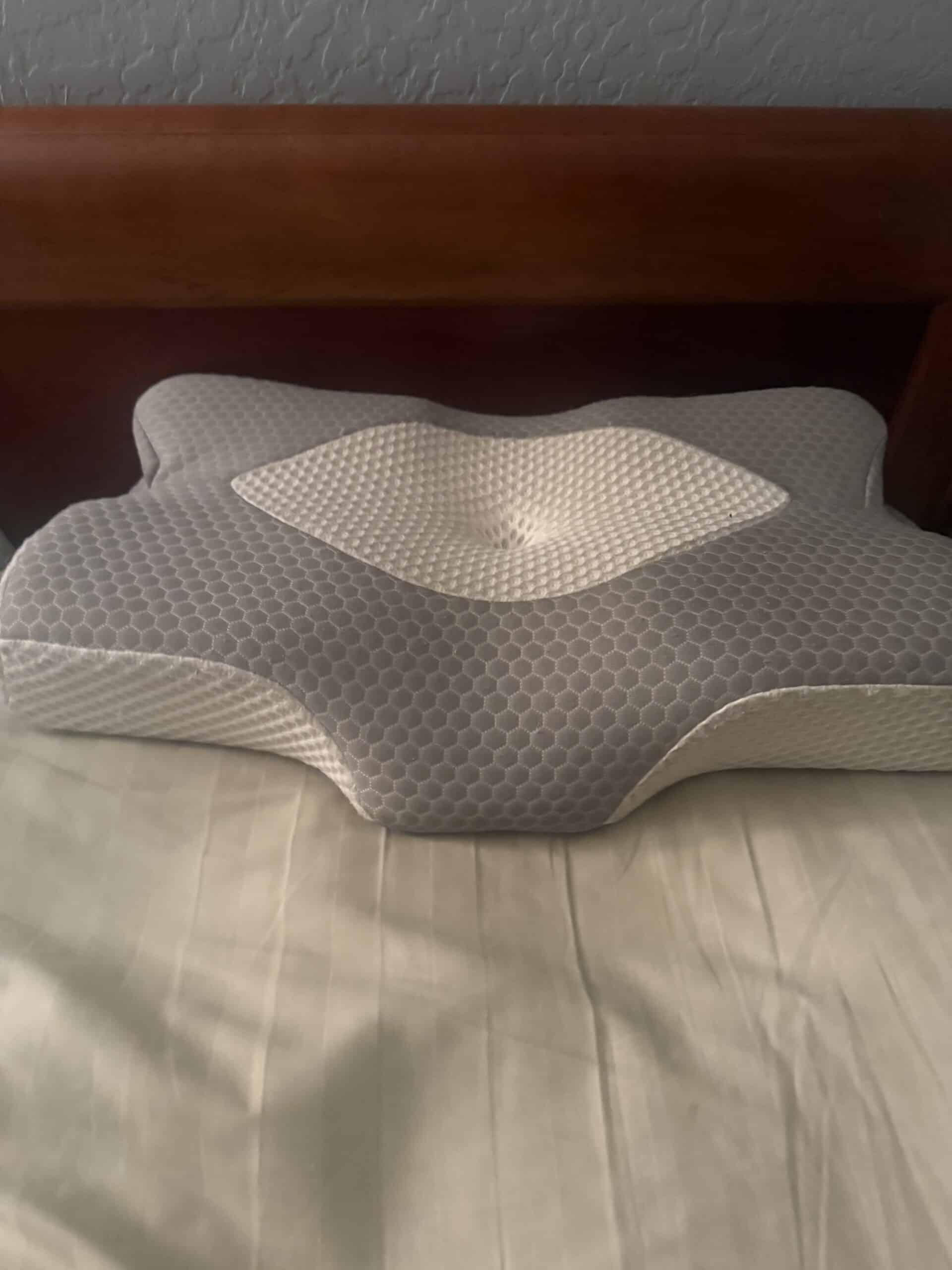
Most people need somewhere between a few nights and three weeks. The contour holds your head in a position your muscles are not used to, and that feels wrong before it feels supportive.
Mine definitely took a bit of getting used to. I have had a fixed contour pillow for around two years and use it during the day rather than for sleeping, and it was not comfortable from the first minute.
A Quick Note
This covers adjustment rather than medical advice. Pain that increases, or any numbness or tingling into the arms, means stopping and speaking to a doctor rather than waiting for adjustment.
Quick Answer
Expect a few nights of feeling odd, up to about three weeks for full adjustment. Mild stiffness early is normal, and increasing pain is not. If it still feels wrong after three weeks, the pillow is probably the wrong height for you.
A Rough Timeline
| Stage | What people typically report |
|---|---|
| First use | Feels strange, often too firm or too high |
| Nights 2 to 5 | Mild neck or shoulder stiffness |
| Week 1 to 2 | Starting to feel normal, occasional reversion |
| Week 2 to 3 | Comfortable, or clearly wrong |
| Beyond 3 weeks | Still uncomfortable means wrong fit |
That range is deliberately wide, because adjustment depends on how far the new position differs from your old one rather than on anything about the pillow itself.
Why It Feels Wrong at First
Your neck muscles adapt to whatever position they spend the most time holding. Years of sleeping on a flat or soft pillow means the surrounding muscles have quietly settled into that particular alignment.
A contour moves your head into a different position and then holds it there all night. The muscles that had been sitting shortened get lengthened, and that is what produces the stiffness people notice during the first week.
Firmness compounds the whole effect. Contoured pillows are generally firmer than conventional ones out of necessity, because a soft contour simply collapses under the weight of a head and stops being a contour at all.
None of that means the position is better for you. It means it is different, and different feels wrong regardless of direction, covered in cervical pillows.
What Mine Was Like
It took a bit rather than a long time, and it was noticeable enough that I still remember it clearly two years later.
It is very firm, which I like, and firmness is the thing that stands out first with a contour. A soft pillow lets you sink and a firm one puts your head where it decides.
I also wish it were slightly taller than it is, which I only worked out properly after using it for a while. That is exactly the sort of fit judgment you cannot possibly make standing in a shop.
Using it during the day rather than for sleeping probably made adjustment easier, since I could stop whenever it felt off rather than waking up stiff, covered in using a cervical pillow while working in bed.
Anyone switching their actual sleeping pillow does not have that option available, which is worth knowing before assuming that a few nights will settle everything down.
Normal Against Not Normal
Normal early on
Feeling strange, mild neck or shoulder stiffness for a few days, waking more often the first couple of nights, and the pillow feeling too firm.
Worth watching
Stiffness lasting beyond two weeks, or discomfort that is the same on day fourteen as on day one.
Stop and reassess
Pain that is worse than before you started, headaches, or the pillow clearly forcing your head into an uncomfortable angle.
See a doctor
Numbness, tingling, or weakness into the arms or hands. None of that is adjustment, covered in pillows for neck pain.
Making the Adjustment Easier
Use it in shorter stretches at the start. An hour reclined is a considerably gentler introduction than a full night, and it lets you gauge the fit without committing yourself to eight hours of it.
Keep your old pillow somewhere accessible for the first week at least. Having to sleep badly all night because the new pillow turns out to be wrong helps absolutely nobody.
Give it consistent use rather than alternating back and forth. Switching between two different positions every other night extends the adjustment period considerably, since your muscles never settle.
And resist the urge to judge it on the first night, since the first night is easily the least representative one you are going to have, covered in choosing a pillow for your sleep position.
Why the Trial Period Matters More Than Reviews
Fit is individual enough that other people’s experiences tell you very little, which makes the return policy the most useful specification a cervical pillow has.
Neck length, shoulder width, sleep position, and mattress firmness all change what height works. A pillow that suits one person can be plainly wrong for another of similar build on a different mattress.
Mattress firmness is the factor people miss entirely. A soft mattress lets your shoulder sink in, which reduces the gap the pillow needs to fill, so the same pillow behaves differently on a firm bed.
That is why reviews scatter so widely. The same product reads as excellent and as unusable, and both reviewers are describing their experience accurately.
A trial period long enough to cover the adjustment is what actually protects you. Anything under three weeks does not, since it expires before you know whether the strangeness was adjustment or mismatch.
Adjustable pillows sidestep some of this by letting you add or remove fill, at the cost of the consistent support a molded contour provides.
When It Is the Wrong Pillow
Height is the usual culprit when a pillow simply does not work. Too high forces your chin down toward your chest and too low leaves a gap under the neck, and neither of those resolves with more time.
Your sleep position matters a great deal here. Side sleepers need more loft than back sleepers do, and a contour cut specifically for back sleeping frequently does not work at all on the side.
Shoulder width affects it too. Broader shoulders create a larger gap when side sleeping, which needs a taller pillow than the same person would use on their back.
Three weeks of consistent use with no improvement at all is a reasonable point to conclude the fit is wrong rather than persisting any further with it.
Related Reading
- cervical pillows
- when to use one
- using one while working in bed
- pillows for neck pain
- pillows by sleep position
- waking with a stiff neck
Frequently Asked Questions
How long does it take to adjust to a cervical pillow?
A few nights to about three weeks for most people. The range is wide because it depends on how different the new position is from what your muscles are used to.
Is neck stiffness normal at first?
Mild stiffness for a few days is common, since muscles that had settled into one alignment are being held in another. Increasing pain is not normal.
Should I push through discomfort?
Mild strangeness, yes. Pain worse than before you started, headaches, or any numbness into the arms means stopping rather than persisting.
Why does it feel so firm?
Contoured pillows are firmer by necessity, since a soft contour collapses under the head and stops functioning as a contour at all.
Can I alternate with my old pillow?
Keeping it accessible for the first week is sensible, and alternating regularly extends the adjustment because your muscles never settle into one position.
What if it still feels wrong after three weeks?
The height is probably wrong for you. Too high pushes the chin down, too low leaves a gap, and neither improves with more time.
Does my mattress affect which pillow works?
Considerably. A soft mattress lets your shoulder sink in, reducing the gap the pillow needs to fill, so the same pillow behaves differently on a firm bed.
Does shoulder width matter?
For side sleeping, considerably. Broader shoulders create a larger gap to fill, which needs more loft than the same person needs on their back.
Sources
- Sleep Foundation. Best Pillows for Neck Pain. https://www.sleepfoundation.org/best-pillows/best-pillow-for-neck-pain
- American Academy of Sleep Medicine. Healthy Sleep Habits. https://sleepeducation.org/healthy-sleep/healthy-sleep-habits/
- National Institute of Neurological Disorders and Stroke. Neck Pain. https://www.ninds.nih.gov/health-information/disorders/neck-pain
