
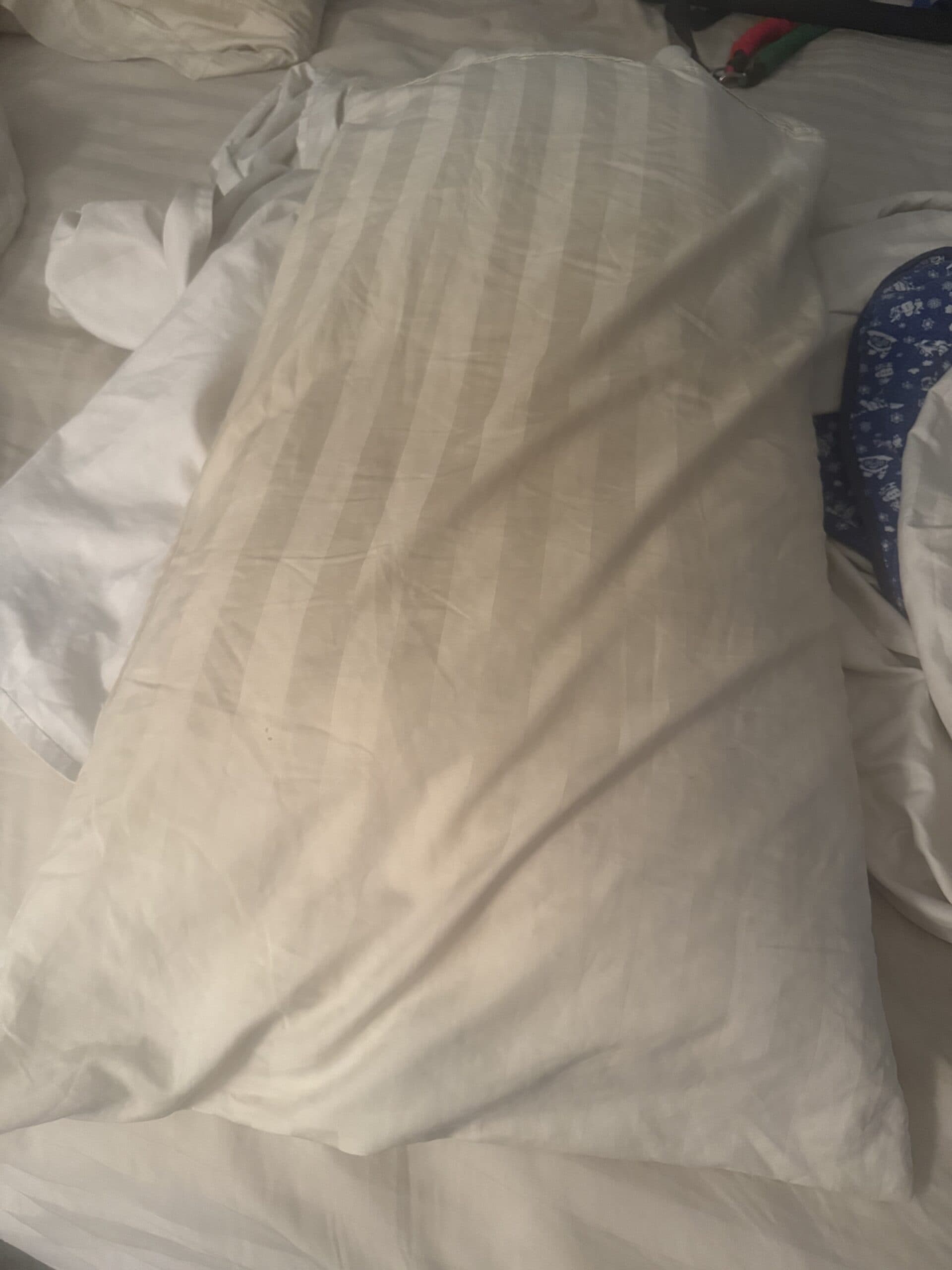
Your head loses heat into the pillow and the pillow gives it back. Within a few minutes the surface under your head reaches roughly skin temperature, and at that point the underside is cooler simply because nothing has been lying on it.
Flipping resets that. The behavior is a response to a real temperature difference rather than a quirk, which is why it persists even after buying a cooling pillow.
Quick Answer
The surface under your head warms to skin temperature within minutes and the underside stays cool because it is exposed to room air. Cooling pillows extend the interval before the surface warms and they do not prevent it. Flipping several times a night is normal.
Key Points
- The pillow surface reaches skin temperature within minutes
- The underside stays cooler because room air reaches it
- Cooling materials extend the interval rather than removing it
- Memory foam retains heat more than most fills
- The habit persists partly because it works
- Flipping is not a sign of a sleep problem
What Is Happening
| Stage | What the pillow is doing |
|---|---|
| Head goes down | Surface is at room temperature, feels cool |
| First few minutes | Heat transfers from head into the surface |
| After 10 to 20 minutes | Surface is at roughly skin temperature |
| Meanwhile | Underside stays near room temperature |
| You flip | Cool surface again, cycle restarts |
| Old side | Sheds heat into the room over several minutes |
Why the Cool Side Is Actually Cool
The underside is not doing anything clever. It is exposed to room air, which is cooler than your head, so it sits near room temperature while the top surface is being warmed.
How quickly the warm side recovers depends on the room. In a cool bedroom it sheds heat fast and is genuinely cool again within minutes, and in a warm one it recovers slowly and each flip buys less time.
That is why flipping feels less effective in summer. The mechanism is the same and the room gives it less to work with, which is covered in why pillows get hot at night.
What Mine Is Like
I flip mine around seven to ten times a night. That is a lot, and I have owned a gel cooling pillow for over a year and it still happens.
It is both helpful and a habit at this point. The cool side is genuinely cooler when I turn it, and I also reach for it without thinking rather than only when I notice heat.
Before the gel pillow I was doing it all the time, so the cooling pillow reduced the frequency rather than removing the need. That distinction matters, because the marketing implies it should stop entirely.
Mine has also flattened a bit and the gel effect has faded over the year, so some of the current flipping frequency is a pillow approaching the end of its life rather than the mechanism alone.
My experience covers one gel cooling pillow in a dry hot climate. It does not cover latex, down, or phase-change pillows, which behave differently, or humid climates where evaporation from the head works less well.
Why Cooling Pillows Do Not Stop It
Cooling pillows conduct heat away from the surface faster than plain foam, which delays the point at which the surface reaches skin temperature.
They do not remove heat from the system. The heat still goes into the pillow and the pillow still warms, just more slowly.
Gel infusions are conductive at first and saturate, phase-change materials absorb heat until they finish changing state, and perforated foam moves air through until the air in it warms. All three delay rather than prevent.
Which is why a realistic expectation is fewer flips rather than none, covered in whether cooling pillows actually work.
Why the Habit Outlasts the Need
Flipping is partly physical and partly learned, and the two are hard to separate once the pattern is established.
A behavior repeated thousands of times becomes automatic. You reach and turn without deciding to, which is why people flip pillows that are not actually warm yet.
That is not a problem to solve. An automatic movement during light sleep costs nothing and rarely wakes anyone fully, and trying to suppress it would create more disturbance than the flipping does.
It does mean the frequency is a poor measure of how well a pillow performs. Someone flipping out of habit will keep doing it on a better pillow, which makes the honest test how hot the surface actually feels rather than how often you turn it.
What Makes It Worse
Memory foam density
Dense memory foam holds heat and restricts airflow. It contours well and is the worst common fill for this specific problem.
A warm room
The underside only stays cool if room air is cool. In a hot bedroom neither side recovers, and no pillow fixes a room problem.
Thick pillowcases
Flannel and heavy cotton insulate the cooling layer you paid for. Percale or a cooling pillowcase interferes far less, covered in cooling pillowcases.
Sleeping under a comforter in summer
Trapped body heat raises the temperature of everything including the air around your head, which shortens how long each flip lasts.
When It Is Worth Doing Something
Flipping a few times a night is normal and needs no intervention. Most people do it and never think about it.
Frequent flipping alongside waking hot, sweating, or disturbed sleep points at the room rather than the pillow, and cooling the room does more than any pillow purchase, covered in cooling a bedroom without central air.
A change in pattern is worth noticing. Suddenly flipping far more than you used to, particularly with night sweats, is worth raising with a doctor rather than solving with bedding.
And a pillow that has flattened or lost its cooling effect is simply worn out, which is a replacement question rather than a mechanism one, covered in how often to replace a cooling pillow.
What Reduces the Frequency
Cooling the room does the most, since it determines whether the underside recovers between flips.
A breathable pillowcase in percale or a cooling weave lets the pillow’s own properties reach you rather than insulating them.
Fill matters more than any cooling treatment. Shredded foam, latex, and buckwheat all breathe better than solid memory foam, and options sit in cooling pillows for hot sleepers.
Two pillows alternated gives one a longer recovery period, which some people find works better than flipping a single one.
Normal Against Worth Addressing
Normal looks like flipping several times a night, finding the cool side genuinely cooler, and sleeping through otherwise. That is the mechanism working as it does for everyone.
Worth addressing looks like flipping constantly while waking hot, a pillow that has flattened or lost its cooling effect, or a sudden change from your usual pattern. The first two are equipment, and the third is worth mentioning to a doctor.
Related Reading
- the heat mechanism
- what cooling pillows deliver
- gel, perforation, and phase change
- the layer over the top
- when a pillow is finished
- fixing the room instead
Frequently Asked Questions
Why is the other side of the pillow always cooler?
Because it is exposed to room air while the top surface is being warmed by your head. The underside sits near room temperature, which is cooler than skin temperature.
How often is normal to flip a pillow?
Several times a night is common and unremarkable. Frequency depends on room temperature, pillow fill, and how much heat you produce, and there is no correct number.
Should a cooling pillow stop me flipping?
It should reduce how often, not eliminate it. Cooling materials delay the surface reaching skin temperature rather than preventing it, so fewer flips is the realistic outcome.
Why does flipping work less well in summer?
The underside only stays cool if room air is cool. In a warm bedroom the flipped side recovers slowly, so each flip buys less time than it does in winter.
Does memory foam make it worse?
Dense memory foam holds heat and restricts airflow, which makes it among the worst fills for this. Shredded foam, latex, and buckwheat all breathe considerably better.
Does the pillowcase matter?
Yes. A thick flannel or heavy cotton case insulates the cooling layer underneath it. Percale or a cooling weave lets the pillow’s properties actually reach you.
When is flipping a sign of something else?
When it comes with waking hot, night sweats, or a sudden change from your usual pattern. Those are worth mentioning to a doctor rather than addressing with new bedding.
Pillow choice starts with sleep position. choosing a pillow for your position covers loft and fill.
