
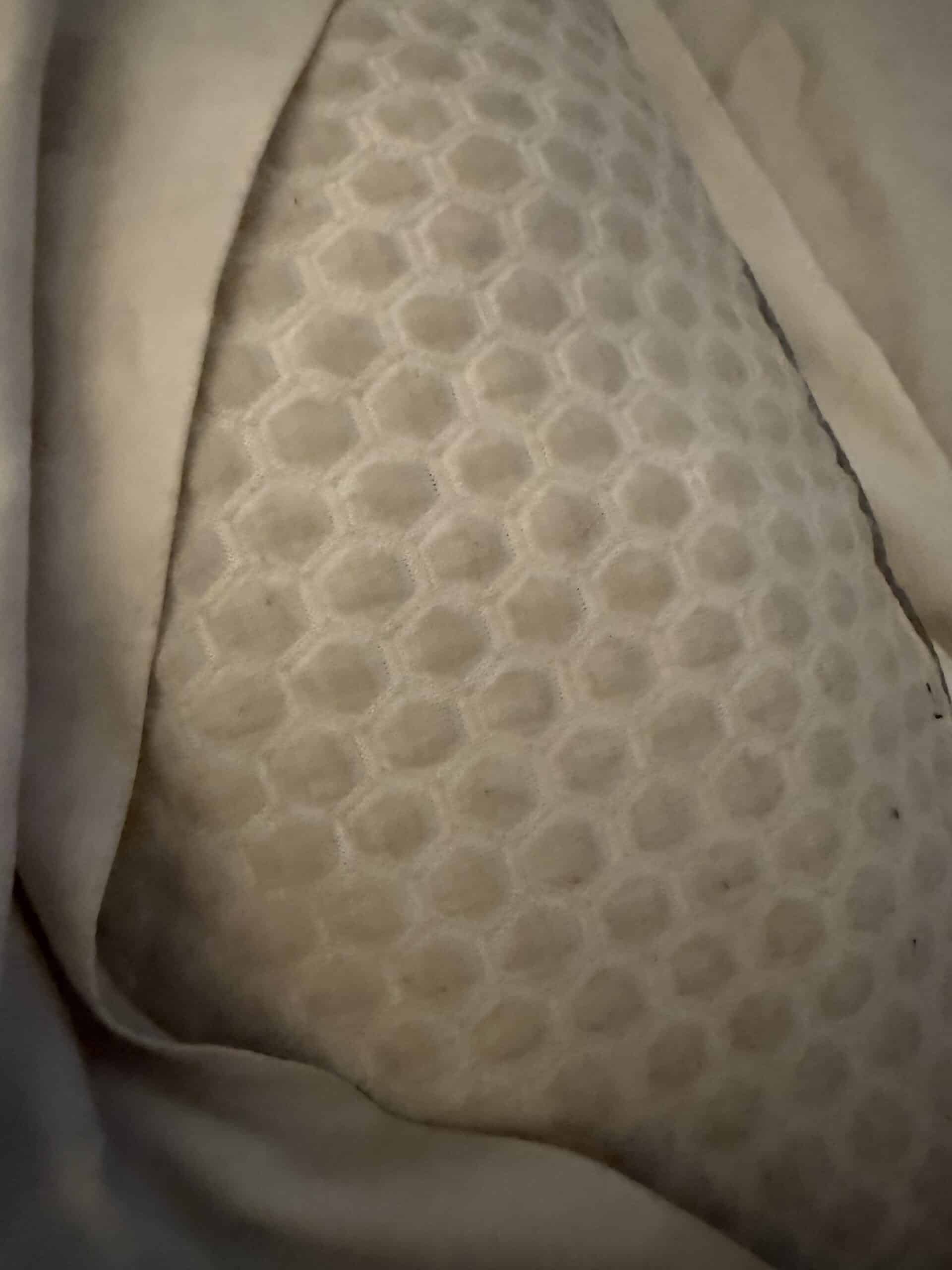
A pillow stops feeling cool because it has absorbed your head’s heat and has nowhere to put it, which is why flipping works and why the cool side runs out. Cooling pillows do not generate cold. They move heat away from your face for a while, and once the material has reached your body temperature the effect is finished until that heat can dissipate again.
Understanding that changes what you do about it. The fixes that work are the ones that help heat leave the pillow, not the ones that promise more cooling, and most of them are about the room rather than the pillow itself.
Quick Answer
Flip the pillow before you get uncomfortable rather than after, keep air moving across the bed so the warm side can shed heat while you are off it, and use a breathable pillowcase. In a hot bedroom no pillow stays cool, so the room temperature matters more than the pillow’s cooling claim.
Why a Cooling Pillow Warms Up
| What is happening | Why it feels cool at first | Why it stops |
|---|---|---|
| Gel layer absorbs heat | Gel conducts heat away faster than foam | Gel reaches your body temperature |
| Phase-change material | Absorbs heat while changing state | Capacity is used up |
| Airflow through the fill | Warm air moves out of the pillow | Stops if the case blocks air |
| Cool side after flipping | That face has shed its heat | Takes time to recover again |
| Room temperature | Cool air lets the pillow dump heat | Warm room means nowhere for heat to go |
Key Points
- Cooling pillows move heat rather than producing cold
- The cool side recovers only if air can reach it
- A thick or synthetic pillowcase cancels most cooling designs
- Room temperature sets the ceiling on how well any pillow performs
- Flipping is a legitimate technique, not a sign of a bad pillow
- Moving air across the bed helps more than most pillow features
My Own Setup and What It Actually Does
I sleep on a gel-infused cooling pillow and have for about a year. It works, in the sense that the surface genuinely feels cooler than a plain foam pillow when I first lie down. It also stops feeling cool after a while, every night, without exception.
So I flip it. Constantly. That is the honest description of how I use a cooling pillow: not as something that stays cool, but as something with two usable sides that I alternate between through the night. Anyone expecting to buy a pillow and stop thinking about temperature is going to be disappointed, and no product on the market has changed that for me.
What did change things was the room rather than the pillow. I run a bedroom fan and a ceiling fan, with blackout curtains up through the whole Arizona summer and air conditioning in the room. With air actually moving over the bed, the side I am not using sheds its heat faster, so when I flip there is genuinely a cool side waiting. In a still, warm room that recovery does not happen and flipping gets you very little.
My experience covers one gel pillow in a hot dry climate with fans and air conditioning running. It does not cover phase-change pillows, water-based pillows, or humid climates, where the physics of heat and moisture work differently.
Flip It Before You Need To
Most people flip when they notice discomfort, which is already too late , the pillow has been warming for a while by then and you have surfaced enough to notice.
The better habit is flipping at natural waking points, when you turn over or shift position, rather than waiting for heat to wake you. It becomes automatic within a week or two, and it uses the pillow the way it actually works rather than the way the packaging implies.
A pillow with two usable faces matters here. Some cooling pillows put the cooling layer on one side only, which halves your options. If you flip as often as I do, a pillow that is the same on both sides is worth more than a slightly cooler single face.
Let the Warm Side Recover
This is the part most people miss. The side you are not lying on can only shed its heat if air reaches it, and a pillow pressed against a headboard, buried under a duvet, or sitting in still air recovers slowly.
Keeping the bed clear around the pillow helps. So does moving air, which is why a bedside fan or a ceiling fan does more for pillow temperature than most pillow features do. The fan is not cooling you directly so much as carrying heat away from the surfaces around you.
Fix the Pillowcase
A cooling pillow inside a thick synthetic case is a cooling pillow you cannot feel. The case sits between your skin and whatever the pillow is doing, and it is the cheapest thing to get wrong.
Breathable natural fibers and loose weaves let heat and moisture through. Percale, bamboo, and lightweight cotton all work better than microfibre or flannel. Purpose-made cooling pillowcases exist and are a smaller purchase than a new pillow if what you own is otherwise fine.
Two cases on the pillow, or a case over a protector over a pillow, stacks the problem. Every layer is insulation between you and the cooling material.
Cool the Room, Not Just the Pillow
Room temperature sets the ceiling on everything above. A cooling pillow in a warm bedroom has nowhere to send heat, so it saturates quickly and stays saturated.
Blocking daytime heat before it enters is the highest-value change in a hot climate, and blackout curtains do more for room temperature than most people expect. The full picture is in cooling a bedroom properly, and it is genuinely the thing to solve before buying another pillow.
What Does Not Work
Putting the pillow in the freezer
It feels dramatic for ten minutes and then the pillow is at room temperature again, with condensation in the fill. Foam and gel do not appreciate freeze cycles either.
Buying a colder pillow
Every cooling pillow saturates. A better one saturates more slowly, which is worth something, but none of them keep going all night against a warm head in a warm room.
Adding a cooling topper and expecting the pillow to benefit
A topper or cooling blanket helps your body, not your head. They are separate problems with separate solutions.
Layering more bedding around your head
Pillows piled up, cases doubled, or a duvet pulled up around your neck all trap heat exactly where you are trying to lose it.
Related Reading
- cooling pillow options compared
- how gel pillows differ from other types
- choosing loft and firmness for how you sleep
- why overheating wakes you
Frequently Asked Questions
Why does my cooling pillow stop feeling cool?
Because it has absorbed as much heat as it can hold. Cooling pillows conduct heat away from your head rather than producing cold, so once the material reaches your body temperature the effect stops until that heat can dissipate.
Is flipping the pillow a sign it is a bad pillow?
No. Flipping is how these pillows are used in practice, and a good one simply gives you a cooler side to flip to and recovers faster. Expecting one face to stay cool all night is expecting something no pillow does.
How long should the cool side last?
It varies with room temperature, bedding, and how hot you sleep, and there is no standard figure. In a warm still room it can be a matter of minutes; in a cool room with air moving it lasts considerably longer.
Does a cooling pillowcase actually help?
Yes, and more than people expect, because the case sits between you and the pillow. A thick synthetic case cancels most of what a cooling pillow does, while a breathable one lets it work.
Can I put a cooling pillow in the freezer?
It is not advisable. The effect fades within minutes once it is back on the bed, and freeze cycles can damage foam and gel while introducing condensation into the fill.
Does a fan help with a hot pillow?
Considerably, because it moves heat away from the pillow surface you are not using so the cool side actually recovers. In a still room the warm side stays warm and flipping gains you very little.
Should I buy a different pillow or fix the room?
Fix the room first. Room temperature sets the limit on how any pillow performs, so blocking daytime heat and moving air will do more than upgrading a pillow that is already reasonably good.
Recommended Reading
See our note on fans for running all night.
