
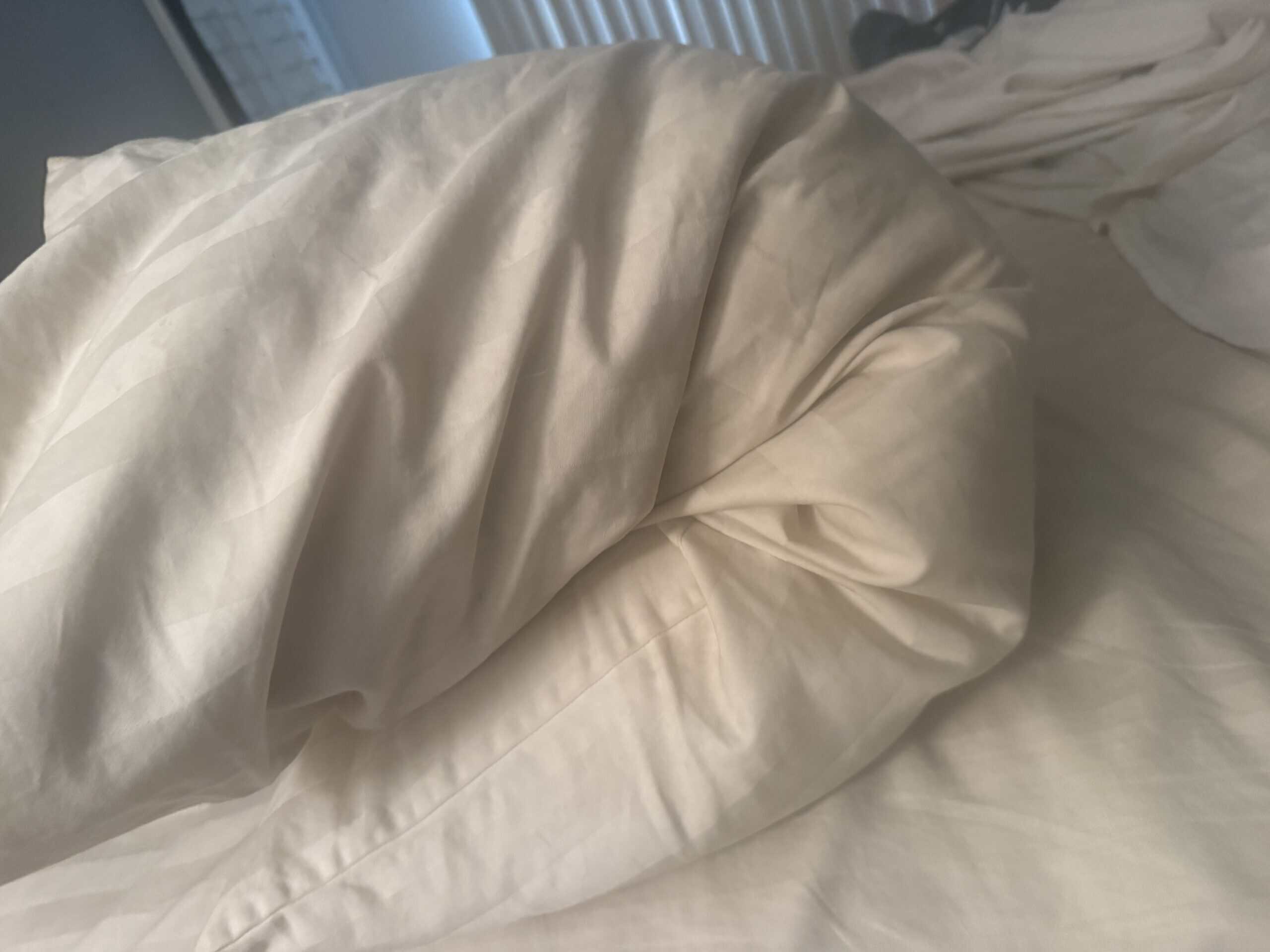
Your pillow gets hot because your head releases heat continuously into a dense material that traps it rather than moving it away, and standard memory foam is the worst offender because it is solid, close-contoured, and has almost no airflow. Understanding why your pillow gets hot at night matters because the fixes are different depending on which part of the system is failing: the fill, the cover, or the room. For picks that address it, see our guide to cooling pillows for hot sleepers.
Quick Answer
Dense foam absorbs body heat and holds it, contouring reduces airflow, and a thick pillowcase insulates the whole thing. Flipping to the unused side gives immediate relief. Longer term, a gel-infused or ventilated pillow with a breathable cover moves heat away instead of storing it.
Key Takeaways
- Standard memory foam traps heat because it is dense and closely contoured.
- A thick or synthetic pillowcase can insulate even a cooling pillow.
- Room temperature limits how much heat any pillow can shed.
- Flipping works because the unused side has been cooling the whole time.
- Old pillows sleep hotter as fill compresses and airflow disappears.
Causes and Fixes
| Cause | Why it happens | Fix |
|---|---|---|
| Dense memory foam | Solid structure absorbs and holds body heat | Gel-infused, ventilated, latex, or shredded fill |
| Close contouring | More contact area, less airflow around your head | Firmer or shredded fill that contacts less |
| Insulating pillowcase | Thick or synthetic covers trap heat at the surface | Breathable cotton, bamboo, or cooling case |
| Warm bedroom | Pillow cannot shed heat into already-warm air | Lower room temperature, add airflow |
| Compressed old pillow | Lost loft means lost internal airflow | Replace the pillow |
| Not flipping | Same surface accumulates heat all night | Flip to the cool side |
The Main Culprit Is Usually the Fill
Standard memory foam is designed to soften and conform under body heat, which is exactly the property that makes it sleep hot. It is dense, has minimal internal air movement, and wraps closely around your head, maximizing contact area while minimizing the ability to release heat.
Once that foam has absorbed as much heat as it can hold, it stops feeling neutral and starts feeling actively warm. Nothing is wrong with the pillow; that is the material behaving as designed. Cooling variants attack this by adding conductivity, airflow, or both.
Our guide to what makes a pillow cooling covers the alternatives.
The Pillowcase Is the Overlooked Cause
People replace pillows and keep the same case, then wonder why the new one also sleeps hot. A thick, tightly woven, or synthetic pillowcase sits between you and the fill, insulating the surface and preventing the pillow from doing its job.
This is the cheapest fix in the list and worth trying before buying anything else. Breathable cotton, bamboo, or a purpose-made cooling case lets heat pass through to the fill where it can be conducted away. Our guide to cooling pillowcases covers the options.
Why Flipping Works So Well
The side of the pillow you are not using has been shedding heat into the room for however long you have been lying on the other side. By the time your sleeping surface feels warm, the unused side is genuinely cold, which is why flipping produces such immediate relief.
This is not a workaround; it is how passive cooling pillows are meant to be used. The tradeoff is that you have to keep doing it, and the frequency is the honest annoyance of the category.
What This Looks Like With a Cooling Pillow
Even a Good Cooling Pillow Warms Up
I sleep on a gel-infused cooling pillow, and it stays cool really well. It still warms under my head, because that is unavoidable with any passive material. The difference is how much and how fast, and against plain foam the improvement is obvious.
So the honest expectation is not a pillow that never gets warm. It is a pillow that gets warm more slowly and recovers when you flip it.
The Cold Side Is the Point
What I notice most is that the side I am not using gets really cold. I flip it all the time for exactly that reason, and each flip resets the effect. If you are troubleshooting a hot pillow, this is the behavior you are trying to buy: a fill that sheds heat well enough that the resting side becomes genuinely cool.
Having to flip that often is a little annoying, and I would rather say so than sell it as effortless.
Age Matters Too
Mine is about a year old and I replace pillows roughly every two years. That schedule exists partly because compressed fill sleeps hotter as internal airflow disappears. If your pillow has gone flat and hot at the same time, those are likely the same problem. Our guide to signs your pillow needs replacing covers when to swap.
When the Room Is the Real Problem
A pillow can only release heat into the air around it, so a warm bedroom limits every fix in this article. If the room is hot, the unused side never gets properly cold and flipping delivers much less.
If you are overheating generally rather than specifically at your head, the pillow is the wrong lever entirely and bedding, mattress layers, and room temperature will do far more. Our guides to setting up a cooling sleep environment and cooling mattress pads cover those layers.
Fixes in Order of Cost
Start with flipping, which costs nothing and tells you whether the fill is capable of shedding heat at all. Then try a breathable pillowcase, which is inexpensive and fixes a surprising number of cases. Then look at room temperature and airflow.
Only after those would I replace the pillow, and at that point a gel-infused or ventilated design is the targeted answer. Our guide to gel cooling pillows covers that step.
Recommended Reading
- Cooling pillows for hot sleepers
- Do cooling pillows actually work
- Gel cooling pillows
- What makes a pillow cooling
- How to tell if you need a new pillow
- Cooling sheets for hot sleepers
Frequently Asked Questions
Why does memory foam sleep so hot?
Memory foam is dense, has very little internal airflow, and contours closely around your head, which maximizes contact area while minimizing its ability to release heat. It also softens in response to body heat, which is the property that makes it comfortable and hot at the same time. Gel infusion, ventilation channels, and shredded fills all target that limitation.
Does flipping the pillow actually help?
Yes, and noticeably. The side you have not been using has been shedding heat into the room the whole time, so it is genuinely cold when you flip to it. I do this constantly with my own cooling pillow. The limitation is that you have to keep doing it, since the new surface will warm in turn.
Can a pillowcase make my pillow hotter?
Definitely. A thick, tightly woven, or synthetic case insulates the surface and stops heat reaching the fill where it could be conducted away. This is the cheapest thing to change and it fixes a surprising number of hot-pillow complaints. Breathable cotton, bamboo, or a cooling case is the fix.
Do old pillows sleep hotter?
They tend to, because compressed fill loses the internal air pockets that let heat move through it. A pillow that has gone flat and hot at the same time is usually telling you the same thing twice. Replacing pillows every couple of years addresses both issues together.
Will a cooling pillow stop my head getting hot entirely?
No. Any passive pillow absorbs body heat, and the surface under your head will warm up over time. What a good cooling pillow does is warm up more slowly and recover well when flipped. Mine stays cool really well on that basis, but expecting a permanently cold surface leads to disappointment.
What if my whole body overheats, not just my head?
Then the pillow is the wrong lever, since it only addresses one contact point. Bedding, mattress layers, and room temperature will do considerably more for whole-body overheating. A cooling pillow is worth adding as part of that setup, but it will not carry the whole job on its own.
Is a warm room stopping my cooling pillow from working?
It limits it, yes. Pillows shed heat into the surrounding air, so a hot bedroom slows that process and means the unused side never gets as cold. Cooling pillows perform best as one layer of a cooler sleep environment rather than as compensation for a warm room.
Pillow choice starts with how you sleep. matching a pillow to your position covers the basics.
