
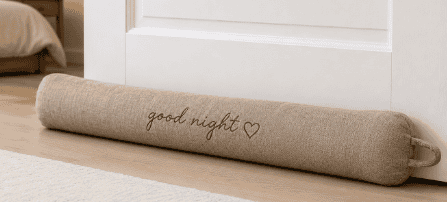
A door draft stopper seals the gap under a bedroom door, cutting the cold air, hallway light, and noise that slip through and disturb sleep. The best door draft stoppers block drafts and sound effectively, stay put without constant readjusting, and suit either a permanently closed door or one you open daily. The trade-offs that matter most are the seal type, whether it attaches or slides freely, and how well it handles uneven floors. Below are six door draft stoppers worth buying, from simple slide-under tubes to double-sided door-mounted seals, with a plain guide to choosing the right one. For a quieter, darker bedroom overall, see our guides to the best blackout curtains and white noise machines.
Quick Verdict
For a bedroom door you use daily, a double-sided slide-on seal is the right default: it seals drafts, light, and noise on both sides and moves with the door so nothing to reset. For a door you keep closed, a simple weighted tube is the cheapest fix, and homeowners wanting a permanent seal can choose an adhesive or screw-on sweep. For more on this, see our guide to curtain rods for a doorway.
Why Trust This Guide
Independent picks, reader-supported through affiliate links at no cost to you. Selections draw on product research, manufacturer specs, and general guidance on a quiet, comfortable sleep environment cited in Sources.
Key Takeaways
- Sealing the under-door gap blocks drafts, hallway light, and some noise that can disturb sleep.
- Slide-on double-sided seals move with the door, so there is nothing to reposition when you open it.
- Loose weighted tubes are cheapest but get pushed aside on doors you use often.
- Adhesive and screw-on sweeps give the tightest, most durable seal but are semi-permanent.
- No under-door seal blocks sound completely, so pair it with other quiet-bedroom steps for light sleepers.
How We Picked the Best Door Draft Stoppers
Picks were chosen on how well they seal drafts, light, and noise, how securely they stay in place, floor and door compatibility, and ease of installation, then cross-checked against reviewer consensus and manufacturer specs. A dark, quiet, draft-free room supports better sleep, so guidance on sleep environment was prioritized. The goal was a short list covering everyday doors to permanent seals rather than six near-identical tubes.
1. Double-Sided Slide-On Door Seal, Best Overall
A double-sided draft stopper that slides onto the bottom of the door seals the gap on both sides at once and moves with the door when you open and close it. It is the most convenient choice for a bedroom door you use every day.
Why It Stands Out
Because it grips the door itself, there is nothing to kick out of place or reposition each time you walk through. Sealing both sides blocks drafts, light, and noise more completely than a single-sided tube. Most trim to fit standard doors and install without tools.
Worth Knowing
You need to measure the door thickness and gap height so the seal fits snugly without dragging hard on the floor. On very thick carpet, a slide-on seal can catch, so check the clearance first. Pair it with blackout curtains to seal light from the window as well as the door.
Best for a bedroom door you open and close daily and want sealed hands-free. Skip only if your door barely clears the floor, where a low-profile option fits better.
Check Price on Amazon2. Weighted Fabric Draft Tube, Best for Simplicity
A simple weighted fabric tube lays against the base of the door to block the gap, the easiest and cheapest way to stop a draft with no installation at all.
Why It Stands Out
You just set it in place, so there is nothing to measure, cut, or attach, and it works on any door or window. The weighted filling keeps it pressed to the floor against light drafts. It is easy to move between rooms as needed.
Worth Knowing
Because it sits loose on the floor, it gets pushed out of place when you open the door and needs repositioning. It suits a door you keep closed more than one in constant use.
Best for a door you keep shut and want a no-effort, low-cost fix. Skip if you open the door often and dislike resetting it.
Check Price on Amazon3. Adhesive Under-Door Sweep, Best for a Tight Seal
A silicone or brush sweep that adhesives to the bottom edge of the door creates a durable, tight seal against drafts, light, and sound for a door you want permanently weatherproofed.
Why It Stands Out
The fixed sweep presses a flexible strip or brush against the floor for a consistent seal that does not shift. It handles drafts and noise well and stays invisible once installed. Silicone versions glide over hard floors quietly.
Worth Knowing
Adhesive sweeps are semi-permanent and work best on smooth floors, since deep carpet can interfere. Clean the door edge well before applying so the adhesive holds. For light sleepers, combine it with a white noise machine to mask any remaining hallway sound.
Best for a door you want sealed for good with a tight, tidy strip. Skip if you rent and cannot apply adhesive, or have thick carpet.
Check Price on Amazon4. Screw-On Door Sweep, Best for Durability
A screw-mounted door sweep offers the most durable, heavy-duty seal, ideal for a solid door where you want a permanent fix that will not peel off over time.
Why It Stands Out
Mechanical fastening means the sweep never loosens the way adhesive can, making it the longest-lasting option. Metal-and-rubber sweeps handle heavy use and larger gaps. It gives a professional, permanent result.
Worth Knowing
Installation requires drilling into the door, so it is not for renters or hollow doors that will not hold screws well. Measure and align carefully before fastening.
Best for homeowners wanting a permanent, heavy-duty seal on a solid door. Skip if you rent or cannot drill into the door.
Check Price on Amazon5. Budget Draft Stopper, Best Value
An inexpensive slide-under or fabric draft stopper covers the basics for a few dollars, an easy way to test whether sealing the door improves your sleep before spending more.
Why It Stands Out
Even a budget stopper noticeably cuts drafts and hallway light for very little money. The low cost lets you try one on the bedroom door and add more elsewhere. Simple designs have nothing to fail.
Worth Knowing
Cheaper stoppers may use lighter materials that flatten or shift sooner and seal less tightly. Treat one as a low-risk starting point rather than a lifetime fix.
Best for trying draft-sealing cheaply or outfitting several doors. Skip if you want the tightest, most durable seal.
Check Price on Amazon6. Draft Stopper With Noise-Dampening Core, Best for Sound
A thicker draft stopper built with a dense foam or noise-dampening core targets sound as much as air, aimed at light sleepers bothered by hallway or household noise.
Why It Stands Out
A denser core absorbs more sound than a hollow fabric tube, cutting the noise that travels under the door. Sealing that gap removes a surprising amount of hallway chatter and footsteps. It pairs the draft and noise jobs in one product.
Worth Knowing
Denser stoppers cost more and are bulkier, and no under-door seal blocks sound completely. Best combined with other quiet-bedroom steps for the biggest effect. Layer it with earplugs on especially noisy nights for the quietest result.
Best for light sleepers whose main problem is noise, not just cold. Skip if you only need to block a cold draft.
Check Price on AmazonDoor Draft Stopper Types at a Glance
| Type | Best For | Install | Seals Both Sides |
|---|---|---|---|
| Slide-on double-sided | Daily-use doors | No tools | Yes |
| Weighted fabric tube | Closed doors | None needed | One side |
| Adhesive sweep | Tight permanent seal | Adhesive | One side |
| Screw-on sweep | Durability | Screws | One side |
How to Choose a Door Draft Stopper
Match it to how you use the door
A door you open and close all day is best served by a slide-on seal that moves with it, while a door you keep closed can use a simple loose tube. Choosing based on daily use saves you from constantly repositioning a stopper that gets kicked aside.
Measure the gap and floor type
Check the height of the under-door gap and whether your floor is hard or carpeted, since a seal that is too tall drags and one too short leaks. Slide-on and sweep styles need the right clearance, and deep carpet can interfere with adhesive sweeps.
Decide between removable and permanent
Loose and slide-on stoppers are renter-friendly and move between rooms, while adhesive and screw-on sweeps give a tighter, lasting seal but are semi-permanent. Pick based on whether you want flexibility or the most complete, durable seal.
Common Draft Stopper Mistakes to Avoid
Ignoring the door thickness
Slide-on seals only work if they match your door’s thickness, so a seal sized wrong slips off or will not fit. Measure the door before buying a slide-on style to get a snug grip.
Fighting thick carpet
A stopper sized for a hard floor can drag or bunch on deep carpet, and adhesive sweeps struggle over pile. On carpet, favor a slide-on seal set to the right height or a loose tube.
Expecting total silence
Sealing the door gap cuts drafts and some noise, but it will not soundproof the room on its own. Pair it with white noise or earplugs if noise is your main problem rather than expecting the stopper to do everything.
Draft, Light, or Noise: Which Matters Most
Sealing a cold draft
If your main issue is cold air pooling at the floor, almost any well-fitted stopper helps, and a double-sided or sweep style seals most completely. Blocking that draft can make the whole room feel warmer and steadier overnight.
Blocking hallway light
If light creeping under the door wakes you, a tight-sealing slide-on or sweep matters most, since loose tubes leave small gaps. Combined with blackout curtains at the window, it helps keep the room genuinely dark.
Cutting noise for light sleepers
If noise is the problem, choose a thicker stopper with a dense core and treat it as one layer among several. Sealing the gap removes some hallway sound, but earplugs or white noise handle what remains.
Recommended Reading
Frequently Asked Questions About Door Draft Stoppers
Do door draft stoppers help you sleep better?
By sealing the under-door gap, a draft stopper blocks cold air, hallway light, and some noise that can disturb sleep, so it can help create a darker, quieter, more comfortable room. It works best alongside other steps like blackout curtains and white noise.
What is the best type of door draft stopper?
A double-sided slide-on seal is the best all-around choice for a bedroom door you use daily, since it seals both sides and moves with the door. For a door you keep closed, a simple weighted tube is the cheapest effective option.
Do draft stoppers block noise?
Draft stoppers cut some noise by sealing the gap under the door, and thicker models with a dense core block more. They will not soundproof a room on their own, so light sleepers often pair them with earplugs or white noise.
Will a draft stopper work on carpet?
Loose weighted tubes and correctly sized slide-on seals work on carpet, but adhesive sweeps struggle over deep pile. On thick carpet, measure the clearance carefully and favor a slide-on style set to the right height.
Are slide-on or loose draft stoppers better?
Slide-on seals attach to the door and move with it, so they do not need repositioning and seal both sides, making them better for daily-use doors. Loose tubes are cheaper and simpler but get pushed aside when you open the door.
Can I use a draft stopper on a rented door?
Yes, loose tubes and slide-on seals are renter-friendly since they require no adhesive or drilling. Avoid screw-on and permanent adhesive sweeps if you cannot modify the door.
How do I measure for a door draft stopper?
Measure the door’s width, its thickness for slide-on styles, and the height of the gap between the door and floor. Matching these ensures a snug seal that blocks drafts without dragging hard on the floor.
Recommended Reading
See also our guides to window insulation kits for quiet sleep.
