
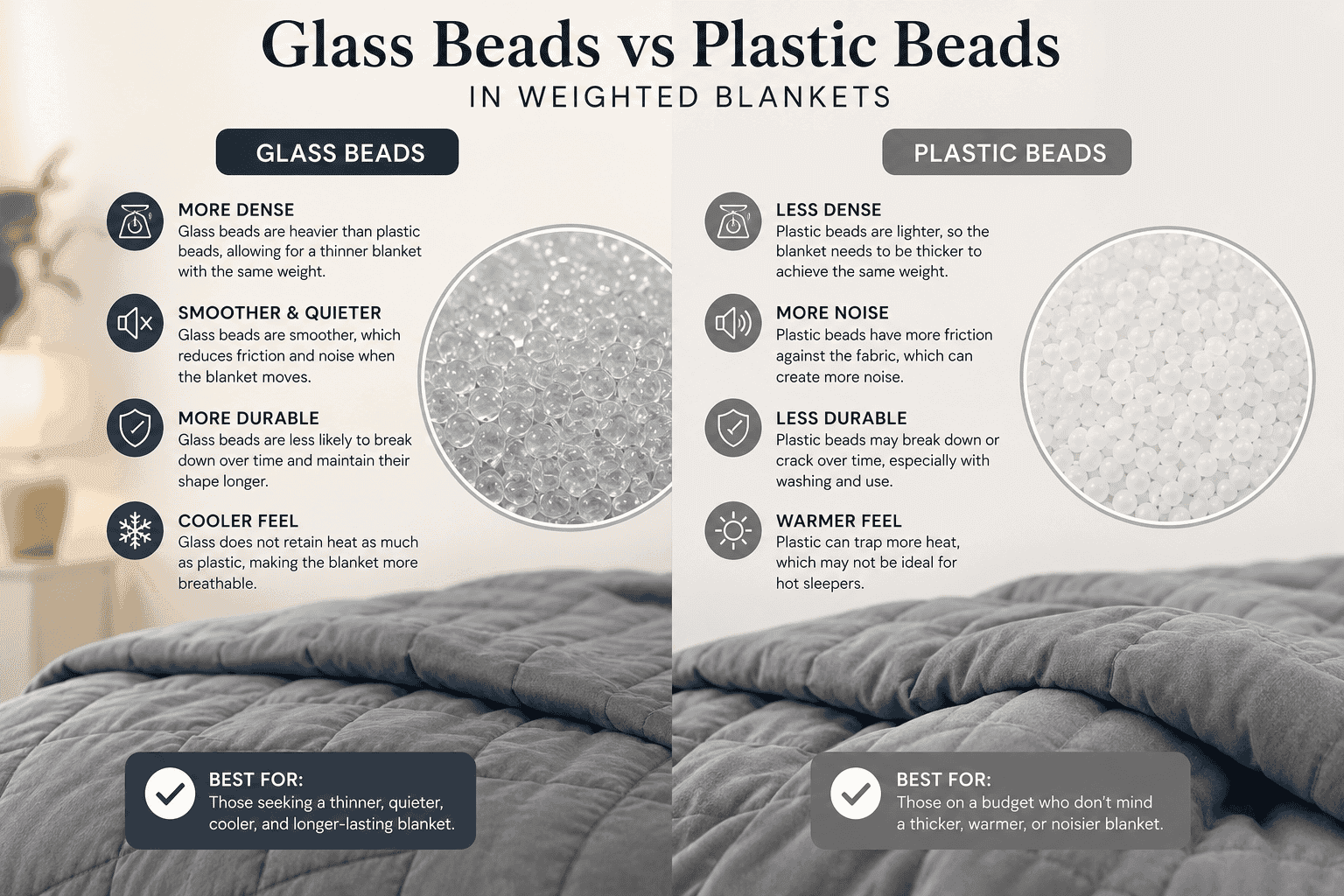
For recommendations, see our best weighted blankets for kids guide. Two weighted blankets can weigh the same yet feel completely different, and the fill inside is usually why. The glass vs plastic weighted blanket question comes down to this: glass beads are fine and dense, so they add weight without bulk and run cooler and quieter, while plastic pellets are larger, cheaper, and a bit warmer. For most buyers, glass beads are the better choice. If you are choosing a blanket from scratch, our weighted blanket buying guide covers fill alongside weight and fabric.
Quick verdict: Glass beads win for most sleepers, with a cooler, quieter, thinner, more even feel. Plastic pellets make sense mainly on a tight budget, where the bulkier, slightly warmer feel is an acceptable trade.
Disclosure: RestRight is reader-supported. As an Amazon Associate, we earn from qualifying purchases made through links on this page, at no extra cost to you.
Why the Glass vs Plastic Weighted Blanket Choice Matters
The fill is what gives a weighted blanket its weight, so it shapes the entire experience. It affects temperature, noise, bulk, and how evenly the weight spreads. Two blankets at the same weight can feel worlds apart because of it. A 15-pound glass-bead blanket and a 15-pound pellet blanket press with the same force but feel different in the hand.
That makes fill worth checking before you buy, not an afterthought. The right fill is the difference between a blanket you love and one you tolerate.
How Each Fill Works
Both fills add weight, but their size and material change the feel. That difference drives temperature, sound, and bulk.
Glass Beads
Glass beads are tiny, sand-like spheres that pack dense weight into a small volume. Because they are fine, the blanket stays thinner and the weight spreads smoothly. They also hold less heat and make almost no noise. Their sand-like size lets them settle into thin, even layers rather than lumps.
Plastic Pellets
Plastic poly pellets are larger, bead-like pieces, similar to the filling in some stuffed toys. They add weight at a lower cost, but take up more space, so the blanket feels bulkier. They can also trap a little more heat and make a faint rattle. The larger size is easier to feel through a thin cover than fine glass beads are.
Check Price on AmazonKey Differences
Five differences separate glass beads from plastic pellets. They add up to a real gap in feel.
Density and Bulk
Glass beads are denser, so the same weight takes up less space and lies flatter. Plastic pellets are bulkier and make a thicker, puffier blanket. The thinner glass-bead profile feels more refined against the body. A bulkier pellet blanket can feel more like a thick quilt with weight added.
Temperature
Glass beads hold less heat, which helps the blanket sleep cooler. Plastic pellets trap a bit more warmth, a downside for hot sleepers. For warm nights, glass beads are the safer pick, as our cooling weighted blanket picks show.
Noise
Glass beads are nearly silent as they shift, since they are so fine. Plastic pellets can rattle faintly when you move. A quiet blanket matters if you are a light sleeper or share a bed.
Even Distribution
Fine glass beads settle smoothly into small quilted pockets for even weight. Larger plastic pellets can clump or pool more easily if the stitching is loose. Box stitching helps either fill stay put. Without it, the fill drifts toward your feet or the edges over a night of movement.
Cost
Plastic pellets are cheaper, which lowers the blanket’s price. Glass beads cost a little more but deliver the cooler, quieter, thinner feel. The small premium buys most of what people like about weighted blankets. Across the life of the blanket, the difference in price is modest next to the daily comfort gain.
Glass vs Plastic at a Glance
This table sums up the comparison. Confirm current prices before buying.
| Factor | Glass beads | Plastic pellets |
|---|---|---|
| Bulk | Thin, dense | Bulkier |
| Temperature | Cooler | Warmer |
| Noise | Nearly silent | Slight rattle |
| Cost | Higher | Lower |
| Best for | Most sleepers | Tight budgets |
Which Should You Choose?
The choice comes down to comfort priorities and budget. Here is the quick call.
Choose Glass Beads If
You want a cooler, quieter, thinner blanket with smooth, even weight. This suits most sleepers, especially those who run warm. Our weighted blankets for anxiety picks favor glass-bead fills.
Choose Plastic Pellets If
You are on a tight budget and do not mind a bulkier, slightly warmer feel. A pellet-filled blanket still delivers calming pressure for less. It is a reasonable entry point into weighted blankets.
Look Beyond the Fill Too
Fill is one factor; weight and fabric matter just as much. Our weight guide helps you size the blanket right. Together, fill, weight, and fabric decide the feel.
Recommended read: Ready to shop? See our best weighted blankets and best cooling weighted blankets. Still deciding if you want one at all? Read weighted vs regular blanket.
Glass vs Plastic in the Real World
A few situations show when each fill fits. See which sounds like you.
The Hot Sleeper
Someone who overheats at night benefits from the cooler-running glass beads. Paired with a breathable cover, glass keeps heat buildup down. This is the clearest case for choosing glass.
The Budget Buyer
A shopper trying weighted blankets for the first time on a budget can start with plastic pellets. The pressure still works, and the savings are real. They can upgrade to glass later if they want. Starting cheap is a low-risk way to learn whether the pressure suits you at all.
The Light Sleeper
A person woken by small sounds will appreciate the near-silent glass beads. Plastic pellets can rattle just enough to register. Quiet weight helps undisturbed sleep. The same goes for a partner who is easily woken when you shift in the night.
The Even-Pressure Seeker
Anyone who dislikes weight pooling in spots is better served by fine glass beads in box stitching. The smooth distribution feels more consistent across the body. Beadless knit blankets solve this too, since the weight comes from the knit rather than loose fill. They are another route to even, non-pooling pressure.
Common Mistakes to Avoid
A few assumptions lead to fill regret. Watch for these.
Assuming All Fills Feel the Same
Two blankets at the same weight can feel very different based on fill. Check the fill type, not just the pound rating, before buying.
Overlooking Lead-Free Glass
Reputable blankets use lead-free, food-grade glass beads, which are worth confirming. Look for that detail on quality blankets when you shop.
Ignoring the Stitching
Loose construction lets any fill clump or pool over time. Box-stitched pockets keep glass beads or pellets evenly spread.
Frequently Asked Questions
Are glass beads or plastic pellets better for a weighted blanket?
Glass beads are better for most sleepers, since they are denser, cooler, quieter, and spread more evenly while keeping the blanket thinner. Plastic pellets are cheaper but bulkier and slightly warmer. Glass beads deliver most of what people like about weighted blankets.
Do glass-bead blankets sleep cooler?
Yes, glass beads hold less heat than plastic pellets, so they help the blanket sleep cooler. Paired with a breathable cover, glass is the better choice for hot sleepers. Plastic pellets trap a little more warmth.
Are plastic pellets safe in weighted blankets?
Quality plastic poly pellets are generally safe and non-toxic, and they make weighted blankets more affordable. The trade-offs are bulk, a faint rattle, and slightly more warmth. Reputable brands disclose their fill materials.
Why do glass beads cost more?
Glass beads are finer and denser than plastic pellets, which makes them more expensive to produce and use. The premium buys a cooler, quieter, thinner, more even blanket. For most buyers, the small added cost is worth it.
Do weighted blanket beads ever leak?
With sturdy fabric and box stitching, leaks are rare, but a torn blanket can spill its fill. Fine glass beads scatter like sand, while pellets are larger. Durable construction and a good cover prevent most problems.
Where can I learn more about weighted blankets?
The National Sleep Foundation covers sleep and bedding, and the Mayo Clinic covers healthy sleep habits.
Related Reading
Explore more: weighted blankets for kids, heated mattress pad vs electric blanket, weighted blanket vs heated blanket, and bedspreads and blanket sets.
Recommended Reading
See also our guides to door draft stoppers for quiet bedrooms, and weighted blanket vs heated blanket.
