
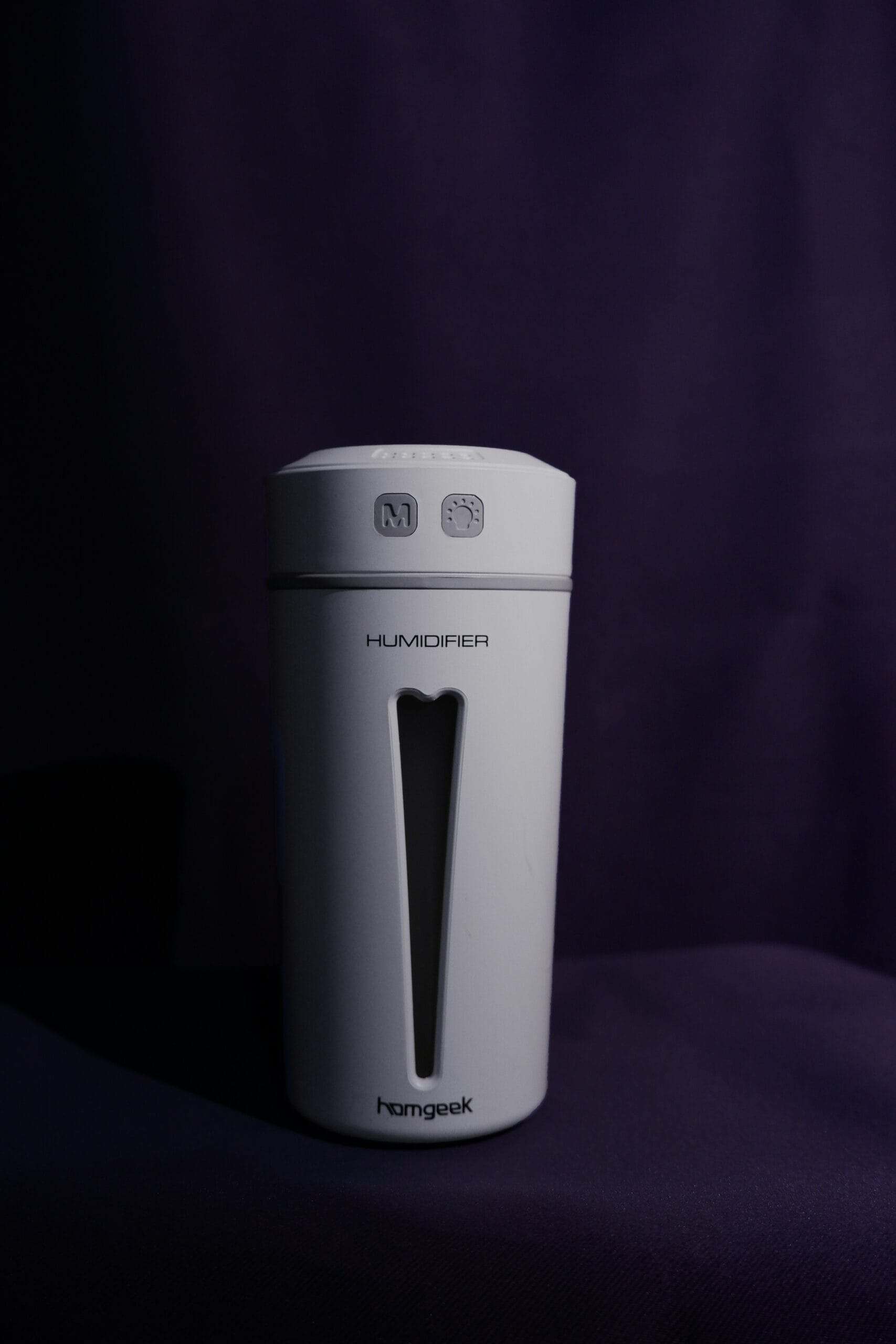
Dry bedroom air is one of those sleep disruptions that is easy to overlook because the symptoms feel like separate, unrelated problems rather than a single environmental cause.
Waking up with a dry throat. Congestion is worse in the morning than during the day. Skin that feels tight and irritated after sleeping. Nosebleeds that occur without any obvious trigger. Snoring that gets worse in winter when heating systems run continuously and strip moisture from indoor air. These are not separate conditions requiring separate solutions, they are different expressions of the same underlying problem. Bedroom air that is too dry irritates the mucous membranes of the nose and throat, causes the nasal passages to swell in response to the irritation, and produces the congestion that disrupts sleep and makes breathing through the night more difficult.
The recommended indoor relative humidity for sleep is 40 to 60 percent. Most bedroom environments, particularly in winter when heating systems run continuously and in dry climates, fall below this range without active humidification. A bedroom humidifier running at low fan speed overnight maintains the humidity level that prevents the mucous membrane irritation and congestion that disrupts sleep in dry conditions.
For building the complete sleep environment, humidification is part of our guides to the best white noise machines, the best blackout curtains for better sleep, and the best sleep masks, which cover the sound, light, and eye comfort elements that work alongside air quality for the most complete sleep environment.
Disclosure: RestRight is reader-supported. As an Amazon Associate, we earn from qualifying purchases made through links on this page, at no extra cost to you.
The Humidifier Types Worth Understanding
Cool mist versus warm mist determines safety, energy use, and effectiveness.
Cool mist humidifiers, either ultrasonic or evaporative, add moisture to the air without heating it. They use significantly less electricity than warm mist alternatives and pose no burn risk from hot water, an important safety consideration for homes with children and pets. Ultrasonic cool mist humidifiers use high-frequency vibration to create a fine water mist, they are among the quietest humidifiers available but can produce white mineral dust from dissolved minerals in tap water that settles on surfaces around the humidifier. Evaporative cool mist humidifiers use a fan to evaporate water through a wick filter, naturally self-regulating in that they slow moisture output as room humidity rises toward saturation.
Warm mist humidifiers boil water before releasing it as steam, the boiling process kills bacteria and mold in the water tank before the moisture enters the room air. The steam they produce is mineral-free since boiling deposits minerals in the tank rather than releasing them into the air. The trade-offs are higher electricity use, the burn risk from the hot water surface, and the noise of the boiling process, which makes them less suitable for light sleepers.
Tank capacity determines how long the humidifier runs between refills.
A 1-liter tank at moderate output lasts approximately 8 hours, roughly one sleep cycle before requiring a morning refill. A 3-liter tank at the same output lasts 24 hours, allowing daily rather than twice-daily refilling. A 6-liter tank lasts multiple days between refills, reducing the maintenance frequency to a manageable once-every-few-days rhythm. For a bedroom humidifier used every night, matching tank capacity to a once-per-day refill cycle, approximately 3 to 4 liters, is the most practical balance between tank size and refill frequency.
Noise level at sleep setting is the bedroom-specific specification that matters most.
A humidifier running at 50 decibels in a bedroom is too loud to sleep alongside without becoming a sleep disruption itself. The best bedroom humidifiers run between 25 and 35 decibels on their lowest sleep setting, barely audible, similar to a very quiet whisper. Check the decibel rating specifically at the lowest fan speed rather than the rated noise level, which typically reflects a higher output setting.
The 5 Best Bedroom Humidifiers for Better Sleep in 2026
#1, Levoit LV600S Smart Hybrid Ultrasonic Humidifier
Best Overall Bedroom Humidifier | Price: ~$90
The Levoit LV600S earns the top position through a combination of smart humidity sensing, hybrid warm and cool mist capability, and a 6-liter tank that runs through multiple nights between refills, the combination that makes it the most practically useful bedroom humidifier for consistent nightly sleep use.
Smart Humidity Sensing That Maintains the Target Range Automatically
The built-in humidity sensor monitors real-time room humidity and adjusts mist output automatically to maintain your target humidity range, eliminating the manual monitoring and adjustment that non-sensor alternatives require. Set your target to 45 to 55 percent, and the LV600S increases output when humidity drops below 45 and reduces it when humidity rises above 55, maintaining the optimal sleep humidity range without any ongoing attention.
The hybrid design switches between warm mist for faster initial humidification and cool mist for sustained overnight maintenance, combining the faster moisture uptake of warm mist with the quieter sustained operation of cool mist in a single unit. The 6-liter tank runs at medium output for approximately 36 hours between refills, every other day rather than daily for most usage patterns. The auto mode at night uses the sensor to maintain target humidity at the lowest fan speed that achieves it, typically producing under 30 decibels of operating noise.
PROS:
- Built-in humidity sensor maintains target range automatically without manual monitoring
- Hybrid warm and cool mist, faster initial humidification and quieter sustained overnight operation
- 6-liter tank runs 36 hours between refills at medium output
- Auto mode maintains the target humidity at the minimum noise level automatically
- App control through VeSync with scheduling and humidity history
- Large enough for bedrooms up to 500 square feet
CONS:
- Higher price at approximately $90
- Larger footprint than compact alternatives, requires nightstand or floor space
- Warm mist mode consumes more electricity than cool mist mode
Best for: Bedroom sleepers who want automatic humidity maintenance without monitoring or adjustment, and anyone who has found manual humidifiers require too much attention to maintain the consistently optimal humidity range for sleep.
#2, Pure Enrichment MistAire Ultrasonic Cool Mist Humidifier
Best Value Bedroom Humidifier | Price: ~$40
The MistAire is the humidifier that appears most consistently across bedroom humidifier recommendation lists, and at $40 with a 1.5-liter tank and operating noise below 30 decibels, it delivers the core sleep humidification function without the smart features and larger tank of premium alternatives.
The ultrasonic cool mist operates nearly silently, the fan that circulates the mist is quieter than the Levoit’s multiple-speed fan system. The 360-degree mist nozzle directs moisture in any direction without repositioning the unit. The automatic shutoff triggers when the tank empties, a safety feature that prevents the motor from running dry and producing the burning smell that non-shutoff alternatives develop when unattended.
At 1.5 liters, the tank runs approximately 16 hours at low mist output, two nights before the morning refill. For a bedroom humidifier used nightly, this means refilling every other morning rather than daily, a manageable maintenance rhythm for the price.
PROS:
- Most affordable quality bedroom humidifier on this list at approximately $40
- Under 30 decibels operating noise, quiet enough for light sleepers
- 360-degree mist nozzle direction without repositioning the unit
- Automatic shutoff when tank empties, prevents motor damage and burning smell
- 1.5-liter tank runs approximately 16 hours at low output, every other morning, refill
- Compact size fits on most nightstands
CONS:
- No humidity sensor, requires manual monitoring and adjustment to maintain the target range
- 1.5-liter tank requires more frequent refilling than larger alternatives for heavy use
- Ultrasonic technology can produce white mineral dust with hard tap water, use distilled water for best results
Best for: Bedroom sleepers who want quiet humidification at the lowest practical price, and anyone testing bedroom humidification before investing in a smart sensor alternative.
#3, Dyson AM10 Humidifier
Best Premium Bedroom Humidifier | Price: ~$300
The Dyson AM10 takes a different approach to humidification than every other product on this list, UV-C light treatment of the water before it leaves the tank kills bacteria and mold rather than releasing potentially contaminated water mist into the room air.
Hygienic Humidification Through UV-C Treatment
Standard ultrasonic humidifiers aerosolize whatever is in the water tank, including minerals, bacteria, and mold if the tank is not cleaned frequently enough. The Dyson AM10 passes water through a UV-C treatment chamber before misting, the UV light kills 99.9 percent of bacteria and mold in the water before it enters the room. This makes the Dyson meaningfully more hygienic than alternatives for sleepers with allergies or respiratory sensitivities, where introducing airborne mold or bacteria through a contaminated humidifier tank would worsen the conditions the humidification is intended to improve.
The Air Multiplier technology projects the humidified air throughout the room more evenly than directional nozzle alternatives, producing more consistent humidity distribution across the full bedroom volume rather than concentrated moisture near the humidifier. At $300, it is the most expensive option on this list and is appropriate specifically for the hygiene-focused buyer rather than the general bedroom humidification use case. Purifiers raise a similar all night question, and running a purifier overnight covers the noise and airflow trade.
PROS:
- UV-C treatment kills 99.9 percent of bacteria and mold before misting, the most hygienic option on this list
- Air Multiplier technology distributes humidified air throughout the room evenly
- Dyson build quality and 2-year warranty
- Remote control with precise humidity setting
- Auto mode maintains the target humidity automatically
- Works as a fan in summer without the humidification function
CONS:
- Most expensive option on this list is approximately $300
- Higher price reflects hygiene technology rather than superior humidification performance for most users
- Larger footprint than compact alternatives
Best for: Sleepers with allergies or respiratory sensitivities where introducing airborne bacteria or mold from a contaminated humidifier tank would worsen symptoms, and anyone who wants the most hygienic humidification available, regardless of price.
#4, Honeywell HCM350W Germ Free Cool Mist Humidifier
Best Evaporative Bedroom Humidifier | Price: ~$55
The Honeywell HCM350W uses UV technology at a lower price point than the Dyson, killing bacteria and mold in the water before the evaporative wick distributes moisture into the room air. The evaporative technology is naturally self-regulating, as room humidity rises toward saturation, the evaporation rate slows automatically, preventing over-humidification that ultrasonic alternatives can produce when running without a sensor at fixed output.
The 1-gallon tank runs approximately 24 hours at medium output, daily refilling for nightly use. The UV treatment chamber is positioned at the water intake rather than throughout the tank, effective for the water entering the wick but less comprehensive than Dyson’s full-tank UV treatment. At $55, it is the most affordable UV-treating humidifier on this list.
PROS:
- UV technology kills bacteria and mold at the water intake, more hygienic than non-UV ultrasonic alternatives
- Evaporative technology naturally self-regulates as room humidity rises, prevents over-humidification
- 1-gallon tank runs approximately 24 hours at medium output, once daily refilling
- More affordable UV treatment than the Dyson at approximately $55
- Honeywell brand reliability in air quality appliances
- Dishwasher-safe water tank for easy cleaning
CONS:
- UV treatment at water intake only, less comprehensive than Dyson’s full-tank treatment
- Evaporative fan produces more noise than ultrasonic alternatives at equivalent output
- Wick filter requires replacement every 1 to 3 months, ongoing filter cost
Best for: Sleepers who want UV antibacterial treatment at a budget-friendly price, and allergy sufferers who want more hygienic humidification than standard ultrasonic alternatives without Dyson’s premium price.
#5, VICKS Filter-Free Ultrasonic Visible Cool Mist Humidifier
Best Budget Bedroom Humidifier | Price: ~$25
The Vicks filter-free ultrasonic humidifier is the entry point for bedroom humidification at the minimum cost, and the filter-free design eliminates the ongoing filter replacement cost that wick-based alternatives require, making the $25 purchase price genuinely closer to the total cost of ownership than the lower upfront price of some wick-filter alternatives.
The visible mist output makes it easy to confirm the unit is operating correctly, ultrasonic mist that can be seen leaving the nozzle provides immediate operational confirmation that invisible evaporative alternatives do not. The 1.2-liter tank runs approximately 8 to 12 hours at low output, daily refilling for overnight use. The two speed settings cover low and high output without the fine gradation of smart sensor alternatives.
Compatible with Vicks VapoPads for menthol scent addition, a practical feature for congested sleepers who want the combination of humidification and menthol vapor during illness recovery.
PROS:
- Most affordable option on this list is approximately $25
- Filter-free design eliminates ongoing filter replacement cost
- Visible mist confirms operation without monitoring the humidity level
- Compatible with Vicks VapoPads for menthol scent addition during illness
- Compact size fits on most nightstands
- Low-risk entry point for testing bedroom humidification
CONS:
- 1.2-liter tank requires daily refilling for overnight use
- No humidity sensor, manual monitoring required to prevent over-humidification
- Ultrasonic technology deposits white mineral dust with hard tap water, use distilled water
- Two speed settings only, less precise output control than smart alternatives
Best for: Sleepers testing bedroom humidification at the lowest possible price, and anyone who wants a simple, effective humidifier during illness recovery alongside Vicks VapoPad menthol treatment.
Quick Comparison: Best Bedroom Humidifiers for Sleep 2026
| Humidifier | Price | Tank | Technology | Noise | Humidity Sensor | Score |
|---|---|---|---|---|---|---|
| Levoit LV600S | ~$90 | 6L | Ultrasonic hybrid | Under 30dB | Yes | 9.4 |
| Dyson AM10 | ~$300 | 1L | Ultrasonic UV-C | Very quiet | Yes | 9.2 |
| Pure Enrichment MistAire | ~$40 | 1.5L | Ultrasonic | Under 30dB | No | 9.1 |
| Honeywell HCM350W | ~$55 | 1 gal | Evaporative UV | Moderate | No | 8.9 |
| Vicks Filter-Free | ~$25 | 1.2L | Ultrasonic | Quiet | No | 8.7 |
Which One Belongs in Your Bedroom
For consistent nightly sleep humidification, the Levoit LV600S at $90 is the most practical choice, the humidity sensor maintains the target range automatically, the 6-liter tank reduces refill frequency to every other day, and the hybrid warm and cool mist covers both fast initial humidification and quiet sustained overnight operation. The Pure Enrichment MistAire at $40 is the right choice for buyers who want quiet ultrasonic humidification at the lowest price without smart features.
For hygiene-focused buyers, the Dyson AM10 at $300 provides the most comprehensive UV treatment available, appropriate for sleepers with allergies or respiratory sensitivities where humidifier hygiene directly affects whether the device improves or worsens their symptoms. The Honeywell at $55 delivers UV treatment at a more accessible price for allergy-conscious buyers who cannot justify the Dyson investment. And the Vicks at $25 is the entry point for testing bedroom humidification or for illness recovery use alongside menthol vapor treatment.
Frequently Asked Questions: Best Bedroom Humidifiers for Sleep
What is the best bedroom humidifier for better sleep in 2026?
The Levoit LV600S Smart Hybrid Ultrasonic Humidifier is the best overall bedroom humidifier for sleep, the built-in humidity sensor maintains the target sleep humidity range automatically, the 6-liter tank reduces refill frequency to every other day, and the hybrid operation combines fast initial humidification with quiet sustained overnight operation at $90. For the best value at a lower price, the Pure Enrichment MistAire at $40 delivers quiet ultrasonic cool mist without the smart features.
What humidity level is best for sleeping?
The recommended indoor relative humidity for sleep comfort and respiratory health is 40 to 60 percent. Below 40 percent relative humidity, mucous membranes in the nose and throat dry out, producing irritation, congestion, and increased susceptibility to respiratory infections. Above 60 percent relative humidity, condensation can develop on cool surfaces, and mold growth risk increases significantly. Maintaining 45 to 55 percent is the target range that provides mucous membrane protection without the mold risk that higher humidity creates.
More Questions About Bedroom Humidifiers
How do I clean a bedroom humidifier to prevent mold growth?
Empty and rinse the water tank daily, never leave standing water in the tank for more than 24 hours. Weekly cleaning with a mixture of equal parts white vinegar and water, filled into the tank and allowed to sit for 30 minutes before rinsing thoroughly, dissolves mineral deposits and kills mold and bacteria that accumulate in the tank over regular use. Monthly deep cleaning with a diluted bleach solution, one teaspoon of bleach per gallon of water, provides more thorough disinfection for tanks that have developed visible mold or bacterial growth. Always rinse thoroughly after any vinegar or bleach cleaning before refilling with fresh water for use. Using distilled water in ultrasonic humidifiers significantly reduces mineral buildup and the white dust deposits that tap water produces.
Should I use tap water or distilled water in a bedroom humidifier?
Distilled water is the recommended choice for ultrasonic humidifiers, specifically, the mineral content of tap water is aerosolized along with the water mist and settles as white mineral dust on surfaces near the humidifier and potentially in the room air you breathe during sleep. Distilled water has minerals removed before purchase, the mist it produces is clean without the mineral deposit issue. For evaporative humidifiers using a wick filter, tap water is acceptable because the wick filter traps minerals before they reach the evaporated moisture, though the mineral buildup on the wick reduces filter life compared to distilled water use. For warm mist humidifiers, tap water is also acceptable because the boiling process deposits minerals in the tank rather than releasing them into the steam. Filters are the recurring cost after the unit itself, and our roundup of replacement filters and wicks covers what fits what.
Recommended Reading
See also our guides to how to choose bedroom essentials, and how to sleep better on night shift.
Related Reading
Explore more: bedroom air conditioners, air quality monitors for bedroom, space heaters for bedroom, how to keep your bedroom cool in summer, dehumidifiers for bedroom, and bedroom air purifiers for sleep.
