
This article is for general educational purposes and is not medical advice. Loud snoring, especially with witnessed breathing pauses, gasping, or excessive daytime sleepiness, can be a sign of obstructive sleep apnea, which requires medical evaluation rather than positional change alone. Talk to a doctor if you have any of these signs. For recommendations, see our best sleep positions for back pain guide.
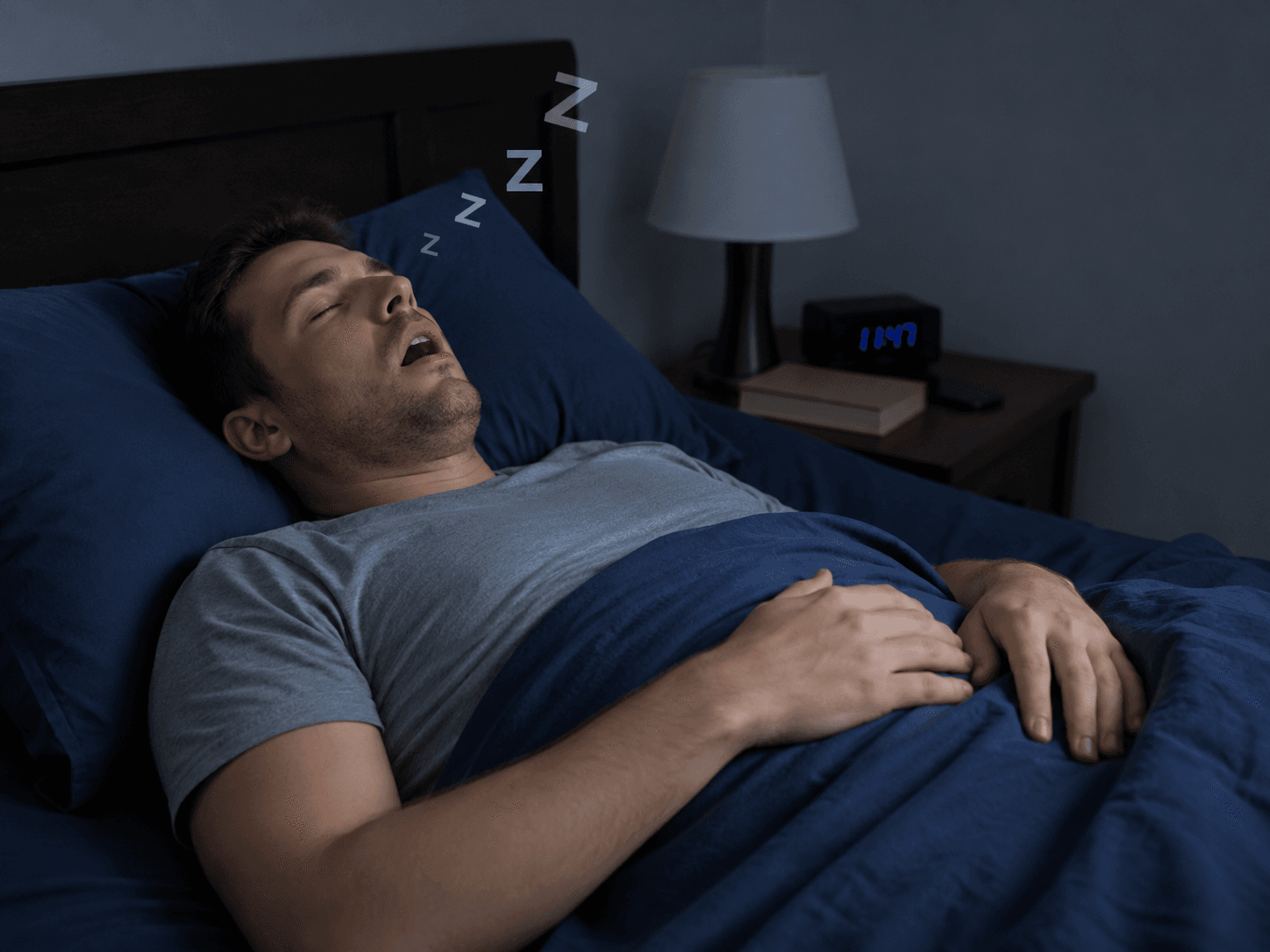
If your snoring follows a clear pattern, loud and obvious when you sleep on your back, quiet or absent when you sleep on your side, you have what’s called positional snoring. It’s one of the most common patterns of snoring, and it’s also one of the most reassuring patterns because it usually means the underlying mechanism is gravity-related airway narrowing rather than something more structural. The position is doing most of the work; change the position, change the snore.
The flip side: positional snoring can also be positional sleep apnea, which is a different and more serious thing, wearing the same outer disguise. Loud snoring with pauses, gasping, or daytime sleepiness deserves evaluation by a doctor regardless of position. But for the large group of people whose only sleep complaint is “I snore on my back, and my partner is annoyed,” understanding the mechanism and the fixes makes a real difference.
This guide walks through why snoring happens disproportionately when you sleep supine, what increases the odds of positional snoring, the home interventions that actually work, and the signs that say “this is more than positional, see a doctor.”
Key Takeaways
- Back sleeping lets gravity pull the tongue, soft palate, and surrounding tissue toward the back of the throat, narrowing the airway and producing the vibration we hear as snoring.
- Side sleeping keeps these tissues better positioned and usually substantially reduces or eliminates positional snoring.
- Risk factors that increase back-sleeping snoring: weight, alcohol, sedatives, allergies, nasal congestion, and aging
- Positional snoring with breathing pauses, gasping, or daytime sleepiness can indicate positional sleep apnea and warrants medical evaluation.
The Mechanics: Why Back Sleeping Causes Snoring
Snoring is the sound of air flowing turbulently past soft tissues in the airway. The tissues vibrate, and the vibration produces the noise. The harder it is for air to get through, the more vibration, and generally the louder the snore.
Several anatomical structures contribute to the airway: the soft palate (the soft tissue at the back of the roof of your mouth), the uvula (the small projection hanging from the soft palate), the tongue, the tonsils, and the walls of the throat itself. When you’re awake and upright, gravity holds these tissues in their normal positions. When you sleep on your back, gravity pulls them all in the same direction: toward the back of the throat, where they can partially obstruct the airway.
The tongue is the biggest single contributor for most people. It’s a large, soft, gravity-affected structure. Lying on your back lets the tongue slide back into the throat, narrowing the space air has to travel through. The soft palate and uvula follow gravity in the same direction, contributing to the narrowing.
Sleep adds another factor: muscle tone decreases during sleep, especially during deeper sleep stages and REM. The same muscles that hold soft tissues in place while you’re awake relax during sleep, letting gravity do more work. Combine sleep-related muscle relaxation with back-sleeping gravity, and you have ideal conditions for snoring.
When you sleep on your side, gravity pulls the tongue and soft palate to the side rather than backward. The airway stays more open, less tissue vibrates, and snoring usually drops dramatically or disappears.
Why It’s Not Just About Position
Position is a major factor, but several other variables interact with it. Many people who don’t snore on their back in normal conditions start snoring after specific triggers.
Weight and neck circumference. Extra tissue around the neck and throat narrows the baseline airway. People with larger neck circumferences are more prone to snoring at any position, and the back-sleeping effect is amplified. Weight gain is one of the most common reasons new positional snoring develops in adults who didn’t snore before.
Alcohol. Alcohol relaxes muscles, including the muscles that hold the airway open. The relaxation makes back-sleeping snoring substantially worse and can convert quiet side-sleeping snoring into loud back-sleeping snoring. Many couples notice that snoring is dramatically worse after a few drinks.
Sedating medications. Sleep aids (especially over-the-counter ones containing diphenhydramine), some anti-anxiety medications, certain antidepressants, and other sedating drugs work similarly to alcohol. They relax the airway muscles along with everything else.
Allergies and nasal congestion. A blocked or partially blocked nose forces more air through the mouth and increases negative pressure in the airway, which pulls soft tissues inward and amplifies vibration. Allergy season often correlates with worse snoring.
Age. Muscle tone in the airway declines with age, and tissue laxity increases. The same person who didn’t snore at 30 may develop positional snoring at 50, even at the same weight.
Sleep deprivation. Counterintuitively, being short on sleep makes snoring worse. The body compensates for sleep debt with deeper sleep when given the chance, and deeper sleep means more muscle relaxation, which amplifies snoring.
Anatomical factors. A large tongue, enlarged tonsils, a long soft palate, a recessed jaw, or a deviated septum all narrow the baseline airway and increase the tendency to snore.
Most positional snorers have one or a few of these factors. Identifying which ones apply to you points toward the changes that will help most.
The Difference Between Positional Snoring and Sleep Apnea
This is the most important distinction in this whole topic. They look similar from the outside but matter very differently.
Simple positional snoring. Loud breathing sound while sleeping on the back, quiet or absent while sleeping on the side. Breathing is continuous; no long pauses. The person doesn’t wake up gasping. They usually wake feeling rested. Daytime sleepiness is normal or absent. Annoying, primarily a partner-disturbance issue, but not a medical concern in itself.
Positional obstructive sleep apnea. Snoring on the back, but with actual breathing interruptions. Witnessed pauses where the person stops breathing for 10 seconds or more, sometimes followed by a gasp or snort. Possible morning headache, dry mouth, sore throat. Often, daytime sleepiness, difficulty concentrating, and mood effects. Same positional pattern, but with the breathing actually stopping rather than just being noisy. Position dependence is one signal among several, which our guide puts in context.
The two can look identical from a partner’s perspective (“they snore on their back”), but represent very different physiologies. Positional sleep apnea isn’t rare; many cases of OSA are positional, meaning they occur primarily or only when the person sleeps on their back.
The way to tell the difference: a sleep study (in-lab or home test). A doctor can refer you for one if symptoms warrant.
Some signs that warrant evaluation rather than just trying positional fixes:
- Witnessed breathing pauses (a partner notices you stop breathing)
- Gasping or choking, awakening from sleep
- Morning headaches
- Excessive daytime sleepiness despite enough sleep
- Difficulty concentrating or memory issues
- High blood pressure that’s hard to control
- Loud, disruptive snoring that’s gotten worse over time
The home positional fixes below work for both simple positional snoring and milder positional OSA, but OSA generally needs medical management beyond positional change alone.
Home Interventions That Work
For simple positional snoring (and as a complement to medical treatment for positional OSA), several interventions help.
Side-sleeping training. The most effective intervention is sleeping on your side. The challenge is staying there once you fall asleep; most back-sleepers naturally roll back.
The “tennis ball trick” is the oldest positional therapy. Sew a tennis ball into the back of a sleep shirt; rolling onto your back creates immediate discomfort that prompts you to roll back to your side. It’s crude, but it works for some people.
Commercial positional therapy devices have improved on this concept. Some are worn shirts with built-in back bumps, some are vibrating belts that gently buzz when you roll supine, prompting a position change without fully waking. These are more comfortable than the tennis ball but require purchase. They work best for people who genuinely want side sleeping and just need help maintaining it.
Wedge pillows for back sleepers. If you really can’t sleep on your side, sleeping on your back with the upper body slightly elevated (about 30-45 degrees from horizontal) can reduce positional snoring. The elevation reduces the gravity pull on the tongue and soft palate. A foam wedge pillow accomplishes this; an adjustable bed accomplishes the same thing more comfortably. Our roundup of the best bed wedge pillows covers these options.
Anti-snoring pillows. Some pillow designs are specifically engineered to encourage side sleeping or to support back sleeping in a position that opens the airway. The evidence for these is mixed, but some users find them helpful.
Body pillows. Hugging a body pillow stabilizes you in a side-sleeping position and reduces rolling onto your back through the night. Less precise than positional therapy devices but more comfortable.
Lose weight if applicable. Weight loss substantially reduces snoring for people who are overweight. Even modest weight reduction often produces noticeable improvement. This is one of the most reliably effective interventions when applicable.
Reduce alcohol, especially in the evening. The relaxation effect of evening alcohol amplifies snoring through the night. Cutting back, or stopping a few hours before bed, often produces noticeable improvement.
Treat nasal congestion. If you have chronic nasal issues, addressing them (with allergy treatment, nasal saline rinses, treating sinus issues, etc.) can reduce snoring. Nasal strips that mechanically widen the nostrils help some people.
Sleep on a regular schedule. Consistent sleep timing reduces the deep-sleep rebound that amplifies snoring after sleep-deprived nights.
For broader behavioral approaches to reducing snoring beyond positional fixes, our guide on how to stop snoring naturally covers options that don’t require medical equipment.
📑 Recommended Read: The right pillow contributes meaningfully to positional snoring even when other factors aren’t easily changed. Check out our tested breakdown of the anti snoring pillows to find options designed to keep the airway open in side and back positions.
What Doesn’t Work or Isn’t Helpful
Several common ideas about snoring don’t hold up.
Sleeping with the mouth taped shut. Mouth taping has had a recent moment in popular wellness content. The theory is that mouth breathing worsens snoring (sometimes true) and that taping forces nasal breathing (sometimes works). But for people with significant nasal congestion or undiagnosed sleep apnea, mouth taping can be uncomfortable or unsafe. It’s not a first-line intervention and shouldn’t replace medical evaluation for serious snoring.
Mouth and throat exercises. There’s some evidence that specific oropharyngeal exercises can reduce mild snoring in some people. The evidence is preliminary, and the time commitment is real (daily exercise routine for weeks). May help some people, but not a quick fix.
Anti-snoring nose clips. Mixed evidence. May help some people with very specific issues. Not generally a reliable intervention.
Throat sprays are marketed as anti-snoring. Limited evidence of effectiveness. Most work by coating throat tissues to reduce vibration; the effect is usually mild and temporary.
“Just lose weight” advice without context. Weight loss helps many overweight snorers, but it’s not the answer for thin people who snore positionally, people whose snoring traces to anatomy or allergies, or people with sleep apnea who need medical treatment regardless of weight.
When to See a Doctor
The following warrants a medical evaluation rather than continuing to try home fixes:
- Witnessed breathing pauses during sleep
- Gasping or choking, awakening from sleep
- Daytime sleepiness that interferes with daily activities
- Morning headaches or sore throat
- High blood pressure that’s hard to control
- Worsening or new-onset snoring in adulthood
- Snoring with weight gain
- Restless sleep, frequent awakenings, or non-restorative sleep
- Loud, disruptive snoring that’s affecting your partner’s sleep or your own
- Family history of sleep apnea
A primary care doctor can assess symptoms and refer for a sleep study if appropriate. Sleep studies are now often done at home with portable equipment, making evaluation easier than it used to be. Diagnosis matters because treatment of sleep apnea (CPAP, oral appliances, or other approaches depending on severity) has substantial benefits beyond reducing snoring noise.
Common Mistakes and How to Avoid Them
Assuming snoring is just an annoyance, not a medical issue. Most snoring is just an annoyance. Some snoring is the audible sign of underlying sleep apnea, which has real health consequences. Loud snoring with any of the warning signs warrants evaluation, not just earplugs for your partner.
Trying every home remedy before getting evaluated. If you have warning signs, evaluate first. Home remedies after diagnosis work better than home remedies in place of diagnosis.
Relying on positional fixes for severe snoring. Positional therapy works well for simple positional snoring. It’s not a substitute for medical treatment of significant sleep apnea, even when the apnea is positional.
Not addressing alcohol. Many cases of “I started snoring suddenly” trace to increased evening drinking. Cutting alcohol is one of the highest-yield single interventions.
Ignoring nasal issues. Chronic nasal congestion or untreated allergies make snoring substantially worse. Addressing the nose often reduces the throat-level problem.
Letting weight gain go unaddressed. Weight gain is a common trigger for new-onset snoring. Addressing the weight often reverses it.
Buying every anti-snoring product on Amazon. Most don’t have strong evidence behind them. Focus on the interventions with real evidence (positional therapy, weight loss, alcohol reduction, treating nasal issues, and medical evaluation for warning signs).
Frequently Asked Questions
Why do I only snore when I’m on my back? Gravity. Back sleeping lets the tongue, soft palate, and surrounding tissues fall toward the back of the throat, narrowing the airway. Side sleeping keeps these tissues better positioned. The same person can have dramatically different airway dynamics in different positions.
Is positional snoring the same as sleep apnea? No. Simple positional snoring is just noisy breathing; the breath continues. Sleep apnea includes actual breathing interruptions. Both can have positional patterns, but they’re different conditions. Loud snoring with breathing pauses or gasping warrants evaluation for apnea.
Will sleeping on my side fix everything? Often, yes, for simple positional snoring. For positional sleep apnea, side sleeping helps but doesn’t necessarily fix it. For non-positional snoring, side sleeping helps less. The benefit depends on what’s actually driving your snoring.
Does losing weight stop snoring? For overweight people, often substantially. Weight loss reduces tissue volume around the airway and improves muscle tone. Even modest reductions can produce noticeable improvement. For thin people whose snoring traces to other causes, weight loss helps less.
Why is my snoring worse some nights than others? Multiple factors compound. The same person who snores quietly with good sleep, no alcohol, and clear sinuses can snore loudly with sleep deprivation, evening drinks, and allergy season congestion. Each factor contributes independently.
Are anti-snoring pillows worth it? Some are, some aren’t. Pillows that encourage side sleeping or that position the head to keep the airway open can help. Pillows that just claim to reduce snoring without a clear mechanism are usually marketing more than substance.
Should I worry about my partner’s loud snoring? Concerned-but-not-panicked is the right level. Most loud snoring isn’t dangerous. But loud snoring with breathing pauses, gasping, or daytime sleepiness is a flag for sleep apnea that has real health consequences if untreated. Encourage evaluation rather than just buying earplugs.
Recommended Reading
See also our guides to back stretcher vs neck traction, and waking up to pee reasons.
Related Reading
Explore more: chin straps snoring, Do Nasal Strips Work for Snoring? What Actually Helps, Do Chin Straps Work for Snoring? What Actually Helps, waking up to pee reasons, how to fall back asleep after waking up, Nasal Strips That Open Your Nose for Quieter and Easier Brea, mouth tape for snoring, and tired after coffee reasons. Also explore: earplugs for sleeping.
Sources
- National Institutes of Health. MedlinePlus health topics. https://medlineplus.gov/
- American Academy of Sleep Medicine. Clinical resources and practice guidelines. https://aasm.org/clinical-resources/practice-standards/practice-guidelines/
