
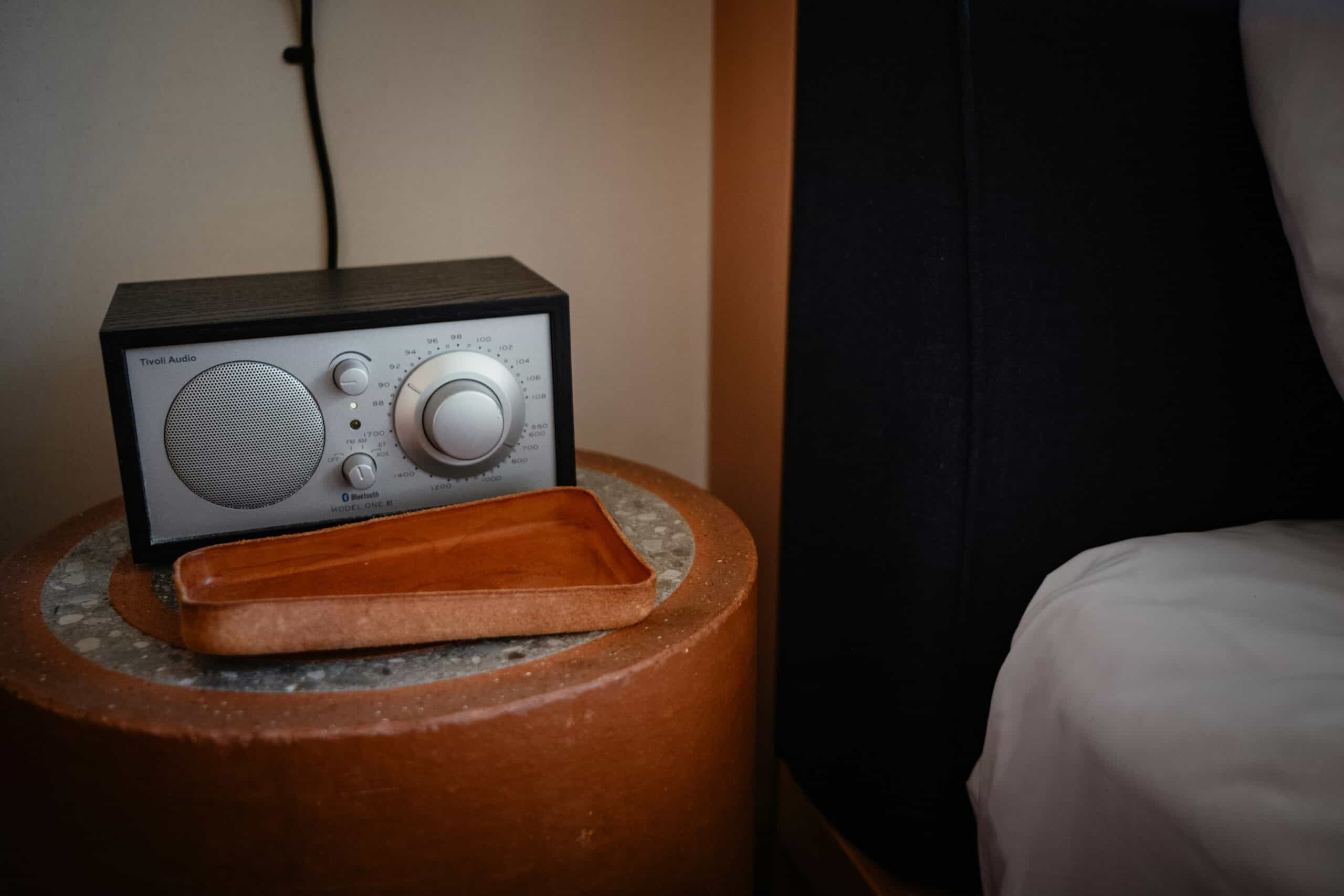
Anyone who shares a bed should lean toward sleep headphones, and anyone who sleeps alone should lean toward a bedside sound machine. That single fact settles the sound machine vs sleep headphones question faster than any feature list. A sound machine fills a room, so everyone in it has to agree.
Headphones put the sound inside one person’s ears and leave the room silent. That is the entire reason the category exists. Someone fighting noise coming through thin walls should answer the sleeping-alone question first.
Quick Verdict
Solo sleepers get more from a sound machine, since nothing sits on the head and nothing needs charging. Partnered sleepers get more from sleep headphones, since one person can mask noise without forcing it on anyone else. Travelers lean headphones, and side sleepers lean machine.
Key Takeaways
- A sound machine treats the room, while headphones treat one person. That drives every other tradeoff.
- Both mask noise instead of blocking it, raising the background so intrusions stand out less.
- Headphones win a shared bedroom, a named noise, and hotel nights.
- Sound machines win comfort, side sleeping, and upkeep. Battery life makes people quit headphones.
How We Compared
Six things actually change a night: partner agreement, comfort, coverage of one intrusion, side sleeping, upkeep, and travel. Those criteria come from how the products behave, not spec sheets.
One mechanical point sits underneath it. Neither option blocks sound the way a thick wall does. Both raise a steady background so an intrusion has less contrast, which is masking rather than blocking.
Sound Machine vs Sleep Headphones at a Glance
| Criterion | Sound machine | Sleep headphones |
|---|---|---|
| Who hears it | Whole room | Wearer only |
| Masks from | Across the room | Beside the ear |
| Comfort | Nothing worn | Something worn |
| Side sleeping | No ear pressure | Form factor decides |
| Power | Plugged in | Battery |
| Upkeep | Almost none | Charging and fit |
| Travel | Room dependent | Packs small |
Bedside Sound Machines, Pros and Cons
- PROS: Nothing touches the head, so sleeping position stays free.
- Stays plugged in, so no charging routine gets forgotten.
- Fills the room evenly, suiting restless sleepers.
- CONS: A partner who wants silence gets a vote.
- Sits farther away than the noise does, so close intrusions cut through.
Best for: solo sleepers wanting the same result every night. A shortlist of bedside units made for overnight use is the next step.
Who should skip it: anyone whose partner sleeps better in silence, or whose problem is hotels.
Check Price on AmazonSleep Headphones, Pros and Cons
- PROS: The sound reaches one person, so the room stays quiet.
- Sits closer to the ear than most intrusions do.
- Comes in three shapes: a fabric headband, shallow earbuds, and a pillow speaker.
- CONS: Battery life sets a hard limit, and a flat battery means silence.
- Fit matters, and small parts wander into the sheets.
Best for: partnered sleepers, frequent travelers, and anyone whose problem is one named noise.
Who should skip it: anyone who hates wearing things to bed, or forgets to charge.
Check Price on AmazonWhich Works Better When a Partner Disagrees About Noise?
Sleep headphones win, and it is not close. A room-filling machine is a shared decision, because the sound reaches both sides of the bed. When one person wants steady background noise and the other wants silence, no single volume setting on a bedside unit satisfies both people.
Headphones remove that negotiation entirely. One person hears the masking sound while the other hears an ordinary quiet room. The same logic runs in reverse, so a couple who both like background sound has no conflict to solve and can buy the machine instead.
Which Is More Comfortable to Actually Sleep In?
The sound machine wins, because nothing sits on the head at all. Comfort is the quiet reason many headphone purchases end up in a drawer by the second month. A device can work well and still lose to the simple fact that a sleeper keeps noticing it.
Headbands spread pressure better than earbuds do, and thinner drivers help further. Even so, something stays against the head for seven or eight hours a night. A bedside unit asks nothing of the body, which matters to anyone who already struggles to settle.
Which Masks a Specific Intrusive Noise Better?
Headphones win whenever the problem has a name, like a snoring partner or traffic on the street outside. Distance explains the whole advantage. Masking works on contrast, and the closer the masking sound sits to the ear, the smaller that contrast becomes.
A bedside machine has to compete across the room, while a snore starts only a few feet away. Headphones move the masking source to within an inch of the ear instead. That closeness also helps with internal noise, which a guide to sleeping when ringing keeps you awake covers further.
Which Suits a Side Sleeper?
The sound machine wins for side sleepers, since no hardware sits between the ear and the pillow. Most headphone designs press against the ear once a head rests on its side. That pressure builds slowly and then wakes people at the worst hour.
Honesty matters on this point. Headband styles exist precisely because of this problem, and they hold flat drivers in soft fabric rather than inside the ear canal. Many side sleepers do fine with them, though a flat driver is still thicker than nothing, so the machine keeps its edge.
Which Is Simpler to Live With?
The sound machine wins on upkeep by a wide margin, and the gap shows up every day. It plugs in, turns on, and behaves identically every single night. There is no charging, no fit to adjust, and no small part hiding somewhere in the sheets.
Headphones carry a routine instead. A battery that runs out at three in the morning ends the masking mid-night, which is the usual reason people abandon them. Anyone weighing simpler home options can also read the case for a fan versus a dedicated unit.
Which Suits Travel?
Sleep headphones win for travel, because they pack flat and work in any room. A hotel is a genuinely different problem from a bedroom. The noise is unfamiliar, the walls are thin, and the layout changes every trip.
A bedside machine depends on the room around it, so socket placement and room size change the result. At home that is fixable, since a permanent setup gets tuned once. Home fixes like sealing the gap under a bedroom door stack with a machine in a way they never will in a hotel.
Which Fits Your Situation
| If this is you | Better choice |
|---|---|
| Sleeping alone, minimal fuss | Sound machine |
| Partner wants silence | Sleep headphones |
| Side sleeper | Sound machine or headband |
| One named noise, like snoring | Sleep headphones |
| Must hear a child or alarm | Sound machine kept low |
| Frequent hotel nights | Sleep headphones |
| Forgets to charge things | Sound machine |
How to Choose Between Them
Start with the room, not the product. If another person sleeps there and wants quiet, headphones respect both preferences. If the bed belongs to one person, the machine wins on comfort.
Next, name the noise. A vague sense that the house is too loud favors a room-filling source, while a named intruder favors sound at the ear.
Then handle volume practically. Audio played beside the ear all night should stay low, which is one reason people prefer a room-filling source. Also worth knowing: what changes after the background sound stops.
The Verdict
Sleep headphones win the shared bedroom, the named intrusion, and the hotel room. Sound machines win comfort, side sleeping, and upkeep. Neither blocks noise, so decide by who else is in the room.
Solo sleepers should buy the machine and stop overthinking. Partnered sleepers and travelers should buy headphones, pick a headband for side sleeping, and charge nightly.
Recommended Reading
Compare the roundup of white noise units for bedrooms, then wearable audio made for overnight use. Anyone leaning toward silence should see the options for blocking noise outright.
Common Misconceptions
Sleep headphones block outside noise
They mask it. Soft fabric and thin drivers do little physical blocking, which is not the job. The advantage comes from sitting close to the ear.
Any looping audio works fine
Short loops are the problem. Once the ear catches the seam where a clip restarts, the repeat turns noticeable and irritating. Continuous audio avoids that pattern.
One fix handles the whole bedroom
Masking pairs with the physical side of the room. Window coverings help a little, though the truth about heavy curtains and sound is more limited than listings imply.
Sound Machine vs Sleep Headphones FAQ
Is the sound machine vs sleep headphones choice really about sleeping alone?
Sleeping alone is the strongest single signal, though not the only one. Solo sleepers face no objection to a room-filling source, so the machine wins on comfort. Shared beds create a conflict that only headphones resolve, and travel acts as a tiebreaker.
What are the three sleep headphone form factors?
Headbands hold flat drivers in soft fabric across the forehead. Shallow earbuds sit in the ear canal and stay low enough for some side sleeping. Pillow speakers skip the head entirely and tuck under the pillow, trading masking strength for comfort.
Do sleep headphones help with a snoring partner?
They help more than a bedside machine, because the masking sound is closer to the ear than the snore is. Masking works on contrast, so shortening that distance shrinks the gap. Loud snoring can still break through, so pair headphones with realistic expectations.
How loud should overnight sound be?
Keep it low enough to fade into the background within a minute or two. Audio played beside the ear all night deserves extra restraint, since no distance softens it. Many people prefer a room-filling source at the bedside for that reason alone.
Will either option stop someone hearing an alarm or a child?
Both can, so decide this before buying rather than after. Masking reduces contrast, so a quiet alert gets harder to notice. Anyone on call for a child, a doorbell, or an early alarm should keep levels low and add a vibrating alarm.
Does battery life really decide anything?
It decides whether headphones survive past the first few weeks. A battery that dies mid-night ends the masking at the worst possible moment, and that failure is the most common reason people quit. A plugged-in machine never has that problem.
Can both be used at the same time?
Yes, and some people layer them during unusual weeks. A machine handles the general room noise while headphones handle one specific intrusion. Most sleepers find that a single device is enough, so start with one and add the second only later.
