
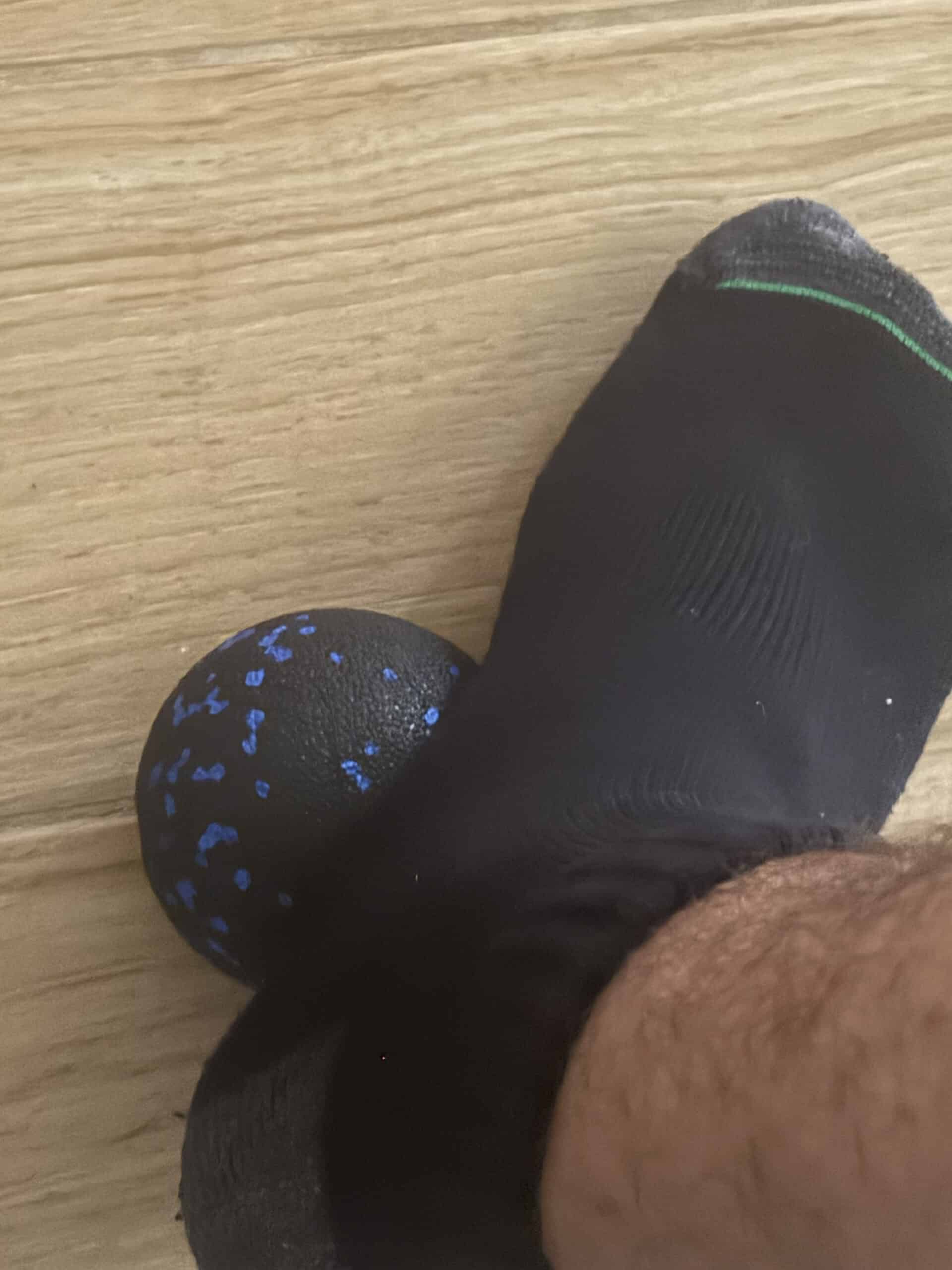
I have used the same firm massage ball for years, mostly underfoot, standing and pressing down into it. The thing I got wrong early was assuming more weight meant more benefit. Press a massage ball hard enough to feel a clear dull ache you can still breathe through calmly, and no harder, because the ball works through sustained moderate pressure rather than force.
Chasing sharp pain is the most common reason people give up on the tool. Our roundup of massage balls for trigger point relief covers the firmness options, and this covers what to do once you have one.
What the Right Pressure Actually Feels Like
The useful sensation is dull and spreading rather than sharp and pinpointed. It should register clearly, and it should not make you flinch.
Breathing is the practical test. If you are holding your breath, gritting your teeth, or bracing somewhere else in your body, the pressure has gone past where the muscle will let go.
Muscle releases when the nervous system reads the input as safe. Pressure that reads as threatening produces guarding instead, which is why forcing it works against you.
Time is the variable worth increasing, not weight. Staying on a spot longer at moderate pressure does more than stabbing at it harder.
Quick Answer
Aim for discomfort you would call noticeable but tolerable, where your breathing stays slow and the muscles around the spot stay loose. Hold rather than grind. If you flinch, tense elsewhere, or catch your breath, take weight off straight away by moving toward a wall or putting something soft under the ball.
The short version is that pressure is set by position, not by effort, and that the ball you choose changes how forgiving that position is. Sustained moderate contact beats brief hard contact almost every time. Bruising, numbness or tingling are stop signals rather than progress. And the areas people most want to work, the neck and the shoulder blades, are the ones that want the least.
| What you feel | What it means | What to do |
|---|---|---|
| Dull ache, easy breathing | Working range | Hold and stay there |
| Barely anything | Too little weight | Move floorward or go firmer |
| Sharp or hot pain | Past useful | Take weight off now |
| Tingling or numbness | On a nerve | Move off the spot entirely |
| Sore for days after | Overdone | Lighter and shorter next time |
Position Sets the Pressure, Not Your Arms
The floor gives you the most weight through the ball and the least control over it. Starting there is why so many first attempts feel brutal.
A wall turns pressure into a dial. Standing with the ball between your back and the wall lets you step closer or further out, and the change is gradual and immediate.
Cushioning does the same thing from underneath. A folded towel under the ball, or working on a mattress rather than a hard floor, takes the peak off without changing anything about the technique.
Limbs are easier to meter than the trunk. Sitting and resting a calf on the ball lets you add weight in small increments, which is the same graded approach our guide to using a foam roller takes.
How I Actually Use Mine
Mine is a firm single ball, dense foam rather than the rubber lacrosse type, and it carries no visible brand so I do not name it. It has held its firmness through years of use without softening or developing flat spots.
Standing and pressing into it underfoot is where it gets used most. That is also where I learned the pressure lesson, because a foot on a hard ball is the easiest way to concentrate far more force than you meant to.
What I do now is keep most of my weight on the other foot and let only some of it through the ball. Rolling slowly and stopping where it aches works better than bearing down and pushing through.
The ball stays planted while I do this, which matters more than it sounds. A ball that skids underfoot makes you tense up to control it, and tensing up is the opposite of the point.
I own a foam roller and a massage gun as well, and the three settled into different jobs without me planning it. The ball and the gun overlap more with each other than either does with the roller, since both work a specific spot while the roller covers broad areas. Our comparison of foam rollers against massage guns works through that split.
I treat all of this as a comfort tool rather than a treatment, and everything below about anatomy and caution is research rather than anything I can speak to personally.
Ball Firmness Changes How Forgiving It Is
A softer ball spreads pressure over a wider area, so it feels gentler at the same body weight. That is the sensible starting point for anyone new to this, or for working somewhere thin.
Hard balls concentrate force into a small point. They suit dense areas like glutes and feet, and they are unforgiving anywhere the muscle is shallow.
Size works alongside firmness. A larger ball contacts more tissue and feels milder, while a small one digs into one spot and is much harder to moderate.
Owning two firmnesses solves more than hunting for one perfect ball, and our roundup of recovery tools for bedtime tension covers where each fits.
Pressure by Body Area
Glutes and the upper back take the most weight comfortably. There is depth of muscle there, so the floor is a reasonable position and a firmer ball is manageable.
Feet tolerate a lot but reward restraint, which is the area I know best. Standing full weight on a hard ball concentrates force through a small patch of tissue, and keeping most of your weight on the other foot is the fix.
Calves and forearms want noticeably less. Both sit close to bone on one side, so floor pressure tends to pin the muscle against bone rather than work through it.
The neck and the area around the shoulder blade want the least of all. Use a wall, use a softer ball, and stay off the bony ridge, which our roundup of gear for neck and back tension covers in more detail.
Where to Be Careful
Bone gets nothing out of this. Rolling over the spine, the shoulder blade ridge, the kneecap or the hip bone hurts without releasing anything, so keep the ball on muscle.
Nerve paths deserve room. The inner upper arm, the outer knee, the front of the neck and the armpit all sit close to nerves, and tingling or numbness means move rather than press harder.
Fresh injury is not the place to start. Bruising, swelling or a recent strain calls for rest, and pain that keeps returning to one spot is worth raising with a doctor or physical therapist rather than working at it nightly.
Frequency follows the same logic as rolling. Little and often beats one punishing session, and our note on how often to foam roll applies here too.
Recommended Reading
See our guide to using a roller before bed, our roundup of muscle roller sticks for areas a ball cannot reach comfortably, and our roundup of massage guns if controlling your own body weight is the part you find hardest.
Massage Ball Pressure FAQ
How hard should you press a massage ball on a tight muscle?
Hard enough for a clear dull ache you can breathe through without clenching, which usually sits well below what people expect. If your breathing changes or you brace elsewhere, reduce the weight going through the ball until it settles.
Should it hurt?
It should be uncomfortable rather than painful. A dull spreading ache is the working sensation, while sharp, hot or stabbing pain means you are on bone, on a nerve, or simply pressing too hard.
How much weight should I put on it underfoot?
Less than your full body weight, which is the mistake most people make standing on one. Keep most of your weight on the other foot and let only part of it through the ball, then increase slowly if the ache stays comfortable.
Is a harder ball better for stubborn knots?
Usually not. A harder ball concentrates force rather than improving the release, and concentrated force is more likely to trigger guarding. Hold longer at moderate pressure before reaching for something firmer.
Why does it feel worse the next day?
Mild soreness after a first session is common, much like unfamiliar exercise. Soreness lasting for days, or visible bruising, means the pressure was too high and the next session should be lighter and shorter.
When should I see a professional instead?
If pain is sharp, persistent, spreading down a limb, or paired with numbness or weakness, see a doctor or physical therapist rather than working on it yourself. A massage ball is for ordinary muscular tension, not for working out what is causing it.
