
A mattress is awkward rather than heavy, which is why the usual approach of two people wrestling it down a hallway goes badly. It bends in the middle, it has nothing to grip, and it fills a doorway.
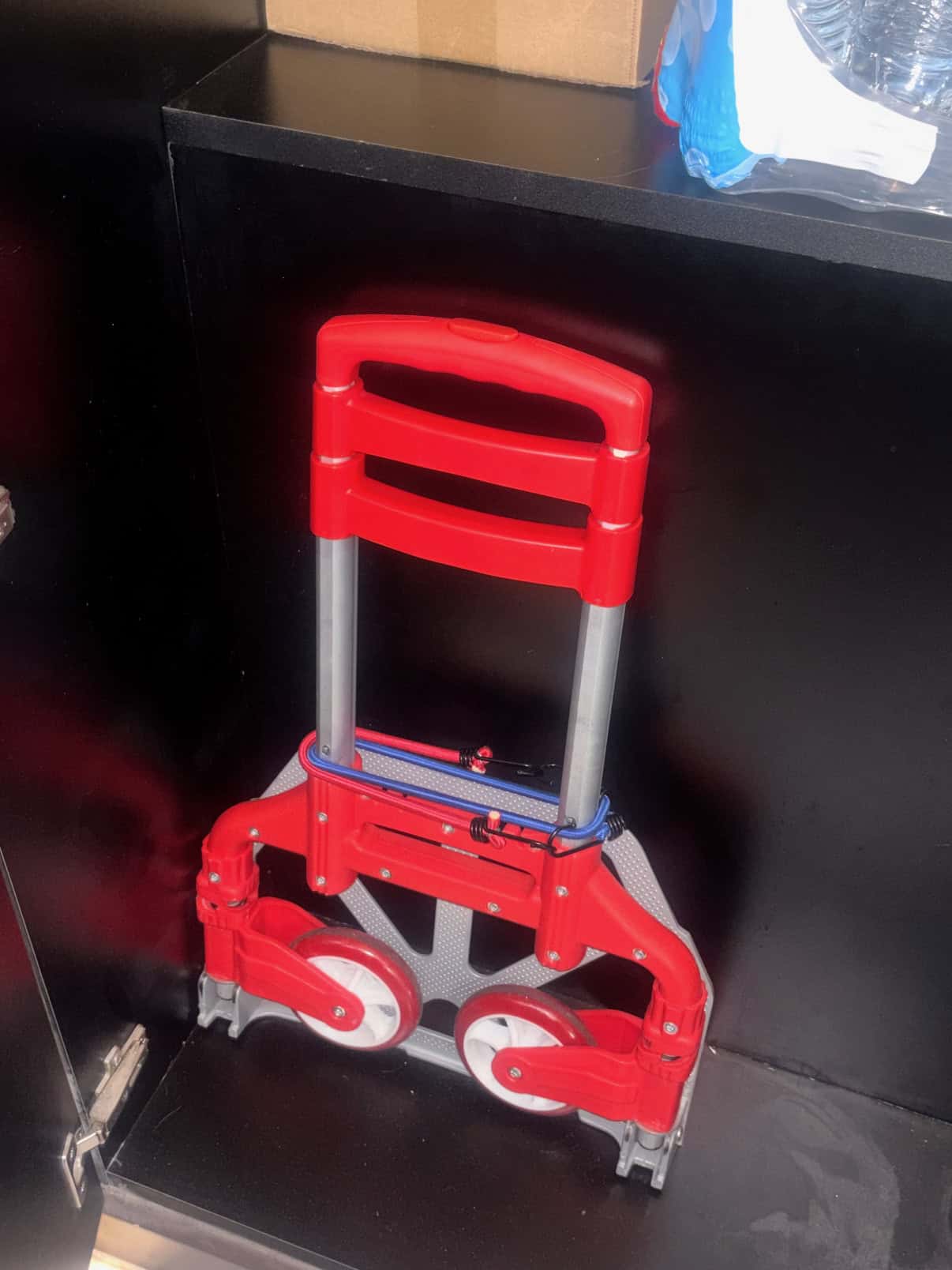
I moved mine bagged, on a dolly, using the straps that came with the bag to lift it on. Pushing beats carrying for almost the whole distance. Our roundup of mattress bags for moving covers the bag.
Quick Answer
Bag it, strap it, get it onto a dolly, and push. Carrying is the part to avoid rather than the part to do well.
What You Need
| Item | Why |
|---|---|
| Mattress bag | Keeps dirt off, gives a smoother surface |
| Straps | Something to grip, and holds shape |
| A dolly | Turns carrying into pushing |
| A second person | For the lift onto the dolly |
| A cleared route | The step everyone skips |
| Door measurements | Taken before starting, not during |
Bag It Before Anything Else
A bagged mattress stays clean against door frames and floors, which is the obvious reason.
The less obvious one is that plastic slides where fabric grips, so a bagged mattress moves against a wall or onto a dolly far more easily.
Bagging also stops the mattress from flopping open as it bends, since the plastic holds it in a rough shape.
Mine went into a heavy plastic bag before anything else happened, and that is the order I would keep. Our note on storing a mattress covers the same first step.
Straps Do Two Jobs
They give you something to hold
A mattress has no handles, and straps solve that directly.
They hold the shape
A strapped mattress bends less, which matters in a hallway.
Spacing matters
Mine sit a few feet apart, which leaves the middle to bulge.
They came with the bag
Most bag kits include them. Our roundup of moving straps and lifting aids covers the options.
The Dolly Is the Whole Trick
Carrying a mattress any real distance is where people get hurt and where furniture gets scratched, and a dolly removes almost all of it.
Getting it onto the dolly is still a lift, and it is the only lift in the whole process rather than a sustained carry.
After that it is pushing, which one person can manage on flat ground with the load balanced.
I moved mine bagged on a dolly rather than carrying it, and the difference is not marginal. Our roundup of furniture dollies covers which type.
Measure the Doorways First
A mattress that will not turn a corner is the failure that happens with the thing already in your hands and nowhere to put it down.
Doorway width, hallway width, and the turn between the two are the three measurements that actually matter here, and a diagonal turn always needs more clearance than either doorway on its own would suggest.
Stair landings are the genuine worst case of the lot, since a mattress has to pivot within a space designed only for people to turn around in.
Taking the measurements before starting costs five minutes and avoids the whole scenario.
Clearing the Route
Stepping over something while holding a mattress is exactly when a lift goes wrong, and the floor along the route is worth clearing entirely.
Doors need propping open properly rather than being held by somebody, since nobody involved has a spare hand for it.
Rugs slide underfoot and catch dolly wheels, and rolling them back first is quicker than dealing with either.
Anything breakable sitting at mattress height along a hallway should be moved out of the way before the mattress does, rather than afterward once it has already been knocked.
Compressing Before the Move
A foam mattress that has been vacuum compressed is a fundamentally different object to move, and the decision is worth making before rather than after.
Compressed, it becomes something that fits through doorways without pivoting and into a car without folding, which removes most of the difficulties at once.
The compression itself needs a shop vac rather than a household vacuum, since the volume of air involved stalls a normal one.
What it does not do is stay compressed on its own. The bag loses vacuum over time through the seam and any pinhole, so straps go on immediately while it is still down.
That only applies to foam. Innerspring and hybrid mattresses should not be compressed at all, and manufacturers generally say so directly. Our roundup of bunkie boards covers the compression step.
Getting It Into a Vehicle
Without a truck the options are a roof, an SUV with seats down, or a trailer, and each has real limits.
Roof transport requires proper tie-down running through the vehicle itself rather than simply around the mattress, since a mattress moving at speed generates genuine lift and rope over the top alone has failed for plenty of people.
Folding a mattress into an SUV is possible for foam and generally not advisable for innerspring, since the coils are not designed to bend.
A compressed and bagged foam mattress is the version that actually fits in a car, which is an argument for compressing before moving rather than after. Our roundup of choose a mattress covers compression.
Why Two People Beats One
The lift onto the dolly is the moment a second person matters, and it is brief rather than the whole job.
Two people lifting with straps can raise a mattress onto a platform without either of them bending badly.
One person can manage it alone, and doing so involves considerably more dragging and more awkward positions than is really sensible.
After the lift, one person pushing is generally enough on flat ground, so the second person is needed for minutes rather than the whole move.
Protecting It During the Move
Most mattress damage during a move happens at the edges rather than the surface, and the bag alone does not prevent all of it.
Dragging is the main cause. A mattress pulled across a floor or a driveway wears through plastic at the corner first, and then the fabric underneath.
Pushing it upright against a wall to get past a corner puts the whole weight on one edge, which is worth avoiding on anything with a defined edge structure.
Setting it down on a clean surface rather than a driveway matters more than it sounds, since grit works through plastic quickly under weight.
None of that is fragile handling. It is the difference between a mattress that arrives the same as it left and one that arrives with a torn bag and a scuffed corner. Our note on why mattresses sag covers longer-term damage.
Common Mistakes to Avoid
Carrying instead of rolling
A dolly turns the whole job into one lift plus pushing.
Skipping the bag
Plastic slides where fabric grips, and it keeps the mattress clean.
Measuring nothing beforehand
The corner that will not work is discovered with the mattress in your hands.
Folding an innerspring mattress
Coils are not designed to bend, and the damage is permanent.
Moving a Mattress FAQ
Can you move a mattress without a truck?
Yes. Bag it, strap it, get it onto a dolly, and push. The only genuine lift is getting it onto the dolly.
How did you move yours?
Bagged, on a dolly, using the straps that came with the bag kit to lift it on. Pushing rather than carrying for the distance.
Do I need two people?
For the lift onto the dolly, yes. After that one person pushing is generally fine on flat ground.
Will it fit in an SUV?
A compressed and bagged foam mattress usually will. An uncompressed one or anything with springs generally will not.
Can I fold a mattress?
Foam yes, within reason. Innerspring no, since the coils are not designed to bend and the damage does not recover.
What about the roof?
Possible with proper tie-down through the vehicle rather than just over the top. A mattress generates lift in wind, which catches people out.
What should I measure?
Doorway width, hallway width, and the turn between them. The diagonal turn needs more clearance than either doorway on its own.
Is the bag really necessary?
It keeps the mattress clean and it makes the whole thing slide rather than grip, which matters more than people expect.
