
Disclosure: RestRight is reader-supported. As an Amazon Associate, we earn from qualifying purchases made through links on this page, at no extra cost to you.
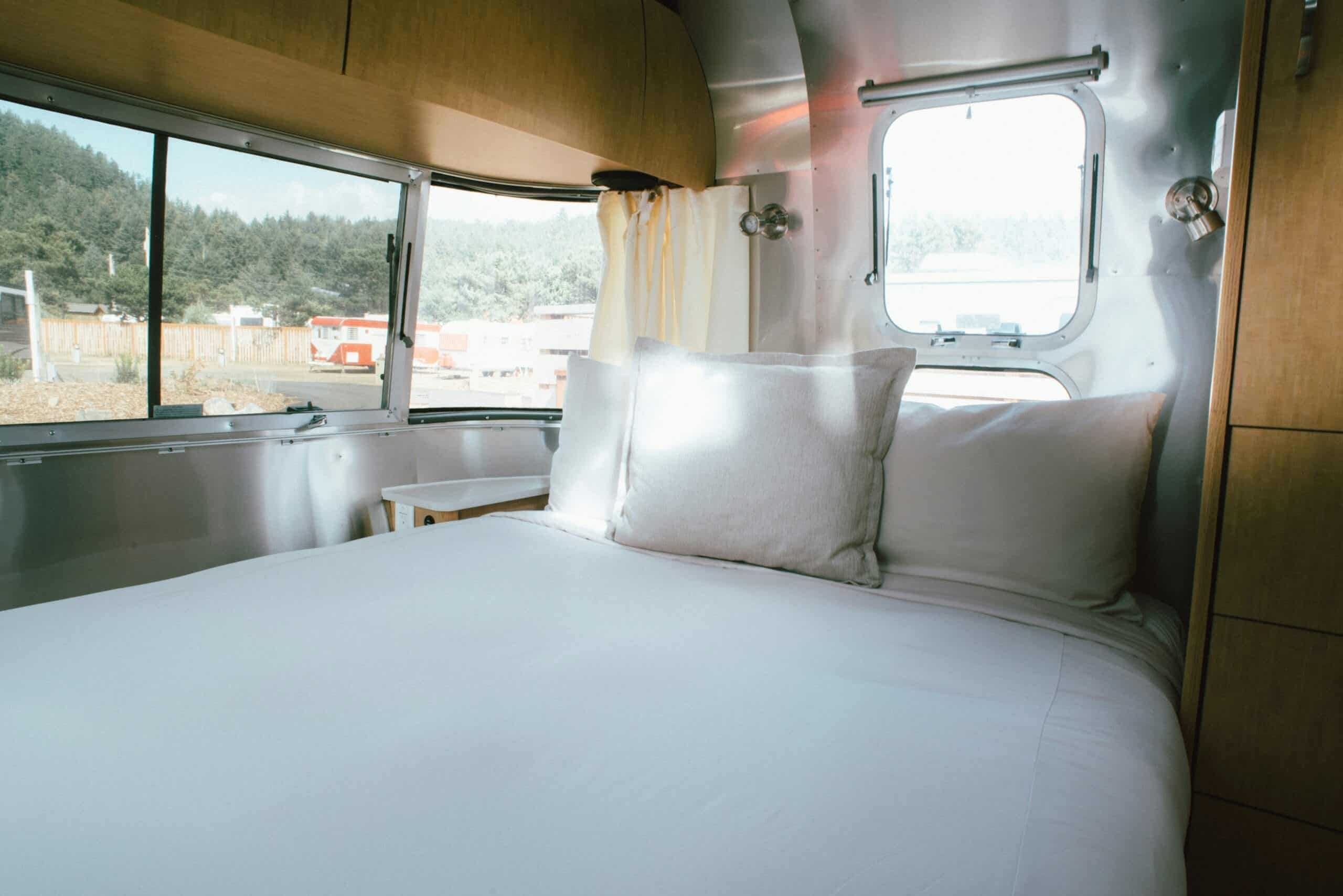
The mattress that came with your RV almost certainly wasn’t chosen with sleep quality in mind. RV manufacturers source the cheapest mattresses that meet basic dimensional requirements, treating them as filler items rather than meaningful purchase decisions. The result is the universal RV experience of waking up sore after a single night, then dreading every camping trip because the bed is the worst part of the entire vacation. Replacing the factory mattress is the single highest-ROI upgrade most RV owners can make.
This guide covers the five best mattresses for RV and camper use in 2026, evaluated on dimensional fit for non-standard RV sizes, durability under road vibration, comfort across sustained use, and the practical question of whether the mattress survives years of camping rather than needing replacement every season.
Why Standard Home Mattresses Don’t Work in RVs
The RV mattress problem comes down to dimensional and engineering differences that most buyers don’t realize until they’ve already made the wrong purchase.
RV mattress sizes don’t match home mattress sizes. An RV Queen runs 60 x 75 inches versus the home Queen at 60 x 80 inches. The RV King runs 72 x 75 inches versus the home King at 76 x 80 inches. RV Bunk sizes vary by manufacturer, with no standard. Buying a home Queen and forcing it into an RV Queen space produces fit problems that affect both sleep and the bed frame itself.
Beyond dimensions, home mattresses face engineering stresses that RVs produce uniquely. Road vibration during travel causes accelerated foam compression. Temperature extremes, RVs in summer can hit 120°F+ when sealed, and in winter can drop below freezing, degrade foam materials that home mattresses never experience. Humidity cycling from condensation produces conditions that promote mildew in mattresses not designed for the environment.
The result is that home mattresses placed in RVs typically fail within 1-2 years of regular use, while RV-specific mattresses designed for the conditions last 5-8 years. The price difference between the two categories is meaningful, but the lifespan difference more than compensates.
For broader sleep environment optimization in your RV, our guide on the best mattress protectors covers protective layers that matter even more in RV use due to humidity exposure, and the best pillows for travel addresses the pillow side of the RV sleep environment.
What to Look For in RV Mattresses
Dimensional Verification
Measure your existing mattress space carefully before buying. RV bed dimensions vary by manufacturer, model, and floor plan. Don’t assume your RV uses standard RV Queen, verify with actual measurements. The most common sizes are RV Queen (60×75), Short Queen (60×74), RV King (72×75), and various bunk and dinette dimensions, but custom dimensions appear in many RV configurations.
Account for slight clearance needs, most RV bed frames need 1/2 to 1 inch of clearance on at least two sides for proper fit. Mattresses that fill the space exactly often cause fitting problems against frame components.
Foam Density Matched to RV Use
Higher foam density resists the compression that RV use accelerates. Look for density ratings of at least 4 lb/ft³ for memory foam and 1.8 lb/ft³ for polyfoam in RV applications. Lower-density materials compress quickly under road vibration, producing the lumpy mattress problem that affects most factory RV mattresses within months.
For frequent travelers or full-time RVers, even higher density (5+ lb/ft³ for memory foam) extends usable life significantly. The price premium is real, but the lifespan extension justifies it for high-use scenarios.
Profile Height Constraints
RV bed frames typically accommodate 8-12 inch mattress profiles, with some configurations limiting to 6-10 inches. Tall mattresses prevent the bed lid from closing properly on RVs with under-bed storage. Verify the height limit for your specific RV before buying.
For RVs with lid-style under-bed storage, profile height is non-negotiable. For permanent bed configurations without lifted access, profile height matters less.
Temperature Tolerance
RV mattresses face temperature extremes that home mattresses don’t experience. Look for foams rated for the temperature range you’ll encounter. Most quality RV mattresses tolerate a 0-120°F operating range; lower-quality alternatives may degrade at the extremes.
For RVs in extreme climates, desert summers, mountain winters, verify the temperature rating specifically. The factory mattress that fails after one Arizona summer is the textbook case of inadequate temperature rating.
Antimicrobial Treatment
RV humidity cycling promotes bacterial and fungal growth more than home conditions do. Mattresses with antimicrobial treatments resist the conditions that produce odors and degradation. Look for treatments certified by recognized organizations rather than vague “antimicrobial” marketing claims.
Best Mattresses for RV and Camper Use in 2026: Our Top 5 Picks
1. Brooklyn Bedding Wanderlust, Best Overall
Best Overall RV Mattress | Price: ~$650 (Short Queen)
Check Price on AmazonBest for: Most RV owners across recreational and full-time use, buyers wanting RV-specific engineering without compromise, and owners willing to invest in a mattress that lasts.
Brooklyn Bedding designed the Wanderlust specifically for RV use rather than adapting a home mattress to fit RV dimensions. The construction uses a hybrid coil-and-foam approach with reinforced edges and a 9.5-inch profile that works in most RV bed configurations. The medium-firm support handles the body weight ranges of typical adult RVers without sagging under sustained use.
Sizing covers all common RV dimensions, including Short Queen, RV Queen, RV King, and various bunk sizes. The dimensional accuracy matters specifically for RV use, mattresses ordered in standard RV sizes from Brooklyn Bedding actually fit standard RV beds without the compromise that adapted home mattresses produce.
The 120-night sleep trial and 10-year warranty back the construction. The trial period matters more for RVs than home mattresses because you’ll evaluate the mattress across different camping conditions before committing fully. The warranty terms specifically include road vibration use without voiding coverage.
PROS:
- Designed specifically for RV use with appropriate engineering
- Hybrid construction balances support and comfort
- Sizing covers all common RV dimensions accurately
- 9.5-inch profile fits most RV bed configurations
- 120-night trial and 10-year warranty
CONS:
- Higher price than budget RV mattresses
- Heavier than all-foam alternatives during installation
- Hybrid construction less compressible for difficult installations
- May be too firm for some side sleepers
2. Tochta Choice Hybrid, Best Premium Pick
Best Premium RV Mattress | Price: ~$1,100 (Short Queen)
Check Price on AmazonBest for: Full-time RVers, owners with significant comfort priorities, buyers wanting custom dimensions for non-standard RV configurations.
Tochta specializes in custom RV mattresses with dimensional flexibility that standard manufacturers can’t match. The Choice Hybrid configuration combines pocketed coils with memory foam comfort layers in a construction approaching home mattress quality while maintaining RV-appropriate engineering.
The custom dimensions matter for RV owners with non-standard bed configurations. Older RVs, custom builds, and certain manufacturer models use dimensions that don’t match standard RV sizes. Tochta builds to your specific measurements rather than forcing you to compromise with off-the-shelf alternatives that don’t fit properly.
The trade-off is price. At $1,100 for the Short Queen, the Choice Hybrid costs nearly double that of the Brooklyn Bedding Wanderlust. For full-time RVers who sleep on their RV mattress 365 nights per year, the comfort upgrade often justifies the cost. For weekend recreational use, the additional spending is harder to justify.
PROS:
- Custom dimensional flexibility for non-standard RVs
- Hybrid construction approaches home mattress quality
- Premium materials throughout
- Strong customer service for custom configurations
- Excellent durability under sustained use
CONS:
- Highest price in our roundup
- Custom production extends the delivery time significantly
- Premium positioning unnecessary for occasional use
- Less established warranty support than mainstream brands
3. Zinus Memory Foam 8 Inch Sleep Master, Best Mid-Tier Pick
Best Mid-Tier RV Mattress | Price: ~$220 (Short Queen)
Check Price on AmazonBest for: Recreational RVers, buyers wanting genuine improvement over factory mattresses without premium pricing, occasional rather than full-time use.
The Zinus Memory Foam 8 Inch delivers a meaningful upgrade over factory RV mattresses at a fraction of premium pricing. The all-foam construction includes 2 inches of memory foam comfort layer over 6 inches of supportive base foam, producing medium-firm support that suits most RVers.
Sizing in Short Queen specifically matches RV dimensions. The 8-inch profile fits most RV bed configurations, including those with lift-style storage. The compressed shipping format makes installation easier in tight RV spaces, the mattress arrives rolled and expands within 24-72 hours after unboxing.
The trade-offs are durability and temperature performance. The Zinus uses lower-density foam than premium RV mattresses, producing a shorter usable life under sustained use. The temperature tolerance range is narrower, which affects performance in extreme climate camping. For weekend RV use over moderate camping seasons, these limitations matter less than for full-time or extreme-climate use.
PROS:
- Strong upgrade over factory RV mattresses
- Affordable mid-tier pricing
- Compressed shipping fits through narrow RV doors
- 8-inch profile works in most RV configurations
- CertiPUR-US certified materials
CONS:
- Lower foam density limits sustained-use durability
- Narrower temperature tolerance than premium options
- Less effective for full-time RV use
- All-foam construction sleeps warmer than hybrid alternatives
4. DynastyMattress CoolBreeze Gel Memory Foam RV, Best Cooling Pick
Best Cooling RV Mattress | Price: ~$450 (Short Queen)
Check Price on AmazonBest for: RVers in hot climates, buyers prioritizing cooling features, and owners whose RVs heat significantly during summer use.
DynastyMattress CoolBreeze uses gel-infused memory foam designed specifically for cooling performance. The gel layer absorbs and dissipates body heat across the surface rather than concentrating it under the sleeper. For RVers in hot climates, Arizona summers, Texas Gulf Coast humidity, Florida year-round, the cooling matters dramatically.
The 12-inch profile provides more cushioning than thinner alternatives but requires verification that your RV bed configuration accommodates the height. For RVs with lid-style under-bed storage, measure carefully, 12-inch profiles often exceed lid clearance.
Sizing covers RV-specific dimensions accurately. Short Queen at 60×75 inches fits standard RV Queen frames. The construction includes antimicrobial treatment that performs well in humidity-cycling RV environments.
PROS:
- Gel-infused memory foam for active cooling
- Strong performance in hot climates
- 12-inch profile provides premium cushioning
- Antimicrobial treatment for RV humidity
- Mid-tier pricing for cooling-specific design
CONS:
- 12-inch profile exceeds some RV bed configurations
- Gel cooling effectiveness diminishes over the years
- Heavier than thinner alternatives during installation
- Less effective in cold-weather camping
5. Linenspa 6 Inch Innerspring, Best Budget Pick
Best Budget RV Mattress | Price: ~$140 (Short Queen)
Check Price on AmazonBest for: Tight budgets, secondary RV bunks, occasional rather than primary RV use, buyers wanting basic improvement over factory mattresses without significant investment.
Linenspa delivers genuine RV mattress functionality at the lowest reasonable price point. The 6-inch innerspring construction with quilted top provides medium-firm support that beats factory RV mattresses in most cases. The thin profile fits even the most space-constrained RV bed configurations, including tight bunks.
The trade-offs match the price point. Innerspring construction transmits road vibration more directly than foam alternatives. The thin profile limits cushioning compared to thicker mattresses. Material quality is functional rather than premium across the components.
For RV bunks where kids sleep occasionally rather than full-time, the Linenspa works well. For primary adult RV beds where you’ll sleep 100+ nights per year, the upgrade to mid-tier or premium options produces better comfort and durability meaningfully.
PROS:
- Lowest price for genuine RV mattress quality
- Thin 6-inch profile fits constrained spaces
- Adequate for RV bunks and occasional use
- Wide retail availability
- Easy installation in tight RV configurations
CONS:
- Innerspring transmits road vibration directly
- Thin profile limits cushioning
- Shorter usable life than foam alternatives
- Less suitable for primary adult RV beds
How to Match a Mattress to Your RV Use Pattern
Different RV use patterns produce different mattress requirements.
For full-time RVers who sleep on their RV mattress 365 nights per year, the mattress investment scales with home mattress economics. The Tochta Choice Hybrid or Brooklyn Bedding Wanderlust produce comfort and durability that match home mattresses, justifying premium spend.
Recreational RVers who use their RV 30-60 nights per year benefit most from mid-tier pricing. The Brooklyn Bedding Wanderlust or DynastyMattress CoolBreeze deliver a meaningful upgrade over factory mattresses without requiring a premium investment for limited annual use.
Occasional RVers who use their RV under 20 nights per year can get away with budget options like the Zinus Memory Foam or even Linenspa Innerspring. The annual sleep nights don’t justify premium investment, and basic upgrade over factory mattresses already delivers significant comfort improvement.
For RV bunks where kids sleep occasionally, the Linenspa Innerspring works well. The thin profile fits constrained bunk spaces, and kids’ lighter weights produce less stress on the construction than adult use.
For RVers in extreme climates, prioritize temperature tolerance and cooling features. Hot climate RVers should look at the DynastyMattress CoolBreeze for active cooling. Cold climate RVers benefit from hybrid constructions like Brooklyn Bedding Wanderlust that maintain support across temperature extremes.
Quick Comparison Table
| Mattress | Best For | Price (Short Queen) | Profile | Construction |
|---|---|---|---|---|
| Brooklyn Bedding Wanderlust | Most RVers | ~$650 | 9.5″ | Hybrid coil-foam |
| Tochta Choice Hybrid | Full-time RVers | ~$1,100 | 10-12″ | Custom hybrid |
| Zinus Memory Foam | Recreational use | ~$220 | 8″ | All-foam |
| DynastyMattress CoolBreeze | Hot climates | ~$450 | 12″ | Gel memory foam |
| Linenspa Innerspring | Budget/bunks | ~$140 | 6″ | Innerspring |
Our Verdict
Most RV owners do best with Brooklyn Bedding Wanderlust. The combination of RV-specific engineering, hybrid construction, accurate dimensional sizing, and a 10-year warranty delivers the practical benefits at a price that matches typical RV use economics. Buy this unless you have specific reasons to choose differently.
Full-time RVers and owners with non-standard bed configurations should look at the Tochta Choice Hybrid. The custom dimensional flexibility and premium materials justify the higher cost when you’re sleeping on the mattress every night of the year.
Recreational RVers wanting a meaningful upgrade without premium spend benefit from Zinus Memory Foam 8 Inch. The mid-tier pricing matches occasional-use economics while delivering genuine improvement over factory RV mattresses.
RVers in hot climates should consider the DynastyMattress CoolBreeze Gel Memory Foam RV. The active cooling matters dramatically when your RV bed temperature regularly exceeds 80°F during summer use.
Budget-conscious buyers and those outfitting RV bunks for occasional kids’ use can pick up the Linenspa 6 Inch Innerspring without significant financial commitment. The basic functionality beats factory mattresses in most cases.
Pair the right mattress with a quality mattress protector for RV humidity exposure, appropriate pillows for travel-friendly use, and climate-appropriate bedding, and you have addressed the major contributors to comfortable RV sleep.
Frequently Asked Questions
What size mattress does an RV use?
RV mattress sizes don’t match home mattress sizes. An RV Queen runs 60×75 inches versus a home Queen at 60×80 inches. Also, the RV King runs 72×75 inches versus the Home King at 76×80 inches. RV Bunk sizes vary significantly by manufacturer. Always measure your existing mattress space before buying, don’t assume your RV uses any specific standard size without verification.
Can I use a regular mattress in an RV?
Generally, no, for two reasons. First, dimensional differences mean home mattresses don’t fit RV bed frames properly. Second, home mattresses aren’t engineered for the road vibration, temperature extremes, and humidity cycling that RVs produce, so they fail much faster than RV-specific mattresses. Custom-cut home mattresses can work but cost more than RV-specific alternatives that already match dimensions.
How long do RV mattresses last?
Quality RV mattresses last 5-8 years under typical recreational use, or 3-5 years under full-time RV use. Factory RV mattresses typically last 1-3 years before significant degradation. Higher-quality construction with appropriate foam density extends usable life proportionally. Replace when you see visible sagging, when comfort degrades meaningfully, or when the mattress develops persistent odors that washing the cover doesn’t address.
Can RV mattresses be machine-washed?
The mattress itself cannot be machine-washed. Most RV mattresses include removable covers that can be washed according to their care labels. For the mattress core, spot cleaning with mild detergent and air drying is the practical approach. Quality mattress protectors handle most contamination, allowing the mattress core to stay clean across years of use.
Are memory foam mattresses good for RVs?
Memory foam works well in RVs when the foam density is appropriate (4+ lb/ft³ for sustained RV use) and the temperature tolerance covers your typical camping conditions. Lower-density memory foam compresses quickly under road vibration. Higher-density alternatives last 5-8 years versus 1-3 years for budget memory foam in RV use. The price difference reflects the durability difference.
What’s the difference between RV Queen and Short Queen mattresses?
RV Queen is 60×75 inches; Short Queen is also 60×74 or 60×75 inches, depending on manufacturer terminology. The terms are often used interchangeably, but verify exact dimensions before ordering, some manufacturers use “Short Queen” to mean dimensions different from “RV Queen.” Always measure your bed frame and order based on actual dimensions rather than the name alone.
How do I install a new mattress in my RV?
Most RV mattresses arrive compressed in vacuum-sealed packaging, allowing them to fit through narrow RV doors. Cut the packaging carefully, once unsealed, the mattress expands rapidly. Allow 24-72 hours for full expansion before sleeping on it. The compressed shipping format is one of the practical advantages of foam mattresses over innerspring alternatives in RV applications.
Should I get a mattress topper instead of replacing my RV mattress?
Toppers can improve factory RV mattress comfort temporarily, but don’t address the underlying durability problems. Cheap factory mattresses still degrade quickly, even with toppers, and the topper sits on a deteriorating base. For meaningful long-term improvement, replacing the mattress entirely produces better results than topper-based approaches. Toppers make sense as short-term solutions while saving for replacement, not as permanent solutions.
Recommended Reading
See also our guides to mattresses college dorms, and trundle bed mattresses.
Related Reading
Explore more: mattresses for heavy people, mattresses under 1000, hybrid mattresses, memory foam mattresses, how long do mattresses last, mattresses for guest rooms, mattresses for kids, and mattresses for athletes and recovery.
