
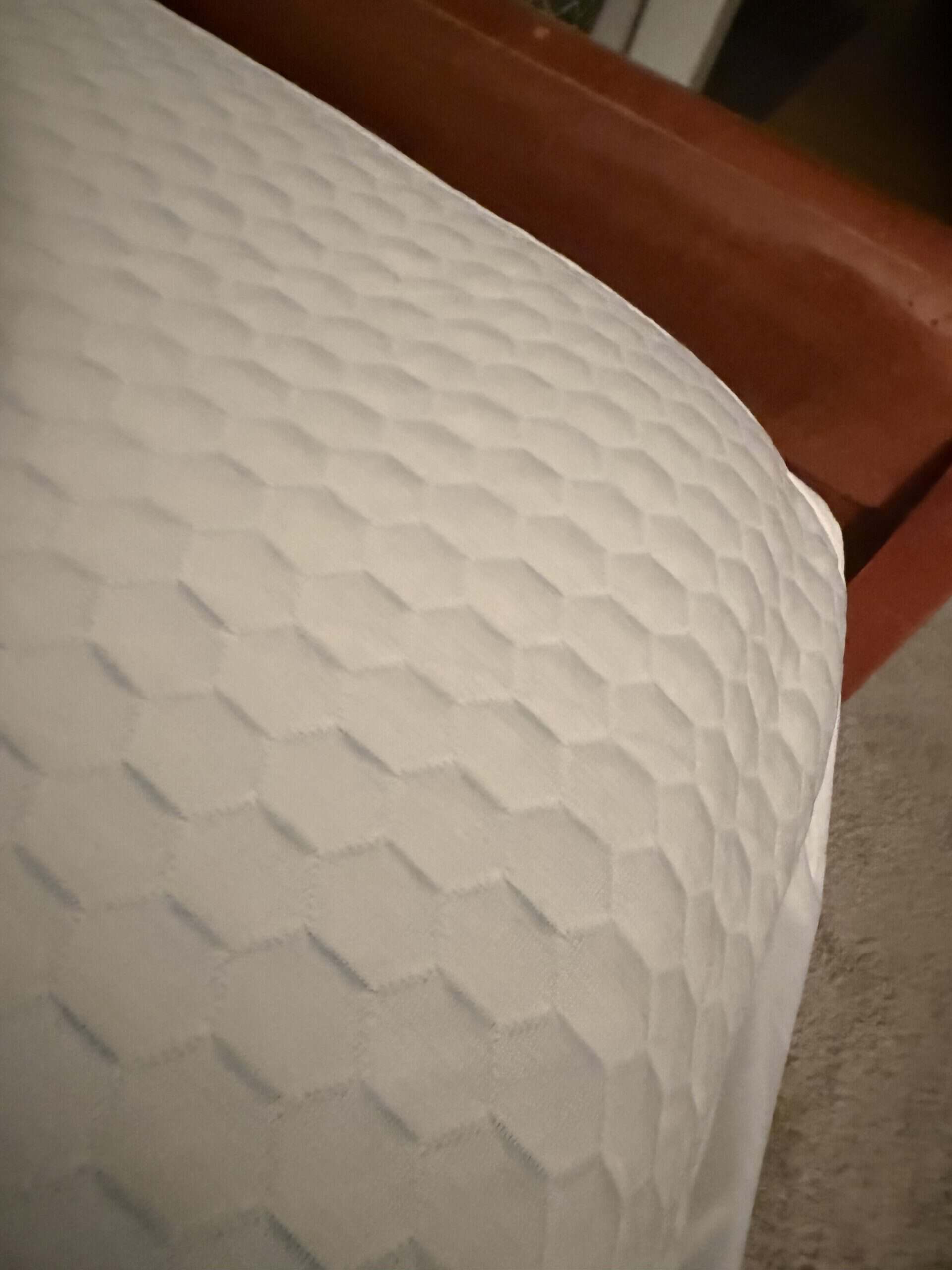
A mattress topper does not fix a sagging mattress, and it will only mask the dip for a while. The sag is a structural failure in the layers underneath, and a soft layer laid over it follows the same curve, which is why the relief fades within weeks. There is one narrow case where a topper is a reasonable stopgap, and it is worth knowing which side of that line you are on.
Quick Verdict
No. A topper conforms to the dip rather than bridging it, so the sag comes back through. It can buy a few months on a mattress you are already planning to replace. It cannot rescue one, and it will wreck the topper in the process.
Key Takeaways
- Toppers follow sags, they do not bridge them. Foam has no structural rigidity.
- Relief typically fades in weeks as the topper takes a permanent set.
- A sagging bed destroys a topper far faster than normal use does.
- Check the foundation first, since a broken slat mimics a sagging mattress exactly.
- The stopgap case is a bed you are already replacing on a known date.
Why a Topper Cannot Bridge a Dip
A topper is a comfort layer, not a support layer, and that distinction is the whole answer. Support comes from the coils or the dense foam core underneath. When that core fails, the surface drops, and anything laid on top drops with it.
Foam has no rigidity across a span. Lay three inches of it over a two-inch dip and you get three inches of foam in the shape of a two-inch dip. It feels better for a week or two because fresh foam is doing its comfort job, then it compresses into the shape it is being held in and you are back where you started, minus the money.
What Happens to the Topper
| Timeline | What you feel | What is happening |
|---|---|---|
| Week 1 | Noticeably better | Fresh foam cushioning the dip |
| Weeks 2 to 6 | Slowly reverting | Foam compressing into the sag |
| Month 2 onward | Sag is back | Topper has taken a permanent set |
| Result | Two problems | Sagging mattress plus a dead topper |
This is the part that makes it a bad trade rather than a neutral one. A topper on a sound mattress might give you three to five years. On a sagging one it can be finished in months, because it is being deformed constantly instead of compressed evenly.
Why the First Week Fools People
The reason this myth survives is that the first week genuinely feels better, and that is not imagination. Fresh foam has full loft and it is cushioning the edges of the dip, so the bed really is more comfortable for a few nights.
That window is also when reviews get written, which is why the category is full of positive early verdicts and quiet disappointment later. If you are reading someone recommending a topper for a sagging bed, the useful question is how long ago they bought it.
Check the Foundation Before Blaming the Mattress
Not every sag is the mattress. A broken slat, a bed frame missing a center support, or a worn box spring produces exactly the same dip, and no mattress or topper survives sitting on it.
Strip the bed and look underneath. Slats should be evenly spaced and unbroken, and a queen or king needs center support. This costs nothing and it is the one fix that genuinely works, which makes it worth ruling out before spending anything. The causes of sagging go into what to look for.
Rotating the mattress is the other free move. It will not undo a real sag, but on a bed that is only starting to settle it can even out the wear and delay the decision.
The One Case Where a Topper Makes Sense
If you have decided to replace the mattress and you need to get through the next few months, a topper is a reasonable stopgap. You are buying time, not a repair, and going in with that expectation is the difference between a sensible purchase and a disappointing one.
Even then, be realistic. Pick something dense rather than plush, since low-density foam will deform into the dip almost immediately. And accept that the topper is likely a casualty of this plan rather than something you will move onto the new bed. A budget topper is the honest choice for a job with a known end date.
If the sag is causing pain, that changes the calculus. Waiting out a bed that is hurting you costs more than the mattress does, and a topper aimed at back pain is still not a substitute for support that has failed.
How to Measure a Sag Properly
Warranty claims turn on a number, so measure before you assume. Strip the bed completely, since bedding fills the dip and hides it. Lay a straight edge across the mattress, a broom handle or a length of timber works, and measure from the underside of it down to the deepest point.
Do it with nothing on the bed and nobody lying on it. Manufacturers specify their threshold measured unloaded, commonly around an inch and a half, and a claim measured with a person on the mattress will be rejected. Photograph the tape against the straight edge while you are there, because that photo is what a claim usually needs.
What Actually Fixes It
Replacing the mattress. That is the unsatisfying answer, and it is the only one that addresses the cause rather than the symptom.
Check the warranty before you buy, because most manufacturers cover sagging past a specified depth, often an inch and a half, measured with nothing on the bed. Many people have a claim and never file it because they assume a dip is normal wear. It is worth measuring.
If you are replacing, sagging is worth treating as information. Foam beds that soften early, and coil beds that dip in the same spot, both point at what to avoid next time. Choosing the next mattress is easier when you know how the last one failed, and the firmness decision is often where it started.
Recommended Reading
Start with why mattresses sag, then how to choose the next one. If you are bridging a gap, see budget toppers and the selection framework. For what a topper genuinely does well, see hot-sleeper picks.
Toppers and Sagging Mattresses FAQ
Can a mattress topper fix a sagging mattress?
No. A topper is a comfort layer with no structural rigidity, so it conforms to the dip instead of bridging it. You get a few weeks of improvement while the foam is fresh, then it compresses into the same shape and the sag returns. The support underneath is what failed.
How long will a topper hide a sag?
Usually a few weeks to a couple of months. Fresh foam cushions the dip at first, then takes a permanent set in the deformed shape. The thicker and denser the topper, the longer the grace period, but the endpoint is the same because nothing is holding the foam up.
Will a thicker topper work better on a sagging bed?
It lasts marginally longer before giving in, but it does not change the outcome. Thickness adds cushioning, not support. A four-inch topper over a two-inch dip is still four inches of foam in the shape of a dip. Density delays it more than thickness does.
Is my sagging mattress or my bed frame the problem?
Check the frame first, because it is free. A broken slat, missing center support, or a worn box spring creates a dip identical to a failing mattress. Strip the bed and inspect underneath. If the foundation is at fault, fixing it solves the problem completely and saves you a mattress.
Does mattress sagging void a topper’s usefulness entirely?
For fixing the sag, yes. A topper still does its other jobs, so if the bed also sleeps hot, a cooling topper will still take the edge off that. It just will not level the surface. Do not buy one expecting both, because the sag will win.
Can I claim a warranty for a sagging mattress?
Often, yes. Most manufacturers cover sagging beyond a stated depth, commonly around an inch and a half, measured with the bed empty. Many people never check and assume a dip is normal wear. Measure it before buying a topper, since a valid claim is worth more than any stopgap.
Should I buy a topper or just replace the mattress?
Replace the mattress if it sags, and use a topper only to survive a known waiting period. A topper on a sagging bed produces two problems instead of one: the sag persists and the topper is destroyed early. If the mattress is sound and merely uncomfortable, a topper is a genuinely good option.
