
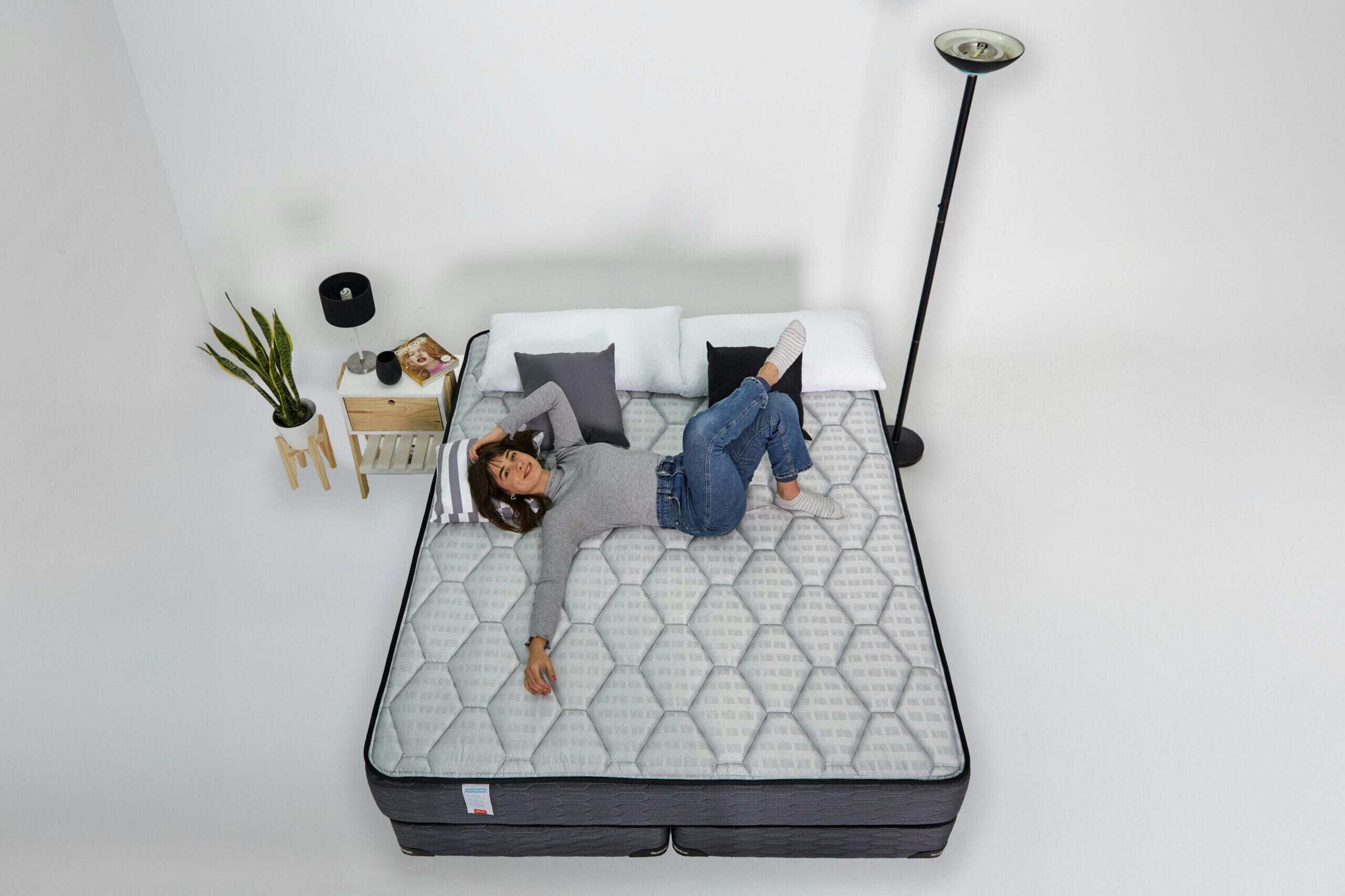
Two mattresses sit at the top of nearly every shortlist in 2026: memory foam and hybrid. The choice between them comes down to four variables that matter more than the dozens marketing emphasizes. Memory foam contours close to the body and isolates motion well, which is why it dominated the mattress-in-a-box era. Comparing options? See our best memory foam pillows roundup.
Hybrids combine a coil support core with foam comfort layers, which gives them stronger edge support, better airflow, and a more responsive feel without losing all the contouring memory foam fans like.
Neither type is universally better. The right answer depends on how you sleep, how hot you run, who shares the bed, and what your budget allows. A high-quality memory foam mattress will outperform a low-quality hybrid for most sleepers, and a high-quality hybrid will outperform a low-quality memory foam mattress for most sleepers. Build quality matters more than category, which is part of why this comparison gets oversimplified online.
Below is what separates the two in practice, who each type suits best, two strong picks per category at different price points, and the mistakes that send people back to the store a year later.
Last updated: May 30 2026
Key Takeaways
- Hybrids sleep cooler, have stronger edges, and feel more responsive; memory foam contours closer, isolates motion better, and runs warmer
- A 2003 randomized trial published in The Lancet found medium-firm mattresses outperform firm mattresses for chronic non-specific low back pain regardless of construction type
- Side sleepers with motion-sensitive partners lean memory foam; hot sleepers, combo sleepers, and couples who value edge support lean hybrid
- Mattresses sold direct-to-consumer often offer 100-365 night sleep trials, which is the only reliable way to know which type suits your body
Disclosure: RestRight is reader-supported. As an Amazon Associate, we earn from qualifying purchases made through links on this page, at no extra cost to you.
Quick Verdict
For most adults sleeping solo or with a partner who moves rarely, a medium-firm memory foam mattress is the simpler choice and the better value at the budget end. The Nectar Classic Memory Foam is a strong premium pick with conservative pricing for the category, and the Zinus Green Tea Memory Foam handles the budget end well for guest rooms and lighter sleepers. For hot sleepers, couples with weight differences, combo sleepers who shift positions through the night, or anyone with chronic back pain who needs stronger edge support, a hybrid earns its premium. The DreamCloud Hybrid is the all-around best pick at the premium end, and the Linenspa 10-Inch Hybrid covers the budget bracket without giving up coil construction.
Side-by-Side Comparison
| Category | Memory Foam | Hybrid |
|---|---|---|
| Body contouring | Excellent (close hug) | Good (lighter contour) |
| Motion isolation | Excellent | Good (depends on coil type) |
| Cooling and airflow | Below average (improving with gel and copper infusions) | Above average (coil airflow) |
| Edge support | Weak to moderate | Strong |
| Bounce and responsiveness | Low (slow response) | Moderate to high |
| Durability (years) | 6 to 8 average | 7 to 10 average |
| Off-gassing on unboxing | Common (dissipates in 24-72 hrs) | Less common |
| Typical price range (queen) | $300 to $2,000+ | $500 to $3,000+ |
| Best for back sleepers | Good | Excellent |
| Best for side sleepers | Excellent | Good (firmer feels less plush) |
| Best for stomach sleepers | Limited (sink risk) | Better (firmer support) |
How Memory Foam Mattresses Work
A memory foam mattress is built entirely from layers of polyurethane foam. The top layer is viscoelastic memory foam, which softens in response to body heat and pressure and conforms to the shape of the sleeper. Beneath that sits one or more transition layers that prevent the body from sinking through to the base, and a high-density polyfoam support core that gives the whole mattress its structural shape and durability.
The signature feel is what most people describe as a slow-motion hug. Heavier areas of the body (hips and shoulders) sink deeper into the surface, while lighter areas stay closer to the top. This redistributes pressure across the contact area rather than concentrating it on the bony parts that bear weight in any single position. Side sleepers benefit most from this because their shoulders and hips carry the bulk of their body weight against the mattress.
I slept on a Nectar memory foam mattress for several years. Contouring is noticeably different from any innerspring I’ve slept on before; the surface conforms to my side-sleeping position quickly and stays put through the night without the pressure-point digging that woke me up regularly on older mattresses. The trade-off I’ve noticed is heat, particularly in summer, which is consistent with what every memory foam mattress in my research and personal experience produces compared to coil-based alternatives.
How Hybrid Mattresses Work
A hybrid mattress combines a foam comfort system on top with a pocketed coil support core underneath. Foam layers can include memory foam, polyfoam, latex, or a manufacturer’s proprietary foam blend, which is why two hybrids labeled the same way can feel meaningfully different. Pocketed coils sit below those foam layers and provide most of the structural support, the airflow, and the bounce that separates a hybrid from an all-foam build.
Individual pocketed coils compress independently rather than transferring movement across the whole bed. Good pocketed-coil construction approaches memory foam’s motion isolation while keeping the cooling and edge support advantages of coil-based designs. Lower-quality hybrids using cheaper interconnected coil systems lose some of that motion isolation, which is one of the reasons not all hybrids are created equal.
The feel sits somewhere between traditional innerspring and pure memory foam. Hybrids respond faster when you shift position, push back more against pressure, and let air move through the construction rather than trapping it. Sleepers who don’t like the “stuck in foam” sensation often prefer hybrids for this reason alone.
Memory Foam: Strengths and Weaknesses
Where memory foam wins. Pressure relief at the shoulders and hips is hard to beat with any other construction. Motion isolation is excellent, which makes memory foam the right choice for couples where one partner moves restlessly during the night. Pricing at the budget end is meaningfully lower than budget hybrids because there are fewer materials and less manufacturing complexity. Off-gassing aside, the surface is silent (no creak, no spring noise).
Memory foam works particularly well for side sleepers, lighter-weight adults, motion-sensitive sleepers, and people whose primary complaint is pressure-point pain at the shoulder or hip. The medium-firm version of any reputable memory foam mattress also performs well in randomized trial evidence on chronic non-specific low back pain. Side sleepers building a full setup around a memory foam mattress will also want to pair it with a pillow that holds spinal alignment through the night. Our roundup of the best pillows for sciatica covers the side-sleeper options in more detail.
Where memory foam loses. Heat retention is the most consistent complaint. Foam traps body heat against the sleeper, and gel infusions, copper infusions, and perforated foam help but don’t eliminate the issue. Edge support is weaker than coil-based mattresses, which matters for couples who sleep close to the edge or for anyone who sits on the edge of the bed regularly. Stomach sleepers often sink too deep into the foam, which forces the lumbar spine into hyperextension and worsens back pain. Off-gassing on first unboxing is normal and dissipates within a few days, but some sleepers find it strong initially.
Hybrid: Strengths and Weaknesses
Where hybrids win. Temperature regulation is the clearest advantage. The coil layer allows air to move through the mattress, dissipating body heat rather than holding it against the sleeper. Edge support is stronger because the perimeter coils resist compression when weight sits at the edge. Responsiveness is higher, which matters for combo sleepers who change positions through the night and for anyone who finds the foam-stuck sensation uncomfortable. For sleepers whose partner complains about snoring, the firmer surface and responsive coil base also make it easier to maintain a side-sleeping position through the night, which is one of several practical changes covered in our guide to how to stop snoring naturally.
Hybrids also tend to last longer than memory foam mattresses on average. Coils don’t develop the body impressions that foam can over years of use, and the foam layer is thinner so it has less material to break down. The average lifespan estimates suggest 7 to 10 years for well-made hybrids versus 6 to 8 for memory foam.
Where hybrids lose. Motion isolation depends heavily on coil type. Cheap interconnected coils transmit movement across the bed, which can wake partners. Higher-quality pocketed-coil hybrids fix this but cost more. The contouring is lighter than memory foam, which means sleepers who want the close hug of foam will find hybrids less satisfying. Budget hybrids around the $300 price range often use thin foam comfort layers and basic coil systems, producing a mattress that feels more like a firm innerspring than a true hybrid. Price points start higher than memory foam, and the sweet spot for quality hybrids is around $1,000 to $1,500 queen.
The Best Memory Foam Mattresses in 2026
Nectar Classic Memory Foam
The Nectar Classic is a 12-inch all-foam mattress with a gel-infused memory foam top layer, dynamic transition layer, and high-density support base. Firmness sits at roughly 6 to 6.5 on the standard 1-to-10 scale, which lands in the medium-firm range that performs best in randomized trial evidence on chronic back pain. A quilted poly-blend cover handles the top surface with cooling features built into the top surface.
This is the mattress I slept on personally for years. The contouring is consistent year to year, the motion isolation is what you’d expect from a 12-inch all-foam build, and the heat issue is real but manageable with a cooling topper or a moisture-wicking sheet set. Nectar offers a 365-night sleep trial and a lifetime warranty, which is more generous than nearly any other brand at this price point. Queen pricing in 2026 generally falls in the $700 to $1,000 range depending on promotions.
The trade-offs to know: edge support is average for memory foam (which means weak compared to hybrids), and the bed feels noticeably warmer than coil-based mattresses in summer. Side sleepers and motion-sensitive couples will be happiest. Stomach sleepers will likely sink too deep.
Check Price on AmazonZinus Green Tea Memory Foam
The Zinus Green Tea is the budget memory foam standard that has held up to nearly a decade of online reviews. Construction is straightforward: green-tea-infused memory foam comfort layer, comfort foam transition, high-density base. Loft options run from 6 to 12 inches; the 10-inch and 12-inch versions are the more reasonable picks for adult use. Firmness is medium across the loft range, leaning slightly softer than the Nectar.
Where the Zinus earns its place is value. Queen pricing typically sits between $250 and $400, which is one-third the price of the Nectar for a mattress that performs well as a guest room bed, a kid’s room upgrade, or a budget primary bed for lighter sleepers. The trade-offs are predictable: thinner foam layers compress faster, the cover is basic, the lifespan is shorter (4 to 6 years versus 6 to 8 for higher-quality memory foam), and the trial period and warranty terms are less generous.
Zinus is the right pick when budget is the binding constraint and the alternative is either a worn-out hand-me-down or a low-quality innerspring. It’s not the right pick for a long-term primary mattress for adults over 180 pounds.
Check Price on AmazonThe Best Hybrid Mattresses in 2026
DreamCloud Premier Hybrid
The Premier is a 14-inch hybrid with a quilted cashmere-blend cover, gel memory foam comfort layers, and an individually wrapped pocketed coil support core. Firmness sits at roughly 6.5 on the 1-to-10 scale, which puts it in the same medium-firm range that performs well for back pain in trial evidence. Edge support is among the best in its price bracket because the perimeter coils are reinforced.
This is the all-around best hybrid pick for most adults who want the cooling and edge support of a coil system without the firm bounce of a traditional innerspring. Motion isolation is good (not memory-foam-tier, but close enough that most couples won’t notice partner movement). The cover sleeps cooler than most foam-only options, and the cashmere blend handles temperature regulation better than basic poly covers.
Queen pricing in 2026 typically runs $1,200 to $1,800 depending on promotions, which puts it in the premium hybrid bracket. A 365-night trial and lifetime warranty match what Nectar offers, generous for the category. The trade-off is weight: the 14-inch build is heavy and harder to move alone.
Check Price on AmazonLinenspa 10-Inch Hybrid
The Linenspa 10-Inch Hybrid is the budget option that still delivers actual hybrid construction: a memory foam comfort layer over individually wrapped pocketed coils, not the foam-over-interconnected-springs construction that some budget brands market as hybrid. Firmness is medium-firm, around 6 to 6.5, comparable to the more expensive picks above.
Queen pricing typically sits between $300 and $450, which is roughly one-quarter of the DreamCloud’s price for a mattress that gets the basics right. Edge support is fine but not premium. Motion isolation is acceptable. Cooling is meaningfully better than budget memory foam mattresses in the same price bracket because of the coil airflow. Cover material is basic poly knit.
Linenspa is the right pick when you want hybrid construction on a budget, particularly for a kid’s room, a guest room, or a starter primary mattress. Lifespan is shorter than the DreamCloud (5 to 7 years versus 7 to 10) and the warranty terms are tighter, but for the price the value is hard to argue with.
Check Price on AmazonWho Should Choose Memory Foam
Memory foam is the better fit when most of the following apply: you sleep primarily on your side and want pressure relief at the shoulders and hips; you share the bed with a partner who moves restlessly and you’re motion-sensitive; you don’t run particularly hot at night; you sleep alone or with a partner who stays in their lane of the bed (edge support won’t matter); you want the lower price point at the budget end; you prefer the close-hug contouring sensation; your primary complaint is pressure-point pain rather than airflow or temperature.
Lighter-weight adults (under 150 pounds) also tend to do better on memory foam than hybrid because the foam compresses adequately without needing the firmness coils provide. Heavier sleepers can do well on memory foam too, but they should look for higher-density foam (4 pounds per cubic foot or higher in the comfort layer) and at least 12-inch loft to avoid bottoming out against the support core.
Who Should Choose Hybrid
A hybrid is the better fit when most of the following apply: you run hot at night and have struggled with sweating or overheating on foam mattresses; you change positions frequently through the night and want a responsive surface; you share the bed with a partner of significantly different weight (the coil support handles weight differences better than foam); you sit on the edge of the bed regularly (getting dressed, putting on shoes, comforting a partner); your primary sleep position is on your back or stomach and you need firmer support to maintain spinal alignment; you have chronic back pain and want the firmness range that performs best in trial evidence (medium-firm) with the cooling of a coil-based design.
Heavier sleepers (over 200 pounds) generally do better on hybrids than on memory foam because the coil core provides the structural support that foam alone struggles to maintain at higher weights. Sleepers with mobility limitations also do better on hybrids because the bounce and edge support make it easier to get in and out of bed.
Common Mistakes When Choosing
Buying based on firmness rating alone. Two mattresses both rated “medium-firm” can feel different because of foam density, coil count, and comfort-layer thickness. Read multiple reviews and use the sleep trial; firmness ratings are an approximation, not a measurement.
Skipping the sleep trial. A mattress feels different in a 10-minute showroom test than it does over 30 nights of actual use. Trial periods exist because the body adapts and reveals problems that don’t show up in the first few nights. Buy from a retailer that offers at least a 100-night trial.
Confusing “memory foam” with “memory foam hybrid.” Some manufacturers label foam mattresses with a thin gel layer as “hybrid” even though there are no coils. A true hybrid has pocketed coils as the support core; if the product description doesn’t say so explicitly, it’s an all-foam mattress.
Ignoring body weight in the firmness calculation. Lighter sleepers should pick slightly softer firmness ratings than the spec suggests because they won’t compress the comfort layer as much. Heavier sleepers should pick slightly firmer ratings for the opposite reason. A medium-firm mattress feels firmer to a 130-pound side sleeper than it does to a 220-pound back sleeper.
Overspending on the wrong category. Buying a premium hybrid when your real issue is shoulder pressure means paying $1,500 to solve a problem a $700 memory foam mattress would have solved better. Match the category to the use case first, then choose the price tier within that category.
Underspending on the right category. Buying the cheapest hybrid you can find when you really need premium cooling and edge support produces a mattress that feels like a budget innerspring. If you’ve identified that hybrid is the right category for your sleep, the $500 increment from budget to mid-tier matters more than people expect.
Frequently Asked Questions
Which is better for back pain, memory foam or hybrid?
Both work well if the firmness lands in the medium-firm range that performs best in trial evidence for chronic non-specific low back pain. Memory foam is often the better pick when the primary issue is shoulder or hip pressure. A hybrid is often the better pick when the issue is lumbar support, edge stability, or when overheating disrupts sleep. The construction type matters less than the firmness and the build quality.
How long does a memory foam vs hybrid mattress last?
Average lifespans run 6 to 8 years for memory foam and 7 to 10 years for hybrid mattresses. Higher-quality builds at both ends of the range push toward the longer figures; budget builds compress and develop body impressions faster. The clearest sign of a worn-out mattress is sagging visible when the mattress is empty, or persistent body impressions that don’t recover.
Do hybrid mattresses really sleep cooler than memory foam?
Yes, on average and consistently. The coil layer allows air to circulate through the mattress, dissipating body heat rather than trapping it. Memory foam has improved with gel infusions, copper infusions, and perforated foam designs, but coil-based airflow remains a structural advantage that no foam technology has fully overcome. Hot sleepers nearly always do better on hybrids.
What’s the right firmness for a side sleeper?
Most side sleepers do best in the 5 to 6.5 firmness range on the standard 1-to-10 scale. Softer than 5 risks the hips and shoulders sinking too deep, which misaligns the spine. Firmer than 6.5 creates pressure points at the shoulder and hip. The medium and medium-firm range covers the sweet spot, which is one reason both memory foam and hybrid mattresses in that range work well for side sleepers.
Can I put a memory foam mattress on a hybrid foundation?
Yes. Memory foam works on slatted foundations, platform beds, and adjustable bases as long as the support surface is firm and even. Slats should be no more than 3 inches apart to prevent sagging between them. Memory foam does not require a box spring; a solid platform or close-slat foundation is the right setup. Box springs designed for innerspring mattresses can actually shorten the life of a memory foam mattress because they flex too much.
Related Reading
Explore more: why is my mattress sagging, how to store a mattress, mattress cleaners, memory foam vs gel memory foam mattress, memory foam vs latex mattress, memory foam vs down alternative pillow, king vs california king mattress, and hybrid vs latex mattress.
Recommended Reading
See also our guides to mattress cleaners, hybrid vs latex mattress, and memory foam vs gel memory foam mattress.
