
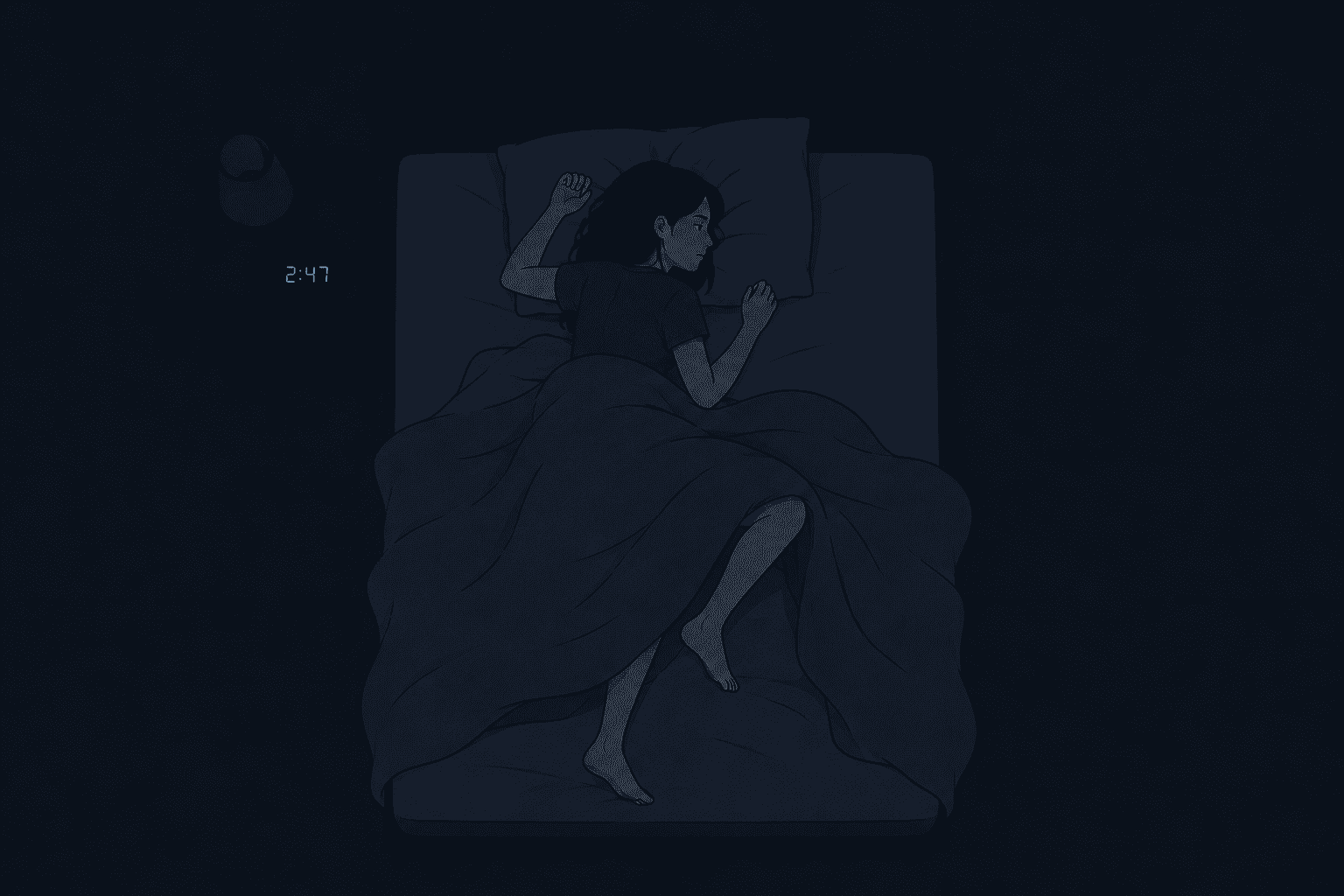
Why does sleep feel like a fight some nights, with no position ever quite right? Tossing and turning usually comes from one of two places: physical discomfort that keeps you searching for a better position, or a wired mind and body that will not settle. Learning how to stop tossing and turning at night means fixing the comfort side (mattress, temperature, pillow) and the settling side (a wind-down routine and what you do when sleep will not come) together.
Key Takeaways
- Restlessness usually traces to physical discomfort, a too-warm bed, or a mind that will not switch off.
- A cool, dark, quiet room removes the most common physical reasons you keep shifting.
- The right mattress and pillow for your sleep position cut down the search for a comfortable spot.
- If you cannot sleep, getting out of bed briefly works better than lying there frustrated.
- Persistent restlessness despite good habits is worth discussing with a clinician.
Why You Toss and Turn in the First Place
Tossing and turning is your body doing two things at once: hunting for physical comfort and failing to downshift into sleep. On the physical side, an unsupportive mattress, a too-warm room, or a pillow at the wrong height keeps you adjusting because no position feels settled. On the mental side, a racing mind keeps your nervous system in gear when it should be powering down.
Most restless nights mix both. You are a little too warm, the pillow is a little off, and your thoughts are still going, so you shift, and shift again. The fix is to remove the physical triggers and give your body a clear signal that the day is over.
The good news is that nearly every cause here is adjustable. If your problem is mostly the racing-mind side, our companion guide on how to fall asleep faster goes deeper on calming a busy brain.
Cool the Room Down
Temperature is the most common physical reason people thrash around at night. The body lowers its core temperature as part of falling asleep, and a cool sleep environment supports that drop, while a warm one fights it. A bedroom in the low-to-mid 60s Fahrenheit suits most adults as a starting point.
If you run hot, attack the heat where you lie. A cooling pillow keeps your head and neck from overheating, the spot people notice first, so the best cooling pillows for hot sleepers are a high-leverage upgrade. Our guide on how to cool a bedroom covers airflow, bedding, and thermostat tactics.
Breathable sheets and lighter bedding finish the job. Swapping a heavy comforter for a lighter layer often stops the kick-the-covers-off cycle that wakes you mid-shift.
Fix the Mattress and Pillow
If you keep flipping to find a comfortable spot, the surface under you is suspect. A mattress that sags or pushes back too hard creates pressure points, and your body responds by constantly repositioning to relieve them. The right firmness for your weight and sleep position lets you settle and stay.
Side sleepers in particular need a surface that cushions the shoulder and hip, which is why a bed suited to side sleeping reduces the toss-and-turn search. See our picks for the best mattresses for side sleepers, and if a new mattress is out of reach, a mattress topper under 100 dollars can rescue a too-firm or worn bed cheaply.
Pillow height matters as much as the mattress. A pillow that holds your head in line with your spine keeps your neck neutral, so you stop adjusting to relieve a kinked angle. Side sleepers usually need more loft, and a topper sized for side sleepers pairs well with the right pillow.
Build a Wind-Down Routine
Your body settles faster when it gets a consistent signal that sleep is coming. General sleep-hygiene guidance points to a regular schedule, dimmer light in the evening, and limiting screens and stimulants before bed as the core of a good routine. The aim is to arrive in bed already downshifting, not still wound up.
Pick a short, repeatable pre-bed sequence and keep it. Dim the lights, set the room cool and dark, and do something low-key like reading or light stretching for the last stretch of the evening. Doing the same wind-down nightly trains your body to associate it with sleep.
Keep stimulants and heavy meals away from bedtime, and put screens down before you get in. Bright screens and late caffeine both keep the nervous system alert when you are trying to power it down.
Recommended Reading
What to Do When You Just Cannot Sleep
Lying in bed frustrated is its own trap. The more you associate your bed with struggling to sleep, the harder settling becomes. Behavioral sleep medicine addresses this directly: stimulus control therapy, a core component of cognitive behavioral therapy for insomnia in the AASM clinical practice guideline, advises getting out of bed when you cannot sleep and returning only when drowsy.
In practice, if you have been lying awake and restless for a while, get up. Go to another room, keep the lights low, and do something calm and boring until you feel sleepy, then return to bed. This breaks the link between your bed and wakeful frustration.
Avoid checking the clock, which only adds pressure. And keep the bed for sleep, so your body keeps its strong association between lying down and drifting off. If you tend to wake and lie awake near morning, our piece on why you wake up before your alarm explains that pattern.
When to Look Deeper
If you have cooled the room, dialed in the mattress and pillow, built a routine, and still toss night after night, the cause may run deeper than habits. Ongoing restlessness can relate to stress, an uncomfortable evening leg sensation, or an underlying sleep issue that benefits from professional input. Anyone still restless at midnight can set a caffeine cutoff time and work backward from their own bedtime.
Multicomponent CBT-I, stimulus control, relaxation therapy, and sleep restriction are evidence-supported behavioral treatments for chronic insomnia, and a clinician or sleep specialist can guide them. There is no need for alarm in seeking help. Persistent trouble sleeping is common and treatable, and a professional can match the approach to your specific pattern.
Watch What You Eat and Drink Before Bed
What goes in during the evening shows up as restlessness at night. Caffeine lingers in the body for hours, so an afternoon coffee can still be working against you at bedtime and keep you shifting around. Cutting off caffeine well before evening removes one common, fixable cause of a restless night.
Alcohol is the sneaky one. A nightcap can make you drowsy at first, then fragments sleep later as it wears off, which is exactly the tossing pattern you are trying to break. Heavy or spicy meals close to bedtime add discomfort and reflux that keep the body unsettled.
The fix is gentle timing, not strict rules. Lighter evening meals, water earlier rather than a large glass at lights-out, and an earlier caffeine cutoff give the body a calmer baseline to fall asleep against, which pairs well with the steps in our guide on falling asleep faster.
Common Tossing-and-Turning Mistakes
A few habits quietly keep the restlessness going.
Keeping the bedroom too warm fights your body’s natural cooling and keeps you shifting. Cool the room and lighten the bedding first.
Lying in bed awake for a long stretch trains your brain to link the bed with frustration. Get up, reset, and return when sleepy instead.
Scrolling a phone to pass the restless minutes feeds your nervous system bright light and stimulation. Put screens away well before bed.
Blaming yourself for a worn-out mattress targets the wrong thing. If no position feels right, the surface is often the cause, not your willpower.
Watching the clock tick adds pressure that makes settling harder. Turn it away from view.
Pushing through months of restless nights without mentioning it to a clinician delays help that works. Persistent insomnia has effective, well-studied treatments.
Frequently Asked Questions
How do I stop tossing and turning at night?
Remove the physical triggers and calm the settling process. Cool the room to the low-to-mid 60s Fahrenheit, match your mattress and pillow to your sleep position, and build a consistent wind-down routine. If you cannot sleep after a while, get up briefly and return only when drowsy rather than lying there frustrated.
Why can’t I get comfortable in bed?
Constant repositioning usually means the surface is creating pressure points or your neck is at an awkward angle. A mattress that suits your weight and position, plus a pillow that keeps your head aligned with your spine, lets you settle. A too-warm bed adds to the restlessness.
Does room temperature affect tossing and turning?
Yes, a great deal. Your body lowers its core temperature to fall asleep, so a warm room works against you and keeps you shifting. Cooling the room, using a cooling pillow, and lightening the bedding are among the most effective fixes for a hot, restless sleeper.
Should I get out of bed if I can’t sleep?
If you have been lying awake and restless for a while, yes. Getting up, keeping the lights low, and doing something calm until you feel sleepy breaks the link between your bed and wakeful frustration. This is the core idea behind stimulus control in behavioral sleep treatment.
Why do I toss and turn even when I’m tired?
Being tired and being able to settle are different. A racing mind, a warm room, or an uncomfortable surface can keep you shifting despite real fatigue. Address the physical triggers and give your nervous system a clear wind-down signal so tiredness can turn into sleep.
Can my mattress cause restless sleep?
A sagging, worn, or poorly matched mattress creates pressure points that make you reposition all night. The right firmness for your body and sleep position lets you stay put. If a new mattress is not an option, a topper can restore comfort to an aging bed at low cost.
Will a cooling pillow really help me sleep?
For a hot sleeper, the head and neck are where overheating gets noticed first, so a cooling pillow can stop the shifting that heat causes there. It works best alongside a cool room and breathable bedding rather than on its own.
When should I see a doctor about restless sleep?
Consider a clinician if restlessness persists for weeks despite a cool room, a suitable mattress and pillow, and a steady routine, or if it comes with uncomfortable leg sensations, low mood, or daytime exhaustion. Effective, well-studied behavioral treatments for chronic insomnia exist, and a professional can match one to your pattern.
Why do I toss and turn even when I feel tired?
Feeling tired and being able to settle are two different things. A warm room, a racing mind, caffeine still in your system, or an uncomfortable mattress can keep your body restless despite real fatigue. The fix is usually to address the specific blocker, cooling the room, winding down, or adjusting your setup, rather than just trying harder to sleep.
Should I just stay in bed and wait it out?
If you have been lying there a while and sleep will not come, getting up briefly for something calm and dim, then returning when you feel sleepy, often works better than forcing it. Staying in bed frustrated can train your brain to associate the bed with being awake, which makes restless nights more likely.
Where can I learn more about healthy sleep habits?
The NIH’s Healthy Sleep Habits resource from the National Heart, Lung, and Blood Institute covers schedule, environment, and routine in clear, general terms.
This article is for general information and is not medical advice. Sleep varies by individual, and persistent insomnia or restless sleep requires evaluation by a qualified healthcare provider for diagnosis and treatment.
Related Reading
Explore more: stop overthinking at night, how to stop waking up at 3am, and how to stop grinding teeth at night.
Recommended Reading
See also our guides to how to stop waking up at 3am, and stop overthinking at night.
