
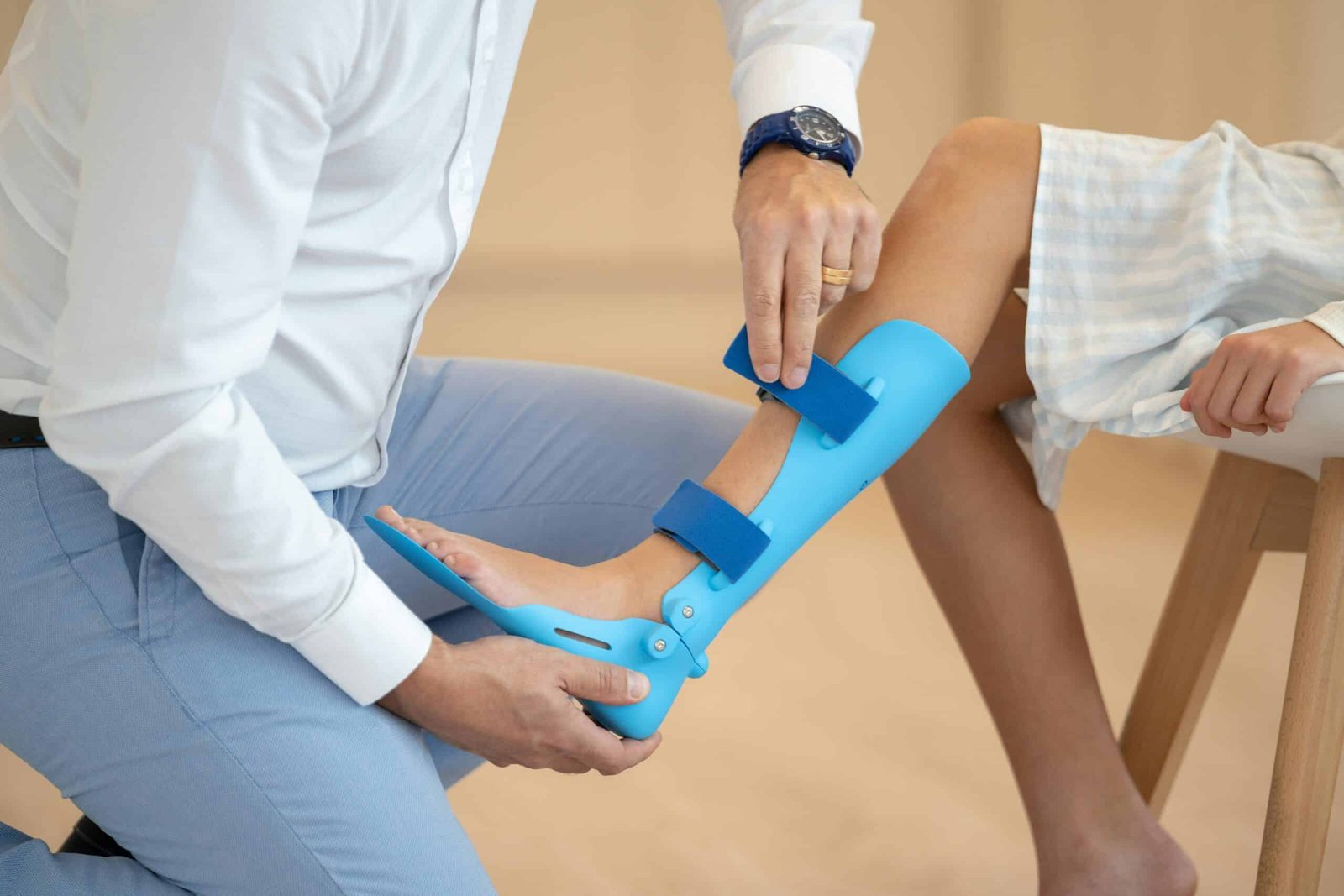
A brace worn in bed has a different job from one worn to play sport, so bulk and seam placement matter more than maximum rigidity, and a soft compression sleeve or a low-profile lace-up is what most people can actually sleep in. The best ankle braces for nighttime pain are the ones you do not take off at two in the morning. Support that gets removed overnight supports nothing.
Daytime braces are built to resist a rolling ankle under load. That means stiff panels, straps and a shoe to wear it in, none of which belongs under a duvet.
What a brace does is limit motion and apply compression. It does not treat whatever is causing the pain, which is why persistent or worsening ankle pain is a conversation with a clinician rather than a shopping problem.
Medical Disclaimer
This article is general information about product categories and is not medical advice. Ankle pain has many causes, some of which need assessment and treatment rather than support. Nothing here diagnoses a condition or claims any product treats one. Talk to a doctor or a physical therapist about pain that persists, worsens, follows an injury, or comes with swelling, numbness or an inability to bear weight.
Quick Verdict
A soft compression sleeve is what most people tolerate overnight, since there are no buckles to press into bedding. A low-profile lace-up with a figure-eight strap gives more support when you need it. Hinged and stirrup braces are daytime equipment, and a walking boot belongs to a clinician’s plan rather than a self-directed one.
Key Takeaways
- Comfort decides compliance, so the least bulky brace you can tolerate is usually the most useful one.
- Hard straps, buckles and hinges press into a mattress and tend to come off in the night.
- A brace limits motion and compresses; it does not address the underlying cause of pain.
- Compression that is too tight overnight is a problem, since you are not awake to notice numbness.
- Writing in Sports Health, Denton and colleagues reported that the clinicians they surveyed most often recommended lace-up braces with straps.
How We Picked These Ankle Braces
We organized these by how much motion each restricts and by how wearable each is lying down, because those two properties pull against each other. Profile, seam placement and adjustability were weighed next.
We have not worn or compared these, so nothing here is presented as a result from our own use, and no product on this page is claimed to relieve or treat anything.
On the question of which style clinicians favor, a 2015 survey published in Sports Health found lace-up braces with straps were the most commonly recommended type among the clinicians who responded. That paper is a descriptive survey with a low response rate rather than a trial of outcomes, so it tells you about professional preference rather than about effectiveness.
1. Lace-Up Braces With Figure-Eight Straps, Best Overall
Why It Stands Out
Laces let you set the tension across the whole foot rather than at one strap, and a figure-eight wrap adds resistance to the side-to-side motion that aggravates many ankles.
This is also the style the surveyed clinicians in that Sports Health paper recommended most often, which makes it a sensible default rather than a niche choice.
Worth Knowing
Laces and straps are the parts that press into a mattress, so a low-profile version matters if this is going to be worn in bed rather than in a shoe.
Lacing also takes longer than pulling on a sleeve, which is a real consideration at night. Pairing it with elevation often does more than tightening it further, and our roundup of wedge pillows for leg elevation covers that.
This suits people who want adjustable support and can tolerate the bulk. Skip it if anything with hardware wakes you. Best for: adjustable support, where you need more than compression alone.
Check Price on Amazon2. Soft Compression Sleeves, Best for Overnight Wear
Why It Stands Out
A knit sleeve has no hardware at all, so there is nothing to dig in and nothing to catch on bedding. For wearing through a whole night this is the most tolerable option here.
Even compression around the joint also suits people whose main overnight complaint is a feeling of swelling or stiffness rather than instability.
Worth Knowing
A sleeve restricts very little motion, so it is not the answer if the ankle actually gives way. It is comfort and compression rather than support.
Sizing matters more than with an adjustable brace, since you cannot loosen it. Anything that feels tight before you fall asleep will feel tighter later, and our roundup of compression socks for leg swelling covers the same consideration.
Buy this if the goal is getting through the night comfortably. Skip it for genuine instability. Best for: overnight comfort and light compression, with nothing to press in.
Check Price on Amazon3. Hinged and Stirrup Braces, Best Lateral Stability
Why It Stands Out
Rigid side panels or a hinge allow the ankle to flex up and down while strongly resisting the inward roll, which is the motion most often involved in a sprain.
For daytime use on an ankle that feels unreliable, this is the most protective style on the list.
Worth Knowing
These are bulky, and the rigid shells are genuinely uncomfortable to lie on. Most people will not sleep in one, and that is the honest assessment.
They are also designed to be worn inside a shoe, which changes the fit of the shoe. Treat this as a daytime brace and use something softer at night.
Choose this for daytime stability on an unstable ankle. Skip it for sleeping. Best for: lateral stability during the day, not overnight wear.
Check Price on Amazon4. Adjustable Wrap Braces, Best Easy On and Off
Why It Stands Out
A single wrap with hook-and-loop closure goes on in seconds without threading laces, which matters when you are half asleep and want it tighter or looser.
Being able to adjust tension in the dark without fully waking is an underrated property for anything worn overnight.
Worth Knowing
Hook-and-loop closures catch on sheets and lose grip as they collect lint, so they loosen over time and over washes.
The support is moderate, sitting between a sleeve and a lace-up. For stiffness that is worst on waking rather than during the night, our roundup of plantar fasciitis night splints addresses a different problem that is often confused with this one.
Buy this if adjusting it in the night is likely. Skip it if you want set-and-forget. Best for: quick adjustment, with moderate support.
Check Price on Amazon5. Walking Boots and Immobilizers, Best for Clinician-Directed Recovery
Why It Stands Out
A boot holds the ankle in a fixed position and takes load off it, which is what a significant injury sometimes requires.
Where one has been prescribed, there is nothing on this list that substitutes for it.
Worth Knowing
This is not a self-directed purchase. Immobilizing a joint has consequences, and whether, how long and in what position are clinical decisions rather than preferences.
Sleeping in a boot is also difficult and usually involves pillows to stop it dragging the leg into an awkward position. Our roundup of sleep products for surgical recovery covers that kind of positioning.
Use this only when a clinician has directed it. Skip it otherwise, entirely. Best for: following a treatment plan someone qualified has set.
Check Price on Amazon6. Ankle Supports With Gel or Air Padding, Best Targeted Cushioning
Why It Stands Out
Gel inserts or small air bladders sit over the bony prominences on either side of the ankle, which is where a plain sleeve presses hardest.
For people whose problem is pressure discomfort rather than instability, moving the padding to the right place is what makes a brace wearable.
Worth Knowing
Gel pads add thickness exactly where you may be lying on them, so this helps some sleepers and bothers others.
Gel also stiffens when cold and air bladders can lose pressure over time. Some people prefer separate cold application instead, which our roundup of cold therapy machines covers, used at the times a clinician advises rather than overnight.
Buy this if pressure points are what bother you. Skip it if extra bulk at the ankle is the problem. Best for: cushioning the bony sides of the ankle.
Check Price on AmazonAnkle Braces at a Glance
| Type | Motion Restricted | Wearable in Bed | Suits |
|---|---|---|---|
| Lace-up with figure-eight strap | Moderate to high | Sometimes, if low profile | Adjustable support |
| Soft compression sleeve | Minimal | Yes, most tolerable | Overnight comfort |
| Hinged or stirrup | High, lateral | No | Daytime instability |
| Adjustable wrap | Moderate | Usually | Adjusting during the night |
| Walking boot | Immobilizing | Only as directed | Clinician-led recovery |
| Gel or air padded support | Low to moderate | Varies by sleeper | Pressure point discomfort |
What to Look For in a Nighttime Ankle Brace
How bulky is it lying down
Hardware is what wakes people, so buckles, rigid shells and thick straps are the features to avoid for overnight wear. The brace that stays on all night does more than a more supportive one that comes off at two in the morning.
Can you adjust the tension easily
Compression feels different after an hour lying still, so being able to loosen it without fully waking is genuinely useful. Anything that feels snug when you get into bed is likely to feel tight later.
Where are the seams
Seams and stitched edges over the bony prominences on either side of the ankle are the usual source of overnight irritation. Flat-seam construction or well-placed padding is what prevents it.
Is a brace even the right answer
Support helps with the feeling of instability and with mild swelling, and it does nothing about an underlying cause. Pain that persists, worsens, follows a fall, or involves numbness or difficulty bearing weight needs assessment rather than another product.
Sleeve or Lace-Up
When the sleeve wins
Choose a sleeve for overnight wear, when the complaint is stiffness, aching or a sense of puffiness rather than the ankle giving way. There is nothing to press in, which is what determines whether it is still on in the morning.
When the lace-up wins
Choose a lace-up when you want real adjustability and more resistance to side-to-side movement, accepting more bulk. It is the style the clinicians surveyed in that Sports Health paper recommended most often, though that reflects professional preference rather than measured outcomes.
Common Ankle Brace Mistakes to Avoid
Wearing a sports brace to bed
Stiff panels and buckles that work well inside a shoe are the things that press into a mattress. A brace designed for athletic use is usually the wrong tool for sleeping, regardless of how supportive it is.
Tightening it until the pain feels better
Compression that is comfortable awake can become too tight once you are still and asleep, and you will not be awake to notice numbness or tingling. Loose enough to sleep in is the right setting.
Using a brace instead of getting it looked at
A brace manages a symptom. Ongoing night pain in a joint is information worth taking to a doctor or physical therapist, particularly alongside the heat and cold questions covered in our guide to heating pads.
Recommended Reading
- Knee braces and sleeves for nighttime pain
- Wrist braces for wearing at night
- Non-slip socks for getting up in the night
Ankle Brace FAQ
What are the best ankle braces for nighttime pain?
A soft compression sleeve is the most wearable choice for a full night, because it has no hardware to press into the mattress. A low-profile lace-up with a figure-eight strap gives more support if the ankle feels unstable. Hinged braces and walking boots are daytime or clinician-directed equipment.
Should you sleep in an ankle brace
Some people find light compression overnight helps with stiffness and a feeling of swelling, and others find any brace disrupts sleep more than the pain does. Whether to wear one at night, and how tight, is worth asking a doctor or physical therapist rather than deciding by trial.
Can an ankle brace fix ankle pain
No. A brace limits motion and applies compression, which can make a joint feel more secure and manage some symptoms, and it does not address what is causing the pain. Persistent ankle pain needs a proper assessment to establish what is going on.
Which type of ankle brace is recommended most often
In a 2015 survey published in Sports Health, the clinicians who responded most commonly recommended lace-up braces with straps. That study surveyed professional preference rather than measuring outcomes, and it had a low response rate, so treat it as an indication of common practice rather than proof of what works best.
Do ankle braces weaken the ankle over time
It is a common concern and the evidence is not settled. The authors of that same Sports Health survey noted the evidence on whether bracing reduces ankle strength is insufficient and that long-term effects need further study. A physical therapist can advise on strengthening alongside any support.
How tight should a night brace be
Loose enough that it is comfortable when you are lying still, which is looser than feels right when you are standing up. Numbness, tingling, color changes or increased pain all mean it is too tight, and you will not be awake to notice them.
When should you see a doctor about ankle pain at night
If the pain persists or is getting worse, if it followed a fall or a twist, if the joint is swollen, hot or deformed, if you cannot put weight on it, or if you have numbness or tingling. Night pain that keeps waking you is itself a reason to get it assessed.
Sources
- Denton JM, Waldhelm A, Hacke JD, Gross MT. Clinician Recommendations and Perceptions of Factors Associated With Ankle Brace Use. Sports Health. 2015;7(3):267-269. https://pmc.ncbi.nlm.nih.gov/articles/PMC4482303
