
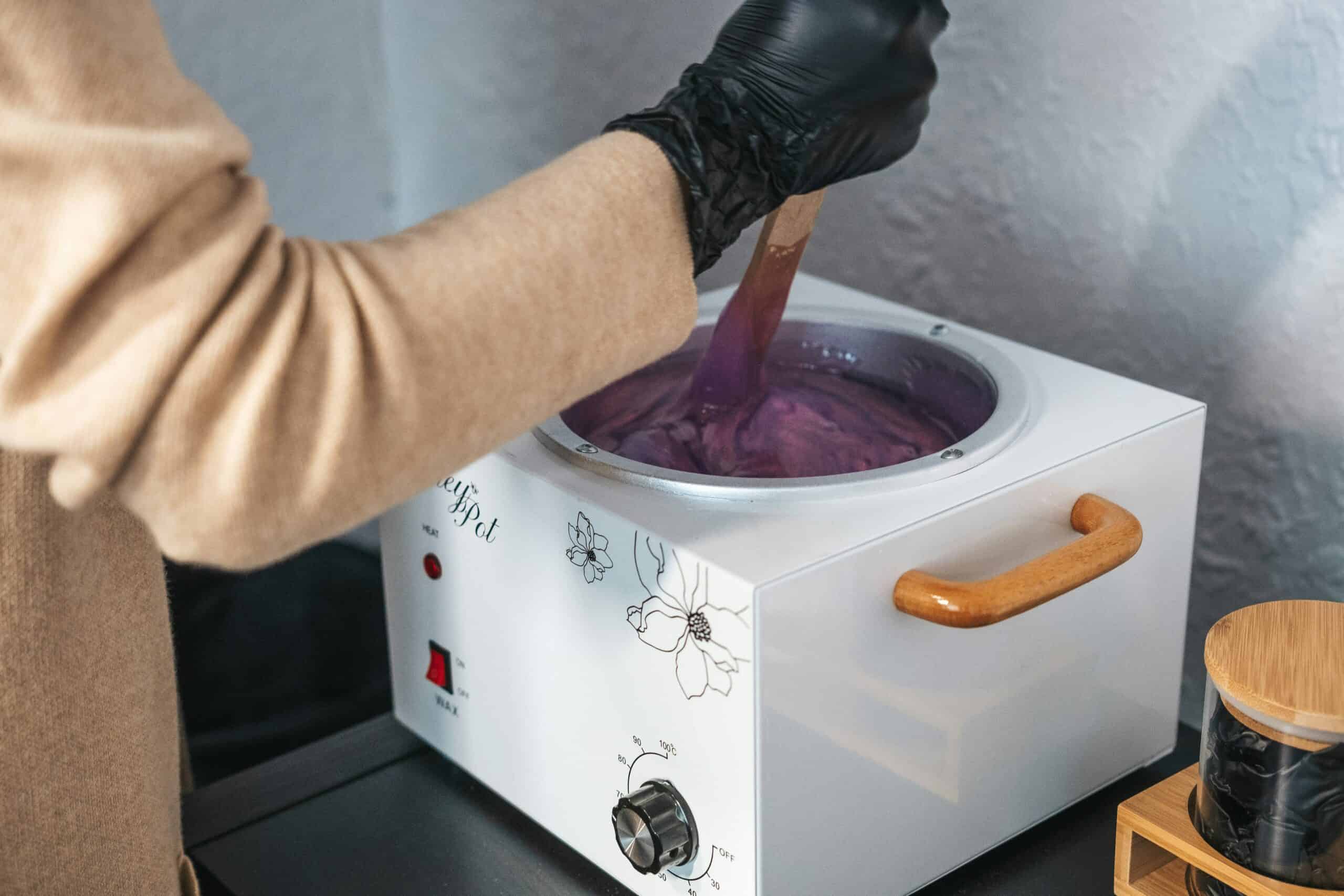
Stiff hands in the morning respond better to deep even warmth than to a heating pad laid across the knuckles, and the best paraffin wax baths for arthritis hands are the standard countertop units, because they hold a steady temperature and surround every joint at once. Wax reaches between the fingers in a way no wrap can.
The mechanism is simple. Melted wax carries a lot of heat and gives it up slowly as it sets.
That makes this a comfort routine rather than a quick fix, and it has real contraindications worth knowing before buying. Our guide to hand and finger splints for arthritis pain covers the support side of the same problem.
Medical Disclaimer
This article is research, not medical advice. Heat therapy is a comfort measure and does not treat arthritis. Do not use paraffin on broken skin, open wounds, a rash, or any area with reduced sensation or poor circulation, and see a doctor before starting if you have diabetes, neuropathy, peripheral vascular disease, or an active flare with heat and swelling in the joint.
The Short Version
A standard countertop bath suits most people and costs the least to run. Larger units matter if you want to treat both hands or a foot, digital temperature control is the upgrade worth paying for, and heated mitts without a bath are the low-commitment alternative. Budget for refill wax, because that is the ongoing cost nobody plans for.
Key Takeaways
- Wax holds and releases heat more slowly than water or a gel pack, which is the whole point.
- Capacity decides whether you can do both hands, or a foot, in one session.
- Temperature control matters more than wattage, since consistency is what makes it comfortable.
- Liners and mitts hold the heat in and keep cleanup manageable.
- Refill wax is a recurring purchase and blends differ in melting point and additives.
- Reduced sensation or poor circulation makes this a medical question before a shopping one.
How We Picked the Best Paraffin Wax Baths for Arthritis Hands
We compared bath types rather than named models, because the specific units rotate constantly while the design choices stay the same.
Each section covers one type, who it suits and where it falls short. We weighted four things: how precisely it holds temperature, how much it fits, how long it takes to melt a full load, and how safe it is to use unsupervised.
We have not published temperature settings or heat-up times. Those depend on wax volume, blend and ambient temperature, and quoting one unit’s figure as a category rule would mislead.
On the clinical side, the National Institute of Arthritis and Musculoskeletal and Skin Diseases lists heat application among the self-care approaches people use for joint stiffness, and MedlinePlus states that heat should be avoided on skin with reduced sensation. Both points matter more than any product choice here.
1. Standard Countertop Wax Baths, Best Overall
Why It Stands Out
An insulated tub with a heating element in the base, a thermostat, and a lid. You load solid wax, leave it to melt, and dip when it reaches temperature.
The thermostat is what separates these from improvised methods. It holds the wax warm enough to stay liquid and cool enough to dip a hand into safely.
Running cost is low as well. Once melted, the unit uses very little power to stay at temperature, so leaving it on through a morning routine is practical.
Worth Knowing
Initial melting is slow, often most of an hour from solid. Plan around that rather than expecting it on demand.
Capacity in the standard size fits one hand comfortably. Two hands in sequence works, two at once usually does not.
Best for anyone starting with paraffin and treating one or two joints. Our guide to relieving pain for better sleep covers where a warming routine fits in a day.
Check Price on Amazon2. Large Capacity Baths for Both Hands or a Foot, Best for Multiple Joints
Why It Stands Out
Wider, deeper tubs hold enough wax to take a foot or both hands together. For anyone whose arthritis is not confined to one joint, that changes the routine from serial to simultaneous.
Depth also matters for wrists and ankles. A shallow bath coats the fingers and leaves the joint above it untreated.
More wax also means a more stable temperature, because a large thermal mass cools more slowly when something cold goes in.
Worth Knowing
A bigger tub needs more wax, so the first fill and every refill costs more. Melting takes longer too.
These also take real counter space and are heavy once filled. Pick a spot and leave it there.
Best for multiple affected joints and for treating feet. If knees and hips are the issue instead, see our heating pads picks.
Check Price on Amazon3. Baths With Digital Temperature Control, Best Control
Why It Stands Out
A digital thermostat and a readout let you set and see the wax temperature rather than trusting a dial marked low and high.
That matters because comfort and safety both sit in a narrow band. Wax a little too warm is uncomfortable, and wax well above that is a burn risk.
Many of these also include a timer and a keep-warm mode, which makes an unattended melt safer to leave running.
Worth Knowing
Displayed temperature is not always the temperature at the surface you dip into. Stir before the first dip and check with a fingertip regardless of the readout.
Digital units cost more and add electronics that can fail. A simple thermostat is the more durable design.
Best for anyone who wants a verified temperature, especially with any sensitivity concern. Skip the premium if a basic unit already feels right.
Check Price on Amazon4. Paraffin Refill Blends, Best Consumable Choice
Why It Stands Out
Refill wax is sold in blocks and beads, with and without added mineral oil, and in scented and unscented versions. The blend changes how the wax behaves.
Mineral oil lowers the melting point and keeps the set wax flexible, which makes peeling it off far easier and gentler on skin.
Beads also melt faster and more evenly than solid blocks, which shortens the wait at the start of a session.
Worth Knowing
Scented blends are common and are a problem for anyone sensitive to fragrance. Unscented refills exist and are worth seeking out deliberately.
Wax can be remelted many times but picks up skin oils and debris. Replace it rather than topping up indefinitely.
Best bought alongside the unit, since the included wax runs out quickly. Our guide to sleeping better with chronic pain covers the wider routine.
Check Price on Amazon5. Liners, Mitts and Booties, Best Accessory Set
Why It Stands Out
Plastic liners go over the waxed hand and insulated mitts go over those, which holds the heat in for far longer than bare wax does.
Without a mitt the wax cools quickly and the session is short. With one the warmth lasts long enough to matter.
Liners also make removal clean. The wax peels off inside the bag rather than flaking across the room.
Worth Knowing
Liners are single use in practice, so they are a recurring cost. Reusable fabric mitts last for years.
A snug mitt on an already warm hand can feel oppressive. Loose insulated mitts are more comfortable for long sessions.
Best bought with the bath, because the routine does not work well without them. For hands that also need overnight support, see our wrist braces for carpal tunnel at night.
Check Price on Amazon6. Heated Paraffin Mitts Without a Bath, Best Simple Alternative
Why It Stands Out
These are electrically heated mitts, sometimes with a paraffin or gel insert, that warm the hands without melting anything.
Setup is immediate. There is no melting wait, no wax to manage and nothing to clean up afterward.
They are also far cheaper to start with, which makes them a sensible way to find out whether heat helps your hands at all.
Worth Knowing
The warmth is less even than a wax dip and does not reach between the fingers the same way. This is a lighter version of the idea.
Anything electrically heated and worn needs an automatic shutoff, especially if you might doze off in a chair.
Best as a low-commitment trial and for travel. Note the difference from the heated wraps in our pillows for arthritis sufferers cluster, which support rather than warm.
Check Price on AmazonParaffin Wax Baths at a Glance
| Type | Capacity | Heat Control | Setup Time | Best Use |
|---|---|---|---|---|
| Standard countertop bath | One hand | Thermostat | Long melt | Most people |
| Large capacity bath | Both hands or a foot | Thermostat | Longest melt | Multiple joints |
| Digital control bath | Varies | Set and displayed | Long melt | Verified temperature |
| Refill wax | Consumable | Blend dependent | Beads melt faster | Ongoing supply |
| Liners and mitts | Accessory | Retains heat | None | Longer sessions |
| Heated mitts, no bath | Both hands | Preset levels | Immediate | Trial and travel |
What to Look For in a Paraffin Wax Bath
A thermostat you can trust
Consistent temperature is the safety feature and the comfort feature at once. A unit that swings is unpleasant at best.
Capacity matched to the joints you treat
Hands only means a standard unit is enough. Add a foot or a wrist and depth becomes the specification that matters.
An automatic shutoff or a timer
These run warm for long periods, often in a kitchen or bedroom. A shutoff removes the question of whether you turned it off.
Unscented refill availability
Scented wax is the default in many ranges. If fragrance bothers you, check that an unscented refill exists before committing to the unit.
Honest cleaning access
Removable tubs and smooth interiors make a wax change straightforward. Fixed tubs with ridges do not.
Paraffin or a Heating Pad?
What paraffin does better
It surrounds the joint completely, including the spaces between fingers, and releases heat slowly as it sets. For hands and feet specifically, nothing else makes that contact.
What a heating pad does better
A pad is instant, costs far less, works on any body part and has no consumables. For a back or a shoulder it is the obvious choice, and our guide to heat or ice for back pain covers which to reach for.
Common Paraffin Mistakes to Avoid
Dipping without checking the temperature
Trust a fingertip over a readout, every time. Wax hotter than expected causes burns rather than relief.
Using it on broken or numb skin
Cuts, rashes and reduced sensation are all reasons not to use paraffin. Reduced sensation in particular means a burn can develop unnoticed.
Skipping the liner and mitt
Bare wax cools in minutes and the session achieves very little. The insulation is what makes the heat last.
Using heat during an inflamed flare
A joint that is hot, red and swollen usually responds better to cold. Heat suits stiffness rather than active inflammation, and a clinician can tell you which you have.
Reusing the same wax indefinitely
Wax accumulates skin oils and debris over many melts. Change it periodically rather than topping it up forever.
Recommended Reading
Best Paraffin Wax Baths for Arthritis Hands FAQ
What are the best paraffin wax baths for arthritis hands?
A standard countertop bath with a reliable thermostat suits most people, because it holds a safe temperature and surrounds every finger joint at once. Larger units matter if you also treat feet, and digital temperature control is the upgrade worth paying for. All of these are comfort measures rather than treatment.
Does paraffin wax help arthritis pain?
Many people find warmth eases stiffness and makes hands easier to move, and paraffin delivers that warmth more evenly to hands than most alternatives. It does not change the underlying condition. NIAMS lists heat among the self-care approaches people use for joint stiffness, alongside medical care rather than instead of it.
How hot should paraffin wax be?
Warm enough to stay liquid and cool enough to dip into comfortably, which is the band a proper thermostat holds. Always check the surface with a fingertip before dipping, because a displayed number does not guarantee what the top layer is doing. If it feels hot rather than warm, let it cool.
How long should a paraffin session last?
Most routines involve several dips to build up a coating, then keeping the hand wrapped while the wax cools and sets. Stop when the warmth has faded rather than watching a clock, and stop immediately if anything stings or feels too hot.
Can you reuse paraffin wax?
Yes, it remelts many times, which is why a bath is economical to run. It gradually collects skin oils and debris, so change it periodically rather than adding to the same batch indefinitely. Never return wax that has touched broken skin to the tub.
Who should not use a paraffin wax bath?
Avoid it with open wounds, cuts, rashes or infections, and on any area with reduced sensation or poor circulation. Diabetes, neuropathy and peripheral vascular disease all call for a conversation with a doctor first, because reduced sensation makes burns easy to miss.
Is paraffin better than a heating pad for hands?
For hands specifically, paraffin reaches between the fingers and around each joint in a way a flat pad cannot, and the heat lasts longer. A heating pad is cheaper, instant and has no consumables, which makes it the better choice for larger areas.
How do you clean a paraffin wax bath?
Let the wax solidify fully, then lift the block out in one piece, which is easier if you line the tub first. Wipe the interior with a dry cloth rather than water, and follow the manufacturer’s instructions for the heating element. Never pour melted wax down a drain.
When should I see a doctor?
See a doctor if joint pain is new, worsening, or accompanied by heat, redness and swelling, and before using heat therapy if you have diabetes, neuropathy or circulation problems. Sudden severe joint pain with fever needs prompt attention. A comfort routine belongs alongside a diagnosis, not in place of one.
Sources
- National Institute of Arthritis and Musculoskeletal and Skin Diseases. Osteoarthritis. National Institutes of Health. https://www.niams.nih.gov/health-topics/osteoarthritis
- National Institute of Arthritis and Musculoskeletal and Skin Diseases. Rheumatoid Arthritis. National Institutes of Health. https://www.niams.nih.gov/health-topics/rheumatoid-arthritis
- MedlinePlus. Arthritis. National Library of Medicine. https://medlineplus.gov/arthritis.html
- Centers for Disease Control and Prevention. Arthritis. https://www.cdc.gov/arthritis/
