
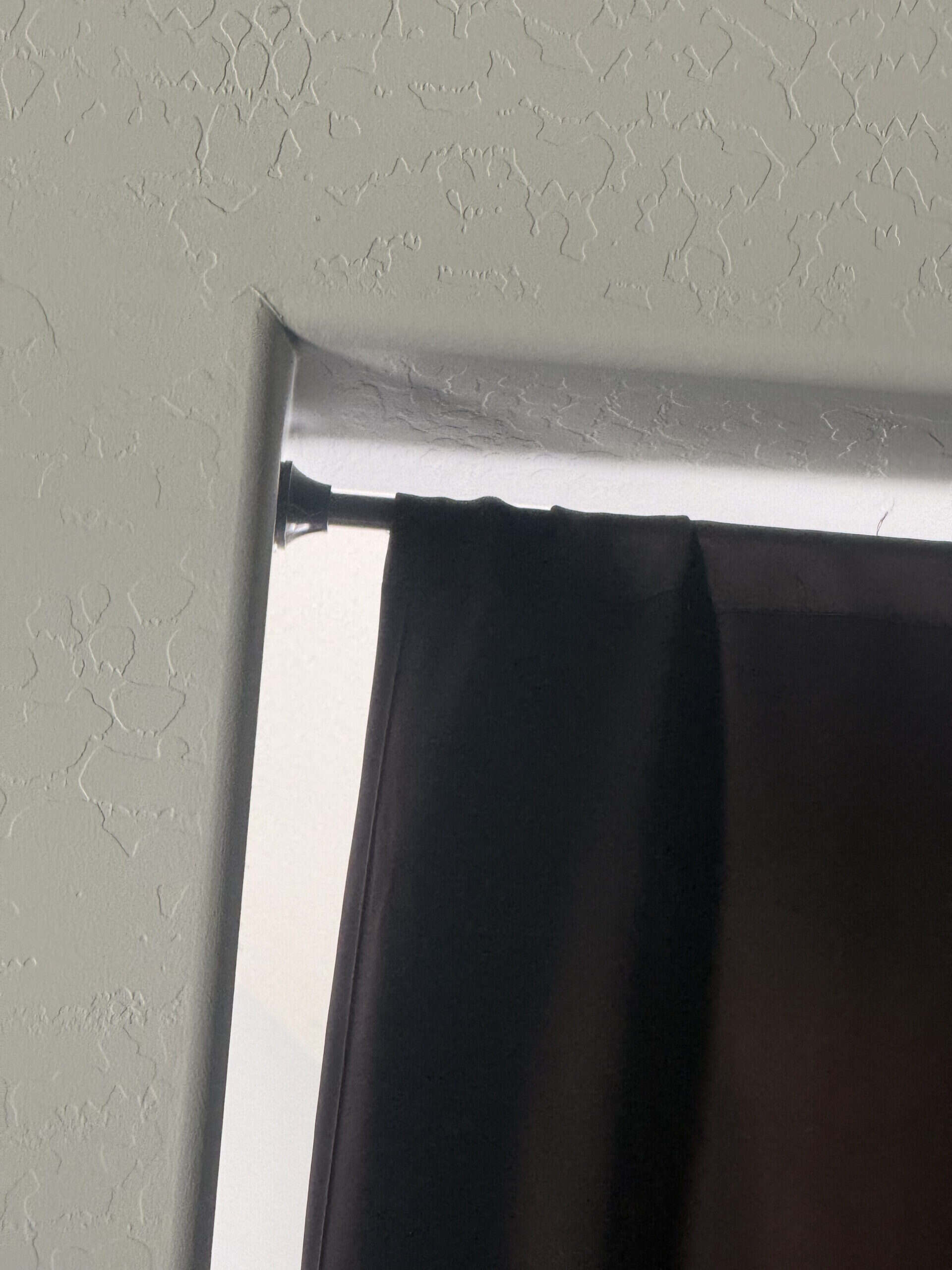
A correctly sized tension rod in a doorway presses against the wooden frame rather than the drywall, and that is why most installations leave no mark at all. A tension rod damages painted drywall only when it is spanning bare wall with no framing behind it, when it is overtightened, or when the end caps are hard enough to score the paint.
The distinction people miss is what the rod is actually pushing on. Our roundup of curtain rods for doorways covers the rods built for that job.
Quick Answer
In a doorway, the rod bears on the jamb, which is solid wood, so paint damage is unlikely. Across an open wall it bears on drywall over air, which dents. Overtightening, hard plastic caps, and a heavy panel on a long span are the three things that turn a clean install into a marked one.
Key Takeaways
- A doorway rod pushes on the frame, not on drywall.
- Bare-wall spans are the case where denting happens.
- Tighter is not more secure past a point, and it is more damaging.
- Rubber or foam caps spread the load and protect paint.
- Weight and span cause failure more than pressure does.
- Marks are usually paint scuffs rather than structural damage.
| Where It Is Mounted | Damage Risk | Why |
|---|---|---|
| Inside a doorway | Low | Bears on solid jamb |
| Inside a window reveal | Low | Framed opening |
| Between two walls in an alcove | Moderate | Depends on framing behind |
| Across open drywall | High | Board over a cavity |
| Against tile or plaster | Low to moderate | Hard surface, can scuff |
| Overtightened anywhere | Raised | Point load in one spot |
What the Rod Is Pressing Against
A doorway is framed with lumber. The jamb you see is trim over a structural opening, so a rod inside it is loading solid wood rather than a hollow panel.
Drywall over a stud cavity is a different material entirely. It is gypsum board perhaps half an inch thick, and a concentrated sideways load on it can crush the surface or crack the paper.
That is the whole reason doorway installs behave so differently from open-wall installs. Anyone reporting dents from a tension rod is usually describing the second situation.
Three or Four Years Against Painted Drywall
The rod holding my doorway curtain is a tension rod. It goes through several passes a day, and it has never come down.
It is the same age as the curtains, three to four years, and in that time it has never been reseated. I installed it with nothing special done, no shimming and no prep, and I have not added rubber tips to it.
It presses against painted drywall. That is the part worth reporting, because it is the case people are told to worry about, and the doorway width is ordinary rather than anything I measured.
In a doorframe of ordinary width, with a panel within the rod’s rating, the failure everyone warns about has not been my experience at all. What I would take from it is that the problem is probably about span and weight rather than about pushing.
I have used one rod in one doorway, so I cannot compare mounted, magnetic, or heavy-duty versions from experience. Those sections are research rather than something I have run side by side.
What Actually Causes Marks
Overtightening
Turning a rod until it feels immovable concentrates force at two small points. Snug enough to hold the panel is the target, and past that you are only adding load.
Hard end caps
Some rods ship with rigid plastic feet that dig in and score paint. Rubber or foam caps spread the same force across more area, and they grip better.
A long span with a heavy panel
Weight pulls the rod into a slight bow, which changes the angle of the force at each end and increases point pressure. This is also the setup most likely to fail.
Fresh paint
Paint takes weeks to fully cure, and a rod set against a newly painted wall can lift or imprint the finish even at modest pressure. Wait it out.
Installing One Without Leaving a Mark
- Prefer a framed opening. A doorway or a window reveal gives you wood to push on.
- Size the rod to the middle of its range. A rod at full extension has the least thread engagement and the most flex.
- Use soft end caps. Rubber, foam, or a piece of felt does the job.
- Tighten to snug, then stop. Test by pushing the panel aside rather than by feel at the rod.
- Keep the panel within the rating. Blackout fabric is heavier than sheer, and the rating exists for a reason.
- Check it after a week. Any settling shows up early rather than months later.
Our guide to how high to hang blackout curtains covers placement, and our guide to whether tension rods fall down with blackout curtains covers the failure side.
If You Have Already Left a Mark
Most marks are paint rather than board. A scuff or a shiny compressed spot cleans up with a damp cloth or touches up with leftover paint.
A dent in the surface of the drywall is a filler job. A small amount of lightweight spackle, sanded flush, then paint over it.
Cracked paper or a hole means the load was well past what the board could take, which is a signal to change the mounting rather than repair and repeat.
When to Use Something Other Than Tension
If the opening has no framing on both sides, tension is the wrong mechanism and no amount of care fixes that. A mounted bracket into a stud carries the load properly.
Heavy blackout panels on a wide window are the other case. Our roundup of blackout curtain tracks and wrap-around rods covers the mounted options, and our roundup of no-drill blackout curtain rods covers what is available when drilling is not allowed.
Renters with a strict lease sometimes do better avoiding the wall entirely. Our roundup of room darkening shades covers options that fit inside an opening, and our roundup of doorway curtains covers the doorway case specifically.
Recommended Reading
Frequently Asked Questions
Will a tension rod damage painted drywall?
Inside a doorway or window opening, usually not, because the rod bears on the wooden frame rather than on drywall. Across open drywall the risk is real, since the board sits over a cavity. Overtightening and hard end caps are what turn a clean install into a marked one.
How tight should a tension rod be?
Snug enough that the panel does not pull it loose, and no tighter. Test by sliding the curtain rather than by how immovable the rod feels. Extra tightening adds point pressure without adding much security.
Do rubber tips on a tension rod help?
Yes, on both counts. They spread the load over more area, which protects paint, and they grip better than hard plastic on a smooth surface. Felt pads work as an improvised version.
Why do tension rods fall down?
Usually span and weight rather than insufficient tightening. A rod near full extension carrying a heavy panel bows slightly, which reduces the force holding it in place. Sizing the rod to the middle of its range helps more than cranking it.
Can you use a tension rod on a freshly painted wall?
Wait. Paint needs weeks to fully cure, and a rod set against it early can imprint or lift the finish even under modest pressure. Check the paint’s cure time rather than its dry time.
Are tension rods safe for rentals?
They are one of the standard renter solutions, because they need no holes. The caveat is the same one: use framed openings, keep the tension moderate, and use soft caps. Marks are easier to explain than holes, and easier still to avoid.
How do you repair a dent from a tension rod?
Lightweight spackle, sanded flush once dry, then touch-up paint. A scuff that has not broken the surface often cleans up with a damp cloth. Cracked paper means the mounting needs changing rather than just fixing.
Is a mounted rod better for blackout curtains?
For heavy panels on a wide window, yes, since brackets into framing carry weight properly and allow a wrap-around return that blocks side light. Tension suits doorways, narrow openings, and anywhere drilling is not an option.
