
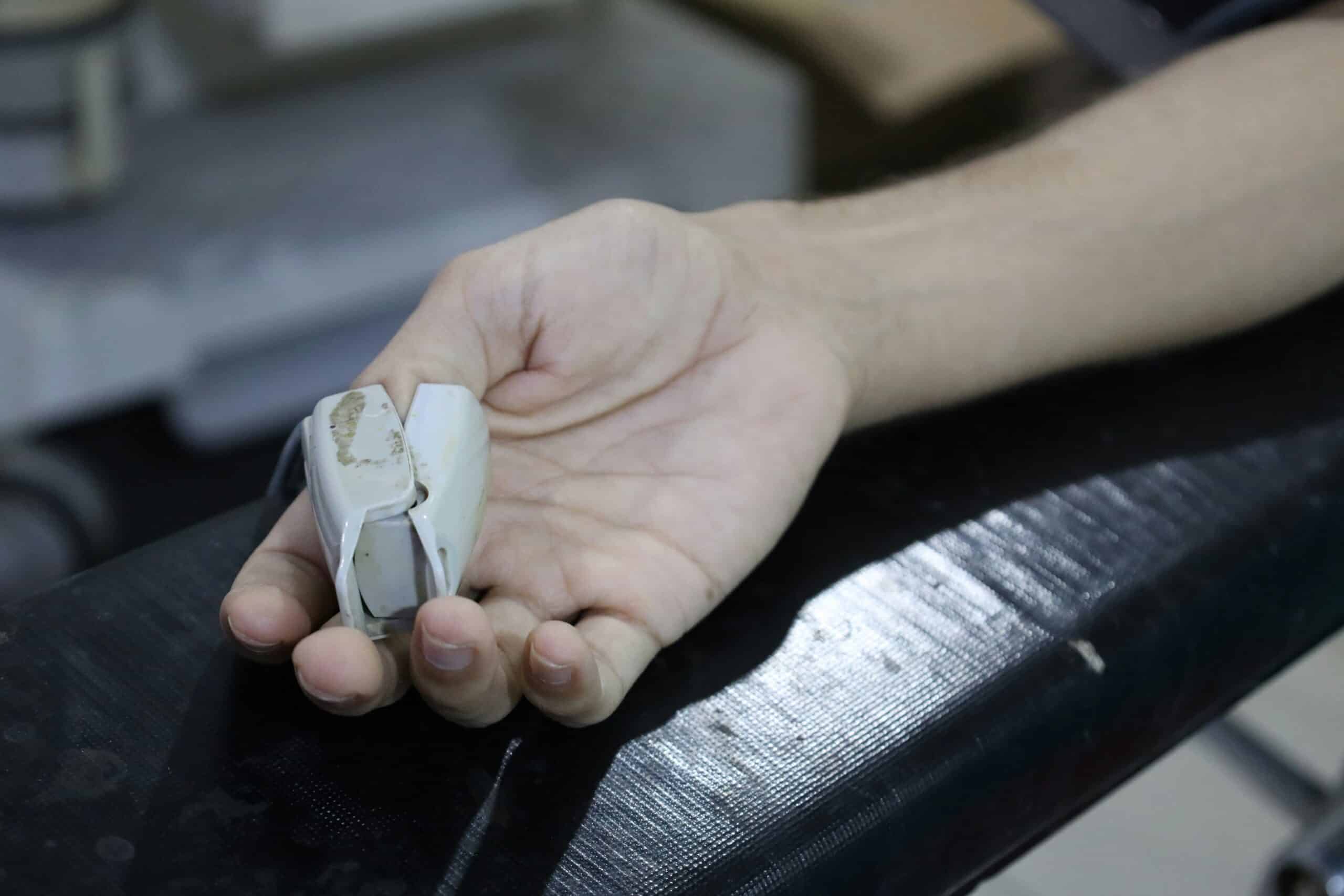
Hand splinting only works when the splint matches the specific joint involved, because a thumb-base problem and a finger-joint problem need completely different shapes. The best hand and finger splints for arthritis pain therefore divide by location: thumb spica for the base of the thumb, ring or oval splints for individual finger joints, and full resting splints when the whole hand aches. Choosing by symptom location is the first and most important step.
The National Institute of Arthritis and Musculoskeletal and Skin Diseases lists splints among the supportive devices used alongside other approaches for arthritis. Fit and joint selection are what determine whether one helps.
Hand pain rarely travels alone at night. Many people also need to address surface pressure, which our guide to mattress toppers for arthritis covers.
The Short Version
Thumb-base pain calls for a thumb spica that immobilizes the joint at the wrist and thumb together. Individual swollen or unstable finger joints call for small ring or oval splints, which are worn on one finger and leave the rest free. Full resting hand splints are for widespread morning stiffness and overnight aching, and they are the bulkiest option by far.
Medical Disclaimer
This article is general information about splint categories and is not medical advice, and nothing here diagnoses or treats arthritis. Several different conditions cause hand and finger pain, and they call for different treatment, so an accurate diagnosis matters before you splint anything. See a clinician for joint swelling, redness and warmth, deformity, sudden severe pain, or symptoms in multiple joints, and ask about occupational or hand therapy, which fits and customizes splints professionally.
Key Takeaways
- Match the splint to the joint, not to the general area.
- Thumb-base pain is the most common reason people buy hand splints.
- Ring and oval splints are sized to a specific finger and knuckle.
- Resting hand splints suit overnight use and not daily activity.
- Prolonged immobilization can reduce strength and mobility, so use guidance.
- Occupational and hand therapists fit custom splints far better than any chart.
How We Picked These Hand and Finger Splints
We separated the category by joint, because that is the only sorting that produces useful recommendations. A splint that stabilizes the thumb base does nothing for a swollen middle finger joint. So each pick below names its target.
Fit came next and it is where most purchases go wrong. Hand dimensions vary enormously, and a splint sized by small, medium, and large rarely fits the joint precisely. Products with real measurement charts ranked higher.
We also considered how each design interacts with sleep. Overnight wear needs soft edges, low bulk, and nothing that catches on bedding, which is a different standard from daytime function. Anything with exposed hard edges scored lower.
Finally we weighted practicality. A splint you can put on with the affected hand matters when both hands hurt, and so does washability. Many people pair splinting with warmth, which our heating pad guide touches on.
1. Thumb Spica Splints
Why It Stands Out
Thumb spica splints immobilize the thumb and wrist together, which stabilizes the joint at the base of the thumb where arthritis commonly shows up. Pain there flares with pinching, gripping, and turning motions, and holding the joint still addresses that directly. This is the most-used hand splint category.
Many designs include a removable stay. You can run the splint firm at night and softer during the day.
Worth Knowing
Immobilizing the thumb makes most tasks awkward. Expect to need help with buttons, jars, and phones, and expect a real adjustment period. Ask a clinician how many hours per day applies to you.
Several different conditions cause thumb-base pain. Get the diagnosis before committing to a splint, since the right answer varies.
Best for: Pain at the base of the thumb that flares with pinching and gripping, after a clinical assessment. Skip it if your pain sits in the finger joints rather than the thumb.
Check Price on Amazon2. Ring and Oval Finger Splints
Why It Stands Out
These small rigid rings slip over one finger and stabilize a single joint, leaving every other finger completely free. For people with one or two problem joints, that selectivity is the whole advantage. Metal versions look like jewelry and many people wear them all day without comment.
They also address specific joint positions. Some designs limit hyperextension while still allowing a normal grip.
Worth Knowing
Sizing is exact and it changes with swelling. Rings that fit in the morning can bind by evening, and a sizing kit is worth using rather than guessing. Some makers sell adjustable versions for this reason.
Metal rings conduct cold. People with circulation sensitivity often prefer coated or plastic versions.
Best for: One or two specific finger joints that are unstable, swollen, or painful in a particular position. Skip it if the whole hand aches, since a single ring will not help that.
Check Price on Amazon3. Resting Hand Splints
Why It Stands Out
Resting splints cradle the whole hand, wrist, and fingers in a supported position, which is why they are used overnight rather than during activity. They target widespread aching and the morning stiffness many people describe. Nothing else covers the whole hand at once.
The supported position also keeps fingers from curling. That matters for people whose hands stiffen into a fist shape by morning.
Worth Knowing
These are bulky and take the hand out of use entirely. Reserve them for sleep, and get a clinician’s input on whether they suit your condition. Prolonged immobilization has tradeoffs, including reduced strength.
Custom versions from a hand therapist fit far better than off-the-shelf shells. Ask about that route if an off-the-shelf splint creates pressure points.
Best for: Overnight use for widespread hand aching and marked morning stiffness, on clinical advice. Skip it for daytime wear, since it removes hand function completely.
Check Price on Amazon4. Compression Arthritis Gloves
Why It Stands Out
Compression gloves apply light even pressure across the hand and leave the fingertips exposed, so you can still use your hands. Many people report they ease the achy, stiff quality overnight and in the early morning. They are also the easiest option to tolerate.
Warmth is part of the effect. Retained heat helps the stiffness many people describe on waking.
Worth Knowing
Gloves do not immobilize or stabilize anything. They manage symptoms rather than protecting a joint, so an unstable joint still needs a splint. Do not substitute one for the other.
Evidence for compression gloves is mixed, and comfort varies a lot between people. Try one pair before buying several.
Best for: Overnight and early-morning stiffness and aching in people who want to keep their hands usable. Skip it if you need actual joint stabilization.
Check Price on Amazon5. Wrist and Hand Wrap Supports
Why It Stands Out
These wrap the wrist and the base of the hand while leaving fingers and thumb free, which suits people whose pain sits at the wrist rather than the digits. Adjustable closures let you tune pressure as swelling changes through the day. Function stays largely intact.
The open design also makes them easy to put on one-handed. That matters when both hands are affected.
Worth Knowing
Wraps do not address thumb or finger joints at all. If your pain is at the thumb base, this category will disappoint you. Confirm the location first.
Straps can compress the wrist nerves if overtightened. New numbness after tightening means loosen it, and our guide to overnight numbness covers why that happens.
Best for: Wrist-centered pain and swelling where finger and thumb motion needs to stay free. Skip it for thumb-base or individual finger joint problems.
Check Price on Amazon6. Heated and Warming Hand Wraps
Why It Stands Out
Warming wraps and microwavable mitts apply heat before bed, which many people use to loosen stiff hands and settle discomfort. Warmth is one of the simplest self-care measures for arthritis stiffness. It also pairs well with gentle movement.
Cordless and microwavable versions are easy to fit into a bedtime routine. No cable and no outlet needed.
Worth Knowing
Never sleep with an active heating element on your hands. Use heat as a timed session before bed, follow the maker’s instructions, and choose a unit with automatic shutoff. Low heat over hours can burn skin, particularly with reduced sensation.
Heat is not always the right choice. For the general framing of heat and cold, see our guide to heat versus ice, and ask a clinician which suits your condition.
Best for: Stiffness and aching that eases with warmth, used as a limited pre-sleep session. Skip powered versions entirely with neuropathy, reduced sensation, or circulation problems.
Check Price on AmazonHand and Finger Splints for Arthritis Pain at a Glance
| Type | Target Joint | Hands Usable | Overnight Wear | Sizing Basis |
|---|---|---|---|---|
| Thumb spica | Thumb base and wrist | Limited | Often | Wrist and hand size |
| Ring or oval splint | One finger joint | Yes | Yes | Exact finger size |
| Resting hand splint | Whole hand and wrist | No | Yes, sleep only | Hand length |
| Compression gloves | Whole hand, no support | Yes | Yes | Hand circumference |
| Wrist and hand wrap | Wrist | Yes | Sometimes | Wrist circumference |
| Warming wrap | Whole hand, no support | No, during use | No, timed only | One size typical |
What to Look For in a Hand Splint
How do you know which joint to splint?
Locate where the pain actually sits. Pain at the fleshy base of the thumb near the wrist points to a thumb spica, while pain and swelling in a single finger knuckle points to a ring splint. Widespread aching across the whole hand points to a resting splint or gloves.
How should a hand splint fit?
It should hold the joint still without pressing anywhere, and it should not leave marks that persist after removal. Fingers and fingertips must stay warm with normal color. Ring splints need exact sizing, since swelling changes fit through the day.
How many hours a day should you wear one?
That depends on your diagnosis and the splint, so ask a clinician. Prolonged immobilization can reduce strength and mobility, which is why splinting usually pairs with exercise guidance. Many programs use night wear plus limited daytime use during flares.
Is a custom splint worth it?
Often yes for the thumb base and the whole hand. Occupational and hand therapists mold splints to your anatomy, which eliminates the pressure points that off-the-shelf shells create. Ask for a referral if standard sizes do not fit you.
Thumb Spica vs Ring Splint
When the thumb spica applies
Choose the spica when pain sits at the base of the thumb and flares with pinching, gripping, or turning a key. It immobilizes the thumb and wrist together, which is what stabilizes that joint. It costs you thumb function while you wear it.
When the ring splint applies
Choose a ring splint for one or two specific finger joints that are painful, swollen, or unstable in a particular direction. It stabilizes that joint and leaves everything else working. Sizing has to be exact, so use a sizing kit.
Common Misconceptions
That one splint covers the whole hand’s problems
Hand arthritis affects different joints in different people, and each joint needs a different shape. Buying a general hand brace for thumb-base pain usually accomplishes nothing. Identify the joint first.
That more immobilization is better
Holding a joint still reduces pain during a flare, and holding it still for weeks reduces strength and mobility. Splinting programs usually balance rest with movement. Ask how the two fit together in your case.
That splints slow the disease
Splints support and protect joints and ease symptoms, and they are not disease-modifying treatment. Medical management is a separate conversation with your clinician. Use splints as one part of a plan.
That hand pain at night is only about the hand
Sleeping position, mattress pressure, and wrist angle all contribute to overnight hand symptoms. Addressing those often changes more than adding another brace, which is why our chronic pain sleep guide and arthritis pillow guide are worth reading. Look at the whole setup.
Recommended Reading
- Mattresses for arthritis
- Night splints for plantar fasciitis
- TENS units for pain relief
- Massage balls for hand and forearm tension
- Relieving pain for better sleep
- Recovery tools for bedtime tension
Frequently Asked Questions
Do hand and finger splints for arthritis pain really help?
Splints appear among the supportive devices used for arthritis, and they work by stabilizing a specific joint and reducing painful movement. Benefit depends heavily on matching the splint to the right joint and getting the fit right. They ease symptoms rather than changing the condition.
Which splint is right for thumb arthritis?
A thumb spica, which holds the thumb and wrist together and stabilizes the joint at the thumb base. That joint is a common site for arthritis pain that flares with pinching and gripping. Get a diagnosis first, since several conditions cause pain there.
Can you sleep in a hand splint?
Yes, and overnight wear is a common approach, particularly for resting hand splints and thumb spicas. Look for soft edges and low bulk so the splint does not catch on bedding. Ask your clinician how many hours suit your case.
Do arthritis compression gloves work?
Many people report less stiffness and aching, especially overnight and first thing in the morning, though evidence is mixed. Gloves provide warmth and light pressure and no joint stabilization. They are a comfort measure rather than a support.
How do you size a ring splint?
Use the maker’s sizing kit or a jeweler’s ring sizer on the specific joint, measured at a typical time of day. Swelling changes finger size through the day and across flares. Adjustable versions exist for people whose size varies a lot.
Will wearing a splint weaken your hand?
Prolonged immobilization can reduce strength and mobility, which is why splinting is usually paired with exercise guidance. Short-term use during flares is different from all-day wear for months. Discuss the balance with a clinician or hand therapist.
Should you use heat or cold on arthritic hands?
Warmth commonly eases stiffness and cold commonly eases swelling and heat, and both are applied for limited sessions. Never sleep with an active heating device on your hands. Ask your clinician which fits your type of arthritis.
When should you see a doctor about hand and finger pain?
See a doctor for joint swelling, redness and warmth, deformity, sudden severe pain, symptoms in several joints, or morning stiffness lasting more than an hour. Those patterns help distinguish between different conditions that need different treatment. Ask about a referral to occupational or hand therapy for a fitted splint.
Sources
- National Institute of Arthritis and Musculoskeletal and Skin Diseases. Osteoarthritis. National Institutes of Health. https://www.niams.nih.gov/health-topics/osteoarthritis
- National Institute of Arthritis and Musculoskeletal and Skin Diseases. Rheumatoid Arthritis. National Institutes of Health. https://www.niams.nih.gov/health-topics/rheumatoid-arthritis
- Centers for Disease Control and Prevention. Arthritis. https://www.cdc.gov/arthritis/
- MedlinePlus. Hand Injuries and Disorders. National Library of Medicine. https://medlineplus.gov/handinjuriesanddisorders.html
