
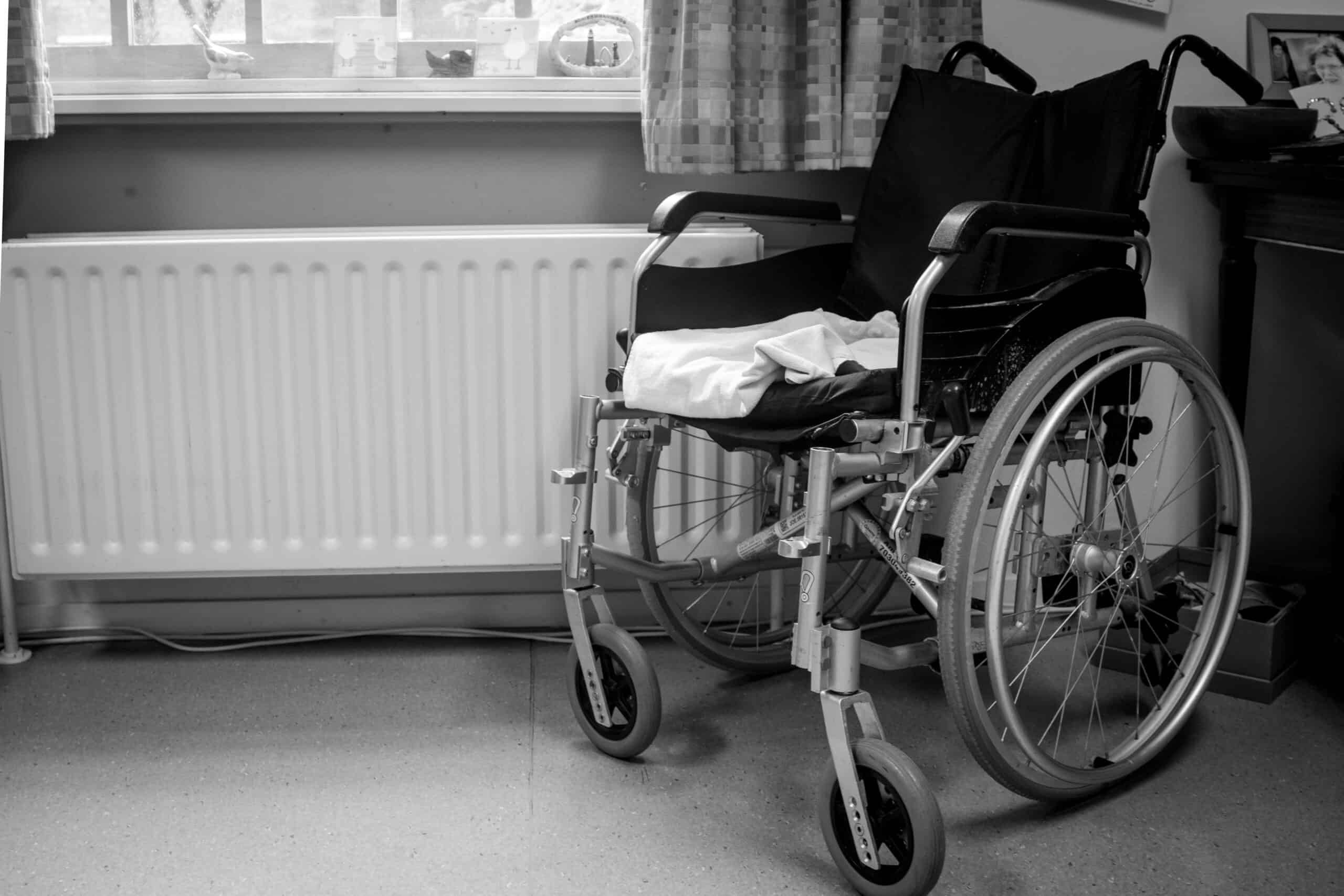
A wheelchair cushion is chosen for one of two jobs, and the ones sold as doing both usually favor one. The best wheelchair cushions split into six types, and the first question is whether you need pressure redistribution for skin protection or a stable base for posture. Getting that backwards is the most common and most expensive mistake in this category.
Hours in the chair decide how much this matters. Someone seated most of the day is managing tissue loading, while someone using a chair occasionally is mostly managing comfort.
No cushion removes the need to reposition. Our guide to seat cushions for tailbone pain covers the general-seating version of the same problem.
Quick Verdict
Air cell cushions give the best pressure redistribution for anyone at genuine skin risk, and they need checking. Gel and gel-foam hybrids balance protection and stability with less maintenance. High-density foam suits posture and part-time use, honeycomb suits heat and washability, and alternating-pressure cushions serve specific clinical situations. Getting into and out of the chair is covered in our transfer board and slide sheet guide.
Key Takeaways
- Pressure redistribution and postural stability pull in different directions, so decide which you need first.
- A cushion reduces risk and does not replace repositioning, skin checks, or clinical assessment.
- Air cushions need regular inflation checks, and an under-inflated one performs worse than foam.
- Cushion height changes footplate position, arm height and transfer mechanics across the whole chair.
- Heat and moisture at the skin surface matter as much as pressure for some people.
- Existing skin damage changes the requirement entirely and needs clinical input rather than a purchase.
How We Picked
We compared cushion types rather than individual units, because lineups turn over while the underlying materials stay stable. Each section covers one type and who it suits.
We ranked types on four things: pressure redistribution, postural stability, heat and moisture at the surface, and how much maintenance each demands.
We excluded ring and donut cushions for pressure-injury prevention, since concentrating load around a ring is the opposite of redistribution, and we have not stated pressure figures, since those come from clinical measurement rather than a product guide.
1. Air Cell Cushions
Why It Stands Out
Interconnected air cells let the body sink in and spread load across the largest possible contact area. For pressure redistribution this is the strongest approach available commercially.
Adjustability is the other advantage, since inflation can be tuned to the person rather than accepted as manufactured.
Worth Knowing
They need checking, and this is not optional. An under-inflated air cushion lets bone contact the base, which is worse than a good foam cushion.
Stability is the trade. Sinking in reduces the firm base some people need to sit upright and to push a manual chair efficiently.
Best for: Anyone at genuine risk of pressure injury who can maintain the cushion or has help doing so. Skip it if nobody will check the inflation weekly.
Check Price on Amazon2. Gel and Gel-Foam Hybrids
Why It Stands Out
A gel bladder over or within foam spreads load while the foam keeps a stable shape. That combination is why hybrids are the most commonly recommended middle ground.
Maintenance is minimal compared with air, which matters for anyone managing this without help.
Worth Knowing
Gel is heavy, which is a real consideration for someone lifting a cushion in and out of a car or propelling their own chair.
Gel can also feel cold at first and then hold heat later in the day. Our guide to cooling pads covers the same material behavior in bedding.
Best for: Most full-time users who need both protection and a stable base. Skip it if weight is a hard constraint.
Check Price on Amazon3. High-Density and Contoured Foam
Why It Stands Out
Contoured foam gives a predictable, stable surface that supports pelvic position. For posture, transfers and pushing a manual chair, that stability is the point.
It is also the lightest and cheapest option, and it needs nothing doing to it.
Worth Knowing
Foam compresses over months and stops performing while still looking fine. Replacement is on a schedule rather than on appearance.
Pressure redistribution is adequate rather than strong. For someone with existing skin problems that gap matters, and our guide to mattress toppers for arthritis covers the same firmness-versus-relief trade lying down.
Best for: Part-time chair users, and anyone whose priority is posture and transfer stability. Skip it if you are managing a skin-integrity risk.
Check Price on Amazon4. Honeycomb and Open-Structure Cushions
Why It Stands Out
An open lattice structure lets air move and moisture escape, which addresses the heat and humidity that contribute to skin problems alongside pressure.
Most are also fully washable, which matters for incontinence and for anyone in a hot climate.
Worth Knowing
Redistribution is moderate, sitting between foam and air. It is a compromise design rather than a specialist one.
Structure firmness varies a lot between products. Sitting on one before committing is worth arranging where possible.
Best for: Hot climates, heavy perspiration, and anyone who needs to wash the cushion often. Skip it if maximum pressure redistribution is the requirement.
Check Price on Amazon5. Alternating-Pressure and Powered Cushions
Why It Stands Out
A small pump cycles air between cells so the loaded area changes on a schedule. For someone who cannot reposition themselves, that mechanical relief is the reason this category exists.
It addresses the core problem directly, which is sustained loading of the same tissue.
Worth Knowing
There is a pump, a power source and noise, and the whole thing fails if the pump does. These are clinical devices rather than comfort purchases.
Selection genuinely belongs with a clinician. The Cleveland Clinic notes that pressure injuries develop from sustained pressure on skin and tissue, which is why offloading and repositioning sit at the center of prevention1.
Best for: Someone unable to reposition independently, on clinical advice. Skip it as a self-directed purchase.
Check Price on Amazon6. Positioning Wedges and Anti-Thrust Cushions
Why It Stands Out
These are shaped to hold the pelvis in position rather than to spread load, using a wedge or a built-up front edge to reduce forward sliding.
For someone sliding out of the chair or sitting asymmetrically, posture is the problem and this is the product that addresses it.
Worth Knowing
Shaped cushions can create new pressure points at the contact ridges, which is the risk you accept for the correction.
Fit is specific to the person and the chair, so this is the type most worth having assessed. Our guide to posture correctors covers the upper-body half of a seating problem.
Best for: Sliding forward, pelvic asymmetry and postural instability. Skip it if skin protection is the primary concern.
Check Price on AmazonWheelchair Cushions at a Glance
| Type | Pressure redistribution | Postural stability | Maintenance |
|---|---|---|---|
| Air cell | Strongest | Lower | Weekly inflation checks |
| Gel and gel-foam | Good | Good | Low, heavy to handle |
| High-density foam | Adequate | Strongest | None, replace on schedule |
| Honeycomb | Moderate | Moderate | Washable |
| Alternating pressure | Strong, mechanical | Lower | Pump and power |
| Positioning wedge | Lower | Highest, corrective | Low |
What to Look For in a Wheelchair Cushion
Skin protection or posture?
This is the question that narrows the field. Air and alternating-pressure cushions lead on redistribution, foam and wedges lead on stability.
Where both are needed, a hybrid is the usual compromise and an assessment is the better route.
How many hours a day in the chair?
Full-time seating is a tissue-loading problem measured in hours. Occasional use is a comfort problem.
Be honest about the number, because it changes which type is appropriate rather than which is nicer.
What does the height change?
A thicker cushion raises the seat, which alters footplate position, armrest height, desk clearance and the mechanics of every transfer.
Measure before buying. A cushion that improves comfort and makes transfers unsafe is a bad trade.
Who maintains it?
Air cushions need inflation checks, foam needs replacing on schedule, powered cushions need the pump working. Match the maintenance to who will actually do it.
An unmaintained air cushion is the worst outcome in this category, because it feels like protection and provides less than foam.
What does the cover do?
The cover decides how much of the cushion underneath actually reaches the skin. A stiff waterproof cover bridges across the contours and cancels part of what you paid for.
Four-way stretch covers move with the shape instead of fighting it. Most makers sell them for exactly that reason.
Covers also handle heat and moisture, which matter for skin health. Look for a cover you can remove and wash without fighting the zip.
How does it travel?
Cushions get lifted into cars, carried through doorways, and taken on planes. Weight and shape decide how easy that is.
Air cells pack down small, so they suit travel. Foam holds its shape and takes up the space it takes up.
Powered cushions bring a pump and a battery along. Plan where those sit on the chair before buying one.
What is the replacement schedule?
Every cushion in this category wears out, and the good ones wear out quietly. Foam loses its rebound gradually, which feels normal right up to the point it stops protecting.
Air cells develop slow leaks and honeycomb structures take a set. None of that announces itself.
So diary the date you start using it. A reminder a year out costs nothing and catches the failure most people miss.
Write the date on the cushion itself, or on the cover label. Nobody remembers a purchase date two years later, and the cushion outlives the receipt.
Does a second cushion make sense?
Plenty of people keep a spare, and the reason is practical rather than luxurious. Covers need washing, cushions need drying, and a chair still gets used on those days.
A spare also covers a slow leak or a pump failure without a gap in protection. Match the spare to the same dimensions so the chair setup does not change.
Funding rules vary, so ask before assuming a second one gets covered. Some programs replace on a schedule instead.
Air Cushions vs Foam Cushions
Where air wins
Pressure redistribution, by a clear margin, and adjustability to the individual. For anyone with a history of skin breakdown that is decisive.
The costs are maintenance, a less stable base, and vulnerability to punctures.
Where foam wins
Stability, weight, price and zero maintenance. For a part-time user or someone propelling a manual chair, those advantages are practical rather than theoretical.
The limit is redistribution. MedlinePlus describes changing position frequently as central to preventing pressure sores, which no cushion type removes the need for2.
Common Misconceptions
“A good cushion means you can stay seated longer”
Repositioning remains necessary regardless of cushion type. A cushion extends tolerance rather than removing the requirement.
“Donut cushions relieve pressure”
A ring concentrates load around its edge, which is the opposite of redistribution. They are not recommended for pressure-injury prevention.
“Softer is safer”
Too soft loses the stable base needed for posture and transfers, and bottoming out puts bone against the base. Correct is better than soft.
“Cushions are interchangeable between chairs”
Width, depth and the height change all interact with the specific chair. A cushion that fits one chair can make another unsafe to transfer from.
Medical Disclaimer
This article is general information about products, not medical advice, and it does not diagnose or treat anything. Anyone with existing skin damage, reduced sensation, or a history of pressure injuries should be assessed by a clinician or a seating specialist, who can measure interface pressure and recommend a specific cushion. Redness that does not fade, broken skin, or any open wound needs prompt medical attention rather than a new cushion.
Recommended Reading
- Lift chairs cover the seating that supports standing up.
- Sleeping with chronic pain covers the overnight half of the same day.
- Zero gravity recliners cover offloading pressure outside the chair.
- Lumbar support pillows cover the back-of-the-chair half of a seating setup.
Frequently Asked Questions
What are the best wheelchair cushions?
Air cell cushions give the strongest pressure redistribution for anyone at skin risk, provided someone checks the inflation. Gel and gel-foam hybrids are the common middle ground for full-time users who need both protection and stability. High-density foam suits part-time use and postural support.
How do you choose between pressure relief and posture?
Start with hours in the chair and skin history. Someone seated most of the day, or with any history of skin breakdown, needs redistribution first. Someone using a chair part-time and sliding or leaning needs stability and positioning first.
How often should you replace a wheelchair cushion?
Foam compresses over months and stops performing before it looks worn, so replacement follows a schedule rather than appearance. Air cushions last longer with maintenance and fail if punctured or left under-inflated. If the cushion bottoms out under you, it is already overdue.
Are gel cushions better than foam?
For pressure redistribution, generally yes, and gel is heavier and can hold heat later in the day. Foam is lighter, cheaper and more stable for transfers and self-propelling. Hybrids exist because most people want some of both.
Do donut cushions help?
Not for pressure-injury prevention. A ring concentrates load around the edge of the opening rather than spreading it, which is the opposite of what redistribution means. They are sometimes used for specific short-term comfort reasons, which is a different purpose.
Does a cushion change how the wheelchair fits?
Yes, and this is often overlooked. Added height alters footplate position, armrest height, table clearance and the mechanics of every transfer. Measure the intended cushion thickness against the chair setup before ordering.
How often do you need to reposition in a wheelchair?
Frequently, and the specific interval for a person comes from their clinician rather than from a cushion’s marketing. Pressure relief lifts, weight shifts and leaning are all used depending on ability. No cushion type removes the need.
When should you see a clinician about seating?
Before buying, if there is reduced sensation, a history of pressure injuries, or significant time in the chair. Promptly for redness that does not fade, any broken skin, new pain when seated, or worsening posture. Seating specialists can measure pressure distribution rather than guessing at it.
Sources
- Cleveland Clinic, Pressure Injuries (Bedsores): Causes and Prevention. my.clevelandclinic.org
- MedlinePlus, National Library of Medicine, Preventing pressure ulcers. medlineplus.gov
