
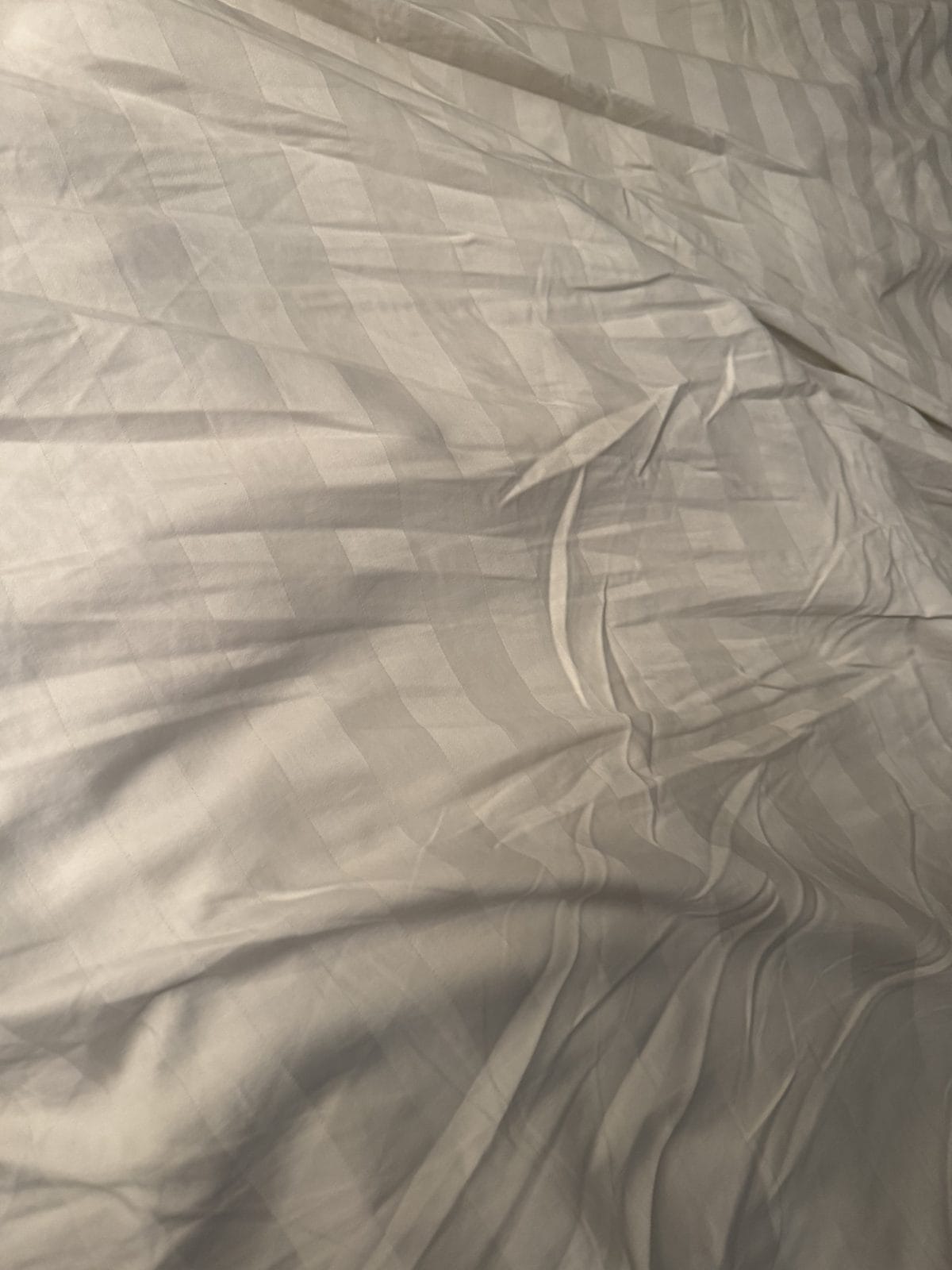
Percale and sateen are the two cotton weaves most sheet shoppers choose between, and they feel genuinely different on the bed. Percale uses a one-over-one-under construction that produces crisp, breathable, lightweight sheets ideal for warm sleepers and humid climates. Sateen uses a four-over-one-under construction that produces silky, slightly heavier sheets with a subtle sheen and more warmth retention. Choosing between them depends on your bedroom climate, your feel preferences, and how you balance those against each other. For recommendations, see our best sateen sheets guide.
I sleep on a cotton sateen set myself, so part of the sateen read here comes from genuine experience rather than spec sheets alone. This guide breaks down the actual differences, covers where each weave performs better, and helps you match the right one to your sleep. Crisp sheets relax with washing, and there is a bit of a trick to softening a stiff new set.
What Percale Sheets Actually Are
Percale uses a plain weave where each horizontal thread passes alternately over and under each vertical thread. This one-over-one-under pattern produces a tight, matte-finish fabric with minimal sheen, and it creates the crisp feel that defines percale.
Breathability is percale’s defining trait. The plain weave lets air flow through the fabric more readily than denser weaves, which makes percale cooler to sleep on in warm weather, and the matte finish reflects less body heat back to the sleeper. For hot sleepers, percale typically outperforms other weaves regardless of the underlying fiber.
The crisp feel some sleepers love is the same feel others find stiff. Percale wrinkles more visibly than sateen and lacks sateen’s smooth drape. For a hotel-luxury feel, percale’s slightly stiff initial texture, which softens over several washes, can read as less plush than sateen. Match the weave to your feel preference rather than to luxury marketing. Our best percale sheets guide covers the top sets.
What Sateen Sheets Actually Are
Sateen uses a four-over-one-under construction where each horizontal thread floats over four vertical threads before passing under one. This exposes more fiber on one side, producing the silky feel and subtle sheen that distinguish sateen from percale.
The smoother surface creates different sleeping characteristics. Sateen drapes more flowingly across the body, feels silkier against the skin, and holds slightly more warmth than percale. The denser weave traps marginally more body heat, which suits cooler sleepers and cooler bedrooms better than hot-sleeper situations. For cold climates or people who run cold, sateen often sleeps more comfortably than percale.
Durability is the trade-off. The floating threads create more surface fibers that can snag on rough skin, jewelry, or coarse blankets, and the smoother surface tends to show wear at high-contact points sooner than percale’s matte construction. Premium sateen with long-staple cotton handles this far better than budget alternatives.
From my own use, this tracks. My cotton sateen sheets feel extremely smooth with a subtle sheen, and they do hold a little more warmth than a crisp weave because the fabric is on the thicker side.
Direct Comparison: Percale vs Sateen
The specific differences affect different aspects of sleep comfort. This table maps them side by side.
| Factor | Percale | Sateen |
|---|---|---|
| Feel | Crisp, cool, matte | Silky, smooth, sheen |
| Temperature | Cooler sleeping | Warmer sleeping |
| Breathability | Excellent | Moderate |
| Wrinkles | Wrinkles more visibly | Resists wrinkles |
| Durability | Higher durability | More snag-prone |
| Drape | Crisp, stays in place | Flowing drape |
| Sound | Slight rustle when moving | Silent on movement |
| Best climate | Warm, humid | Cool, dry |
When Percale Sheets Work Better
Hot sleepers consistently report better sleep on percale than sateen. The breathable construction lets body heat dissipate through the fabric rather than building against the skin. Pair percale with our cooling sheets recommendations for a compound cooling effect, especially in summer or warm climates.
Humid climates benefit from percale’s moisture management. The plain weave lets moisture vapor pass through more readily than denser weaves, which prevents the clammy feeling humid environments produce on dense fabrics. Sleepers in coastal, southern, or tropical areas often prefer percale year-round.
People who change positions frequently appreciate percale’s structure. The crisp weave stays where you put it rather than flowing with your movements, which prevents the bunching that sometimes happens with sateen during active sleep. If you wake up with sheets twisted around you, switching to percale often helps.
All-season climates often call for seasonal rotation. Many sleepers use percale through summer and switch to sateen or flannel in winter. See our flannel sheets guide for winter sets that compound percale’s summer benefits.
When Sateen Sheets Work Better
Cool sleepers and cold bedrooms benefit from sateen’s slight warmth retention. The denser weave traps marginally more body heat, providing extra warmth on cold nights. For people who run cold or bedrooms that stay cool, sateen often sleeps more comfortably than percale’s breezier construction.
Luxury feel preferences often align with sateen. The silky drape and subtle sheen create the hotel-bedding aesthetic many associate with premium accommodations, and sateen tends to deliver that premium feel even at lower thread counts than equivalent percale.
Sensitive skin sometimes does better on sateen’s smooth surface. The longer floating threads create less friction against skin than percale’s more textured surface, which can reduce overnight irritation for eczema-prone sleepers. Our organic cotton sheets guide covers options that combine sateen feel with sensitive-skin construction.
I can speak to the feel side from experience, since I have slept on a cotton sateen set for a couple of years. What stands out every night is how smooth it is, that silky surface sateen is known for is exactly what you feel, and the quality has held up well, washing really nicely over time. The fit has been excellent too, with sturdy, thick corners that lock onto the mattress and stay put. On temperature, I run warm and live in Arizona, and I would call mine neutral, maybe slightly warm because the fabric is thicker, which lines up with the warmth retention sateen is known for. It works for me paired with a cooling layer, though I would not call it a cooling sheet. For a full rundown of cotton sateen options, our best sateen sheets guide covers them.
Material Considerations Across Both Weaves
Both weaves come in multiple materials, and the underlying fiber affects performance independently of the weave. Cotton percale differs from bamboo percale, and the same applies to sateen.
Cotton percale produces the traditional crisp hotel-bedding feel. Long-staple cotton like Egyptian, Pima, or Supima creates a more durable percale that softens elegantly through use, while standard cotton percale wears faster at budget pricing. Bamboo percale pairs the breathable plain weave with bamboo’s natural moisture-wicking for strong warm-weather performance; see our bamboo sheets guide and cotton vs bamboo if cooling is the priority.
Cotton sateen produces the silky luxury feel many associate with premium hotel bedding. Long-staple cotton sateen achieves the smoothest drape while keeping adequate durability, and Egyptian cotton sateen sits at the premium end. Tencel sateen is an alternative for those who prefer plant-based fibers, combining natural smoothness with the sateen weave. Cross-reference our eczema sheets guide for sensitive-skin options.
Thread Count Matters Less Than You Think
Both weaves work best within specific thread count ranges, and higher is not automatically better. Percale performs best at moderate counts: too low and the weave loses its crisp feel, too high and the density compromises the breathability that makes percale valuable for hot sleepers. Marketing-driven percale at very high counts often disappoints sleepers expecting traditional percale character.
Sateen performs best at moderate-to-higher counts: too low and it loses the silky feel that defines it, too high and the denser construction can become too warm and more snag-prone. Premium sateen usually lands in a middle range for the best balance of feel and function.
Material quality affects performance more than thread count. A moderate-count long-staple cotton outperforms a high-count short-staple cotton for both feel and durability in either weave. When comparing options, prioritize fiber quality, weave construction, and certifications over headline thread-count claims.
Care Differences Between Percale and Sateen
The two weaves benefit from slightly different care, and following weave-specific routines extends their useful life. Percale handles aggressive washing well. Hot water can be used safely, which helps with allergen control, standard detergent does not damage the crisp construction, and tumble drying on medium heat maintains the structure most percale sleepers prefer. The matte finish even benefits from slight wrinkling that softens the texture.
Sateen needs gentler care to keep its silky finish. Warm rather than hot water prevents fiber damage that leads to premature roughness, mild detergent without bleach preserves the smooth surface, and low-heat drying protects the floating threads. Many sateen owners prefer air or line drying for maximum longevity. In my experience, normal gentle washing has kept mine smooth and intact for years.
Both weaves benefit from washing before first use. Manufacturing residues can affect feel and performance, and that first wash typically improves both. After it, the sheets perform closer to their long-term feel.
Frequently Asked Questions
What is the difference between percale and sateen sheets?
Percale uses a one-over-one-under weave that produces crisp, breathable, matte-finish sheets ideal for warm sleepers and humid climates. Sateen uses a four-over-one-under weave that produces silky, smooth sheets with a subtle sheen, better suited to cool sleepers and cold climates. The weave affects feel, temperature, durability, and appearance independently of the fiber.
Which is better for hot sleepers, percale or sateen?
Percale typically wins for hot sleepers, since the plain weave lets body heat and moisture vapor escape more readily than sateen’s denser construction, and the matte finish reflects less heat back. For severe overheating, combine a percale weave with bamboo or Tencel for a compound cooling effect. Cool sleepers usually prefer sateen’s slight warmth.
Is percale or sateen more durable?
Percale generally lasts longer, since the tighter weave has no floating threads to snag or wear. Sateen’s floating threads create more potential snag points over time. Both can last many years with quality construction and proper care, and premium long-staple cotton outperforms standard cotton in either weave.
Why does percale feel crisp?
Percale feels crisp because the one-over-one-under weave creates a tight fabric with no floating threads, and the matte finish lacks the smooth surface sateen produces. The initial crispness softens over several washes but keeps the distinctive percale feel. Many describe it as hotel-fresh or newly made.
Are sateen sheets too hot for summer?
Sateen can feel too warm for summer in moderate to hot climates, especially for sleepers who already run hot, since the denser weave traps more heat. Many people rotate sateen for cool months and percale for warm ones. An air-conditioned bedroom makes sateen workable year-round for those who love the silky feel.
Can I use percale and sateen sheets together?
Yes, mixing works in some setups. Some sleepers use a percale fitted sheet for moisture management against the mattress with sateen pillowcases for face-contact comfort, or sateen flat sheets and pillowcases over a percale fitted sheet. Match the combination to your feel preferences and seasonal needs.
Do thread counts work the same for percale and sateen?
No, the two weaves perform best at different ranges. Percale stays crisp at moderate counts and loses breathability when pushed too high. Sateen needs a slightly higher count to feel silky but becomes too warm and snag-prone at the extreme end. Counts beyond each weave’s sweet spot tend to compromise character rather than improve it.
Which weave is better for sensitive skin?
Sateen often suits sensitive skin better, since the smoother surface creates less friction and the silkier feel can help eczema-prone sleepers. That said, percale’s breathability can also help by reducing moisture buildup. Match the weave to your specific skin pattern and sleep environment, and consider a long-staple cotton in either weave.
Recommended Reading
See also our guides to grounding sheets for sleep, and how to keep sheets from pilling.
Related Reading
Explore more: how to keep sheets from pilling, linen vs cotton sheets, microfiber vs cotton sheets, microfiber sheets, grounding sheets for sleep, linen sheets, sheets for adjustable beds, and deep pocket sheets for thick mattresses. Also explore: down vs down alternative comforter.
Satin is a third option with different tradeoffs. satin sheets compared covers heat and durability.
