
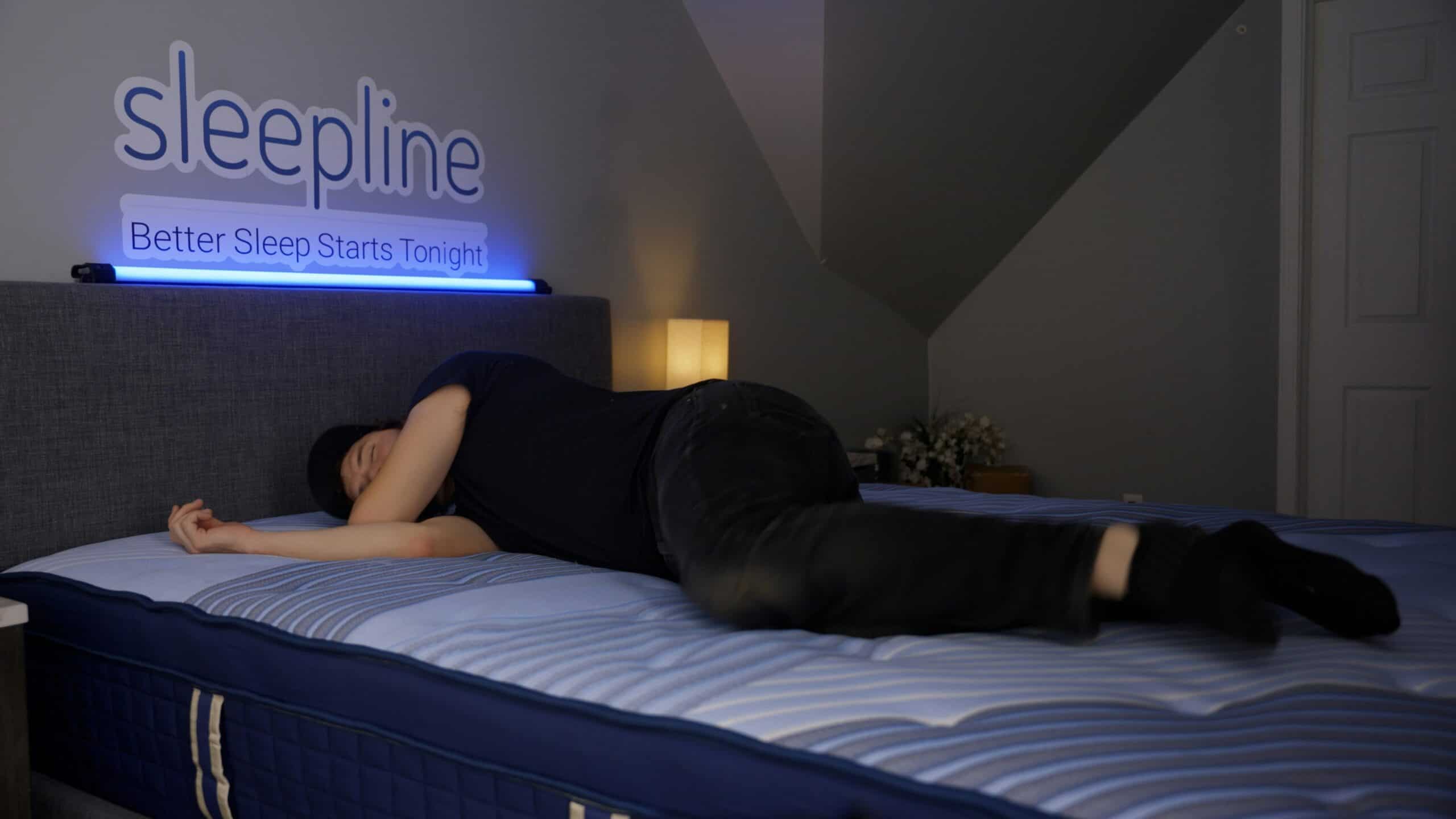
Lying on a mattress in a showroom for two minutes tells you almost nothing about how it sleeps over eight hours. A useful in-store test takes fifteen minutes per mattress, in your actual sleeping position, wearing what you would wear to bed rather than a coat and shoes. Most people spend less time than that and then rely on the trial period to catch the mistake.
| Test | How long | What it tells you |
|---|---|---|
| Lie in your sleeping position | 10 to 15 minutes | Whether pressure builds at hip or shoulder |
| Roll over twice | 1 minute | How much effort changing position takes |
| Sit on the edge | 1 minute | Edge support for getting in and out |
| Have a partner move | 2 minutes | Motion transfer across the bed |
| Slide a hand under your lower back | 30 seconds | Whether the spine is supported or arched |
| Check the temperature | 10 minutes in | Early sign of heat retention |
Key Points
- Fifteen minutes per mattress beats two minutes on six mattresses
- Test in the position you sleep in, not on your back by default
- Take off your coat and shoes, since both change how you lie
- Bring your own pillow if you can, because loft changes spinal alignment
- Showroom firmness feels firmer than the same mattress at home
- The trial period matters more than the showroom for online purchases
Test in Your Sleeping Position
Most people lie flat on their back in a showroom regardless of how they sleep. If you sleep on your side, a mattress that feels supportive on your back may press hard on your shoulder and hip once you turn.
Lie the way you sleep. Side sleepers should check whether the shoulder sinks enough that the spine stays level, and whether the hip does the same. Back sleepers should slide a hand into the gap at the lower back, which is covered below. Stomach sleepers should feel whether the hips drop lower than the chest.
Stay there for ten to fifteen minutes. Pressure builds over minutes, and a mattress that feels fine for two minutes can ache at twelve. Bring a phone and set a timer, since standing up early is the default when a salesperson is waiting.
Firmness selection by sleeping position is covered in the mattress selection guide.
Run the Lower Back Check
Lie on your back and slide your hand palm-down into the gap between your lower back and the mattress. What you feel tells you something specific.
A hand that slides through with room to spare means the mattress is too firm for you, and your lumbar curve has nothing under it. A hand you cannot get in at all means the mattress is too soft and your hips have sunk. A snug fit means the mattress supports the curve without forcing it.
Back sleepers can run this test as written. Side sleepers can use a variant: have someone check whether your spine looks straight from behind, or take a photo. A spine that curves in the photo means the firmness is wrong in one direction or the other.
Roll Over Twice
Changing position on a mattress that grips you is a small effort you repeat many times a night. Memory foam that contours far can feel like climbing out of a hollow, and people who move a lot find that more tiring than they expect.
Roll from your back to your side, then to the other side. Count how much push it takes. A mattress that lets you turn without thinking suits restless sleepers, and one that holds you in place suits people who settle and stay put.
Hybrid and innerspring constructions make turning easier than all-foam. Detail on that comparison sits in memory foam versus hybrid.
Sit on the Edge
Sit on the side of the mattress the way you would to put on socks. A mattress with weak edge support collapses under you and tips you toward the floor.
Edge support matters in three situations: getting in and out of bed, sitting on the bed to dress, and sleeping close to the edge on a shared mattress. If any of those describe you, a mattress that folds at the perimeter will annoy you every night.
Then lie down near the edge rather than the middle. Couples use more of the surface than a single sleeper does, and a mattress with a firm core and soft edges shrinks the usable area.
Test Motion Transfer
Bring whoever you share the bed with. Have them lie down, then get up, then roll over, while you lie still on your side of the mattress.
You are checking how much of their movement reaches you. Foam absorbs most of it. Innerspring passes more through, and older designs with connected coils pass the most with connected coils. If one of you gets up at night, this is the test that predicts whether the other one wakes.
Do this test last. It requires both of you on the mattress, and by then you will have decided whether the firmness works at all.
What a Showroom Cannot Tell You
Showroom mattresses have been lain on by hundreds of people, so a floor model feels softer than the one that arrives at your house. New mattresses also break in over the first few weeks, which moves the feel again.
Temperature is the other gap. Ten minutes in a cool showroom tells you little about how a mattress sleeps under a duvet in a warm bedroom in July. If you sleep hot, weight the construction rather than the showroom feel, and read cooling options before assuming the mattress alone will solve it.
Your own pillow changes the test too. A showroom pillow with the wrong loft tilts your neck and makes a good mattress feel wrong. Bring yours if the store allows it.
Testing an Online Mattress
Most mattresses now sell online, where the showroom test does not exist. The trial period replaces it, and it becomes the specification that matters most.
Sleep on it for at least three weeks before judging. Your body adapts to a new surface, and the first few nights on any different mattress feel wrong. Most trial periods run long enough to accommodate that, so check the length and the terms before you order.
Keep the packaging until you decide. Some returns require the original box, and disposing of it early can complicate a return you were entitled to make.
What Trips People Up
Testing six mattresses in ten minutes
Two minutes each tells you which one feels different, not which one sleeps well. Narrow to two or three from research first, then test those for the full fifteen minutes.
Keeping the coat and shoes on
Both change how your weight distributes. Take them off, and lie down the way you would at home.
Trusting the first impression
The feel in the first thirty seconds is about surface softness. Support shows up after ten minutes, and support is what determines whether you wake sore.
Skipping the partner test
Motion transfer is invisible until you share the bed. Testing alone and discovering it at home is the most common regret with innerspring mattresses.
Worth reading next: the mattress selection guide for narrowing options before you visit a store, then side sleeper firmness or support for back pain depending on what you need. For what happens after delivery, see toppers that adjust a mattress you already own and how mattresses fail over time.
Frequently Asked Questions
How long should I lie on a mattress in a store?
Ten to fifteen minutes per mattress, in the position you sleep in. Pressure builds over minutes, and a mattress that feels comfortable for two minutes can ache by minute twelve.
Does a showroom mattress feel the same as the one delivered?
No. Floor models have been compressed by hundreds of people and feel softer than a new mattress. Expect the delivered one to feel firmer at first, then soften over the first few weeks.
Should I bring my own pillow?
If the store allows it, yes. Pillow loft changes neck angle and spinal alignment, so a showroom pillow with the wrong height can make a suitable mattress feel wrong.
How do I test a mattress I buy online?
The trial period is the test. Sleep on it at least three weeks before deciding, since your body adapts to a new surface. Check the return terms before ordering, including whether you need the original packaging.
What is the hand-under-the-back test?
Lie on your back and slide a hand into the gap at your lower back. Too much room means the mattress is too firm for you. No room at all means it is too soft. A snug fit means the support matches your body.
Can I test motion transfer alone?
No. Bring whoever shares the bed, have them move while you lie still, and see how much reaches you. This is the test people skip and then regret.
Is firmness the same across brands?
No. One brand’s medium can feel like another’s firm, and there is no standard scale. That is why testing matters more than the label, and why the trial period carries the weight for online purchases.
