
Reusable gel ice packs are the cheapest pain tool in most homes and the one most often used wrongly. A pack straight from the freezer against bare skin for an hour does damage rather than good.
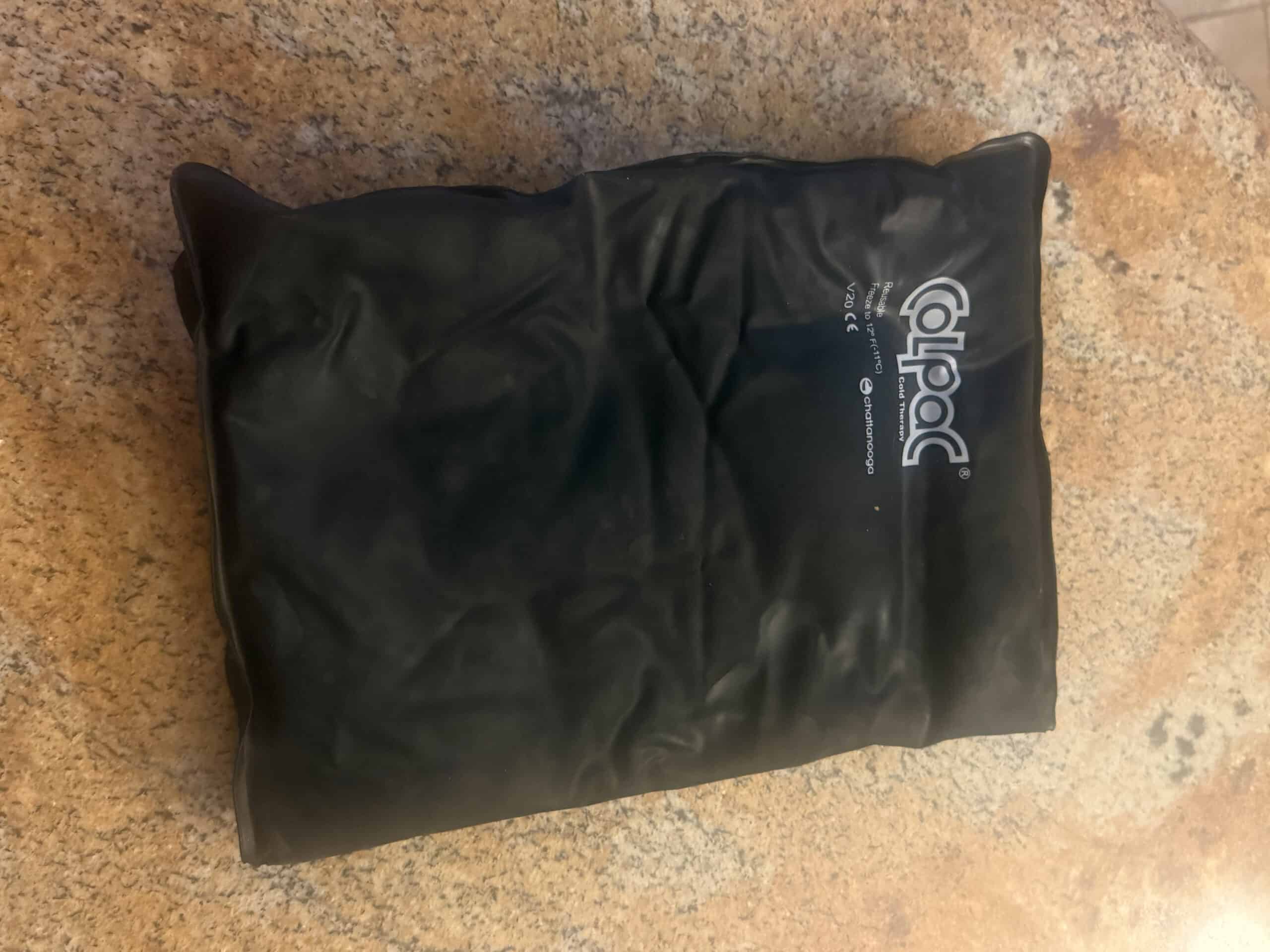
This is a category I use myself. I keep a gel ice pack in the freezer and reach for it when something is sore, so I know what one of these is actually like to live with.
The specific picks below are research-based, drawn from independent reviews and manufacturer specifications, since I have not used every one. Where my own use reaches, I say so.
Cold works as counter-stimulation like pressure or heat does. The gate control theory of pain, introduced by Melzack and Wall in 1965, proposes that non-painful sensory input can reduce the transmission of pain signals at the spinal cord level1.
Medical Disclaimer
This article is general information and does not provide medical advice. Cold application is not suitable for everyone, including people with reduced sensation, circulatory conditions, or cold sensitivity disorders. A clinician should guide treatment after any significant injury.
Quick Verdict
Buy a pair of flexible gel packs so one is always frozen, and a wrap with a strap so you are not holding it in place. Twenty minutes on, a cloth layer against skin, then off for at least an hour. Clay packs hold cold longer if you want one premium pack rather than two cheap ones.
Key Takeaways
- Always put a thin cloth between a frozen pack and skin.
- Twenty minutes is the usual ceiling per application.
- Buy two so one is frozen while the other thaws.
- A strap or wrap matters more than the gel formula.
- Numbness, white skin or burning pain means take it off now.
- Never use a topical cream under a cold pack.
Why Trust This Guide
I own a gel ice pack and use it regularly, so the basics of living with one come from experience rather than from reading. That covers how a plain flexible pack behaves.
I keep a heat wrap as well, and I use the two for different things rather than swapping between them. So the cold against heat comparison comes from owning both.
The strapped wraps, the clay packs, the shaped versions and the insulated sleeves below rest on published specifications and independent reviews. I have not used those, and I am not going to claim I have.
What I Use and How It Performs
I have one gel pack and it lives in the freezer. That is the whole setup, which is worth saying out loud in a guide that recommends owning two.
I use it on my back and my neck area most often, and sometimes on my legs if they are sore. Those are the places a flexible pack actually sits well without being held.
A session for me runs roughly twenty to thirty minutes, and it stays cold for about that long. Worth being clear, though: the guidance below says twenty minutes, and twenty is the number to follow rather than mine.
I keep cold and heat as separate tools rather than alternating them. The ice pack is for when I want cold, and using a heat wrap for neck tension covers the other half of that.
One pack does have a real limitation. It goes back in the freezer after a session, so a second application the same evening means waiting, which is exactly the argument for owning two.
How We Picked
We ranked on how well a pack conforms to a body part when frozen, because a rigid slab against a knee contacts a fraction of the area.
Attachment came second. A pack you have to hold in place gets used for five minutes rather than twenty.
Durability mattered too, since the common failure is a seam splitting and leaking gel into a freezer drawer.
1. Flexible Gel Pack With Strap, Best Overall
Best all-round choice | Score: 9.2/10 | Price: ~$15 to $30 for a set
Why It Stands Out
Gel that stays pliable at freezer temperature wraps around a knee, an ankle or a shoulder instead of bridging across it. Contact area is most of the effect.
The strap frees both hands and holds the pack through twenty minutes without you thinking about it.
Sets usually include a fabric sleeve, which gives you the required layer between gel and skin without hunting for a tea towel.
Worth Knowing
Flexible packs lose their cold faster than rigid ones. Seams are the weak point, so avoid folding a pack hard while it is frozen.
Best for: the default pack for most households, bought in pairs.
Check Price on Amazon2. Clay-Based Pack, Best Cold Retention
Best for long sessions | Score: 8.9/10 | Price: ~$25 to $45
Why It Stands Out
Clay packs hold useful cold considerably longer than gel, which matters if a single twenty-minute session is the whole plan.
They also mould closely to a body part and then hold that shape, so contact stays even through the session.
Most are built with heavier outer material, which survives years rather than months.
Worth Knowing
They are heavier and more expensive, and the extra cold retention makes the cloth layer and the time limit more important rather than less.
Best for: one quality pack for regular use rather than several cheap ones.
Check Price on Amazon3. Knee and Shoulder Wrap Pack, Best Shaped Fit
Best joint coverage | Score: 8.8/10 | Price: ~$20 to $40
Why It Stands Out
Joint-specific wraps are cut to surround a knee or cup a shoulder, so the cold reaches the sides rather than only the front.
Integrated compression adds a second input, which is the same reasoning behind combining pressure with temperature generally.
They stay put while walking to the kitchen, which a flat pack does not.
Worth Knowing
One shape fits one joint, so this is a second purchase rather than a first. Do not strap it tight, since compression plus cold reduces how well you feel skin changes.
Best for: a recurring problem in one specific joint.
Check Price on Amazon4. Hot and Cold Dual-Use Pack, Best Versatility
Best for both modalities | Score: 8.5/10 | Price: ~$15 to $28
Why It Stands Out
One pack that goes in the freezer or the microwave covers the days when cold suits and the days when heat does.
That is useful because the right choice changes with the stage of a problem rather than being fixed, which heat against ice for back pain works through.
It also halves the drawer space and the number of things to keep track of.
Worth Knowing
Microwave times are short and overheating one is the usual way these fail or burn someone. Heat in short bursts and check between each.
Best for: households wanting one pack rather than a freezer collection.
Check Price on Amazon5. Small Targeted Packs, Best for Hands and Face
Best for small areas | Score: 8.2/10 | Price: ~$12 to $22 for a multipack
Why It Stands Out
A large pack on a wrist or a jaw is unwieldy and cools far more tissue than intended. Palm-sized packs suit small joints.
Multipacks mean several are frozen at once, which suits hands where you might treat both.
They also fit a lunch bag, so they travel to a desk for a mid-day session.
Worth Knowing
Small packs warm up fast, often inside ten minutes. Around the face and jaw keep sessions shorter and the cloth layer thicker.
Best for: wrists, hands, elbows and jaw rather than large muscle groups.
Check Price on Amazon6. Insulated Sleeve and Cover Set, Best Add-On
Best for safe contact | Score: 8.3/10 | Price: ~$12 to $20
Why It Stands Out
The cloth layer between gel and skin is not optional, and a purpose-made sleeve means you never skip it because a towel was not nearby.
Sleeves also extend how long a pack stays useful by slowing the warm-up slightly.
They wash, which matters for a pack used on skin repeatedly.
Worth Knowing
Sleeves are sized to specific packs, so check dimensions. A thick sleeve can reduce the cold enough that the session does little.
Best for: anyone whose packs came without covers, which is most cheap sets.
Check Price on AmazonQuick Comparison
| Type | Conforms | Cold retention | Best context |
|---|---|---|---|
| Flexible gel with strap | Well | Moderate | General use, buy two |
| Clay pack | Very well | Longest | Regular single sessions |
| Joint wrap | Shaped to fit | Moderate | One recurring joint |
| Hot and cold dual | Moderate | Moderate | Both modalities, one pack |
| Small targeted | Well | Short | Hands, wrists, jaw |
| Sleeve and cover | Not applicable | Extends slightly | Safe skin contact |
The Twenty-Minute Rule and Why It Exists
Cold applied for too long stops being useful and starts risking skin and nerve injury. Twenty minutes is the figure most guidance converges on for a reason.
Leave at least an hour before the next application so the tissue returns to normal temperature. Back-to-back sessions are where problems happen.
Signs to stop immediately are skin going white or blotchy, numbness beyond a mild dulling, and any burning or aching that gets worse rather than easing.
Falling asleep with a pack strapped on is the single most common way people get hurt, so it does not belong in a bedtime routine on a timer you will not hear.
Where Gel Packs Sit Against the Alternatives
Against circulating-water machines
Those hold a set temperature for hours and cost ten times as much, which suits post-surgical use. They are compared in cold therapy machines.
Against heat
Heat suits stiffness and chronic ache where cold suits fresh flares and swelling, and the device side is in heating pads for back and neck.
Against braces and sleeves
A brace supports through activity while a pack treats afterward, which is why many people own both. Those sit in knee braces and sleeves and ankle braces.
Against night splints and supports
For problems that are worst on waking, overnight positioning does more than evening cold, as plantar fasciitis night splints and wrist braces for carpal tunnel show.
Practical Habits That Make Them Work
Keep two packs frozen at all times and rotate them. One pack means a session now and nothing for two hours.
Store them flat in a dedicated spot so a pack is not buried under frozen peas when you need it in a hurry.
Set a timer rather than guessing, because twenty minutes feels like forty with cold on skin and it is easy to go well past.
After surgery, follow the instructions you were given rather than a general rule, and sleeping after knee replacement surgery covers that context. Small packs also suit the eye area, where eye massagers are a different approach to the same region.
Our Verdict
Buy a pair of flexible gel packs with straps and sleeves. Under thirty dollars, always one frozen, and the strap is what gets you a full twenty minutes rather than five.
Upgrade to a clay pack if you use cold several times a week, since the longer retention changes the session rather than the price.
Then use a timer and a cloth layer every single time. Those two habits matter more than which pack you own.
When to See a Clinician
- An injury where you cannot bear weight or use the limb.
- Obvious deformity, or a joint that gives way.
- Swelling that keeps increasing after a couple of days.
- Numbness or tingling that does not settle after a pack comes off.
- Skin that blisters or stays discolored after cold.
- Reduced sensation, diabetes or a circulatory condition, before using cold at all.
- Pain needing cold every day for weeks to manage.
Sources
- Melzack R, Wall PD. Pain mechanisms: a new theory. Science. 1965;150(3699):971-979.
Recommended Reading
Cold is one of several counter-stimulation options, and which one fits depends on the stage of the problem rather than on preference alone.
Frequently Asked Questions
What are the best reusable gel ice packs for pain relief?
A pair of flexible gel packs with straps and fabric sleeves covers most needs cheaply. Clay packs are the upgrade if you use cold regularly and want longer sessions.
How long should I leave an ice pack on?
Up to about twenty minutes, then off for at least an hour. Longer sessions stop adding benefit and start risking skin and nerve injury.
Do I really need a cloth between the pack and my skin?
Yes. Direct contact with a frozen pack can injure skin, and a thin towel or a fabric sleeve removes that risk without removing the effect.
Ice or heat?
Broadly, cold for fresh flares and swelling and heat for stiffness and chronic ache. The choice shifts with the stage of the problem rather than being fixed.
Can I sleep with an ice pack on?
No. Falling asleep with cold strapped on is how most cold injuries happen, because nothing tells you to take it off.
How many packs should I own?
At least two, so one is frozen while the other thaws. Three is sensible if more than one person uses them.
Can I use a pack over a pain cream?
No. Topical products change how skin senses temperature, which makes a cold injury much harder to notice until it has happened.
