
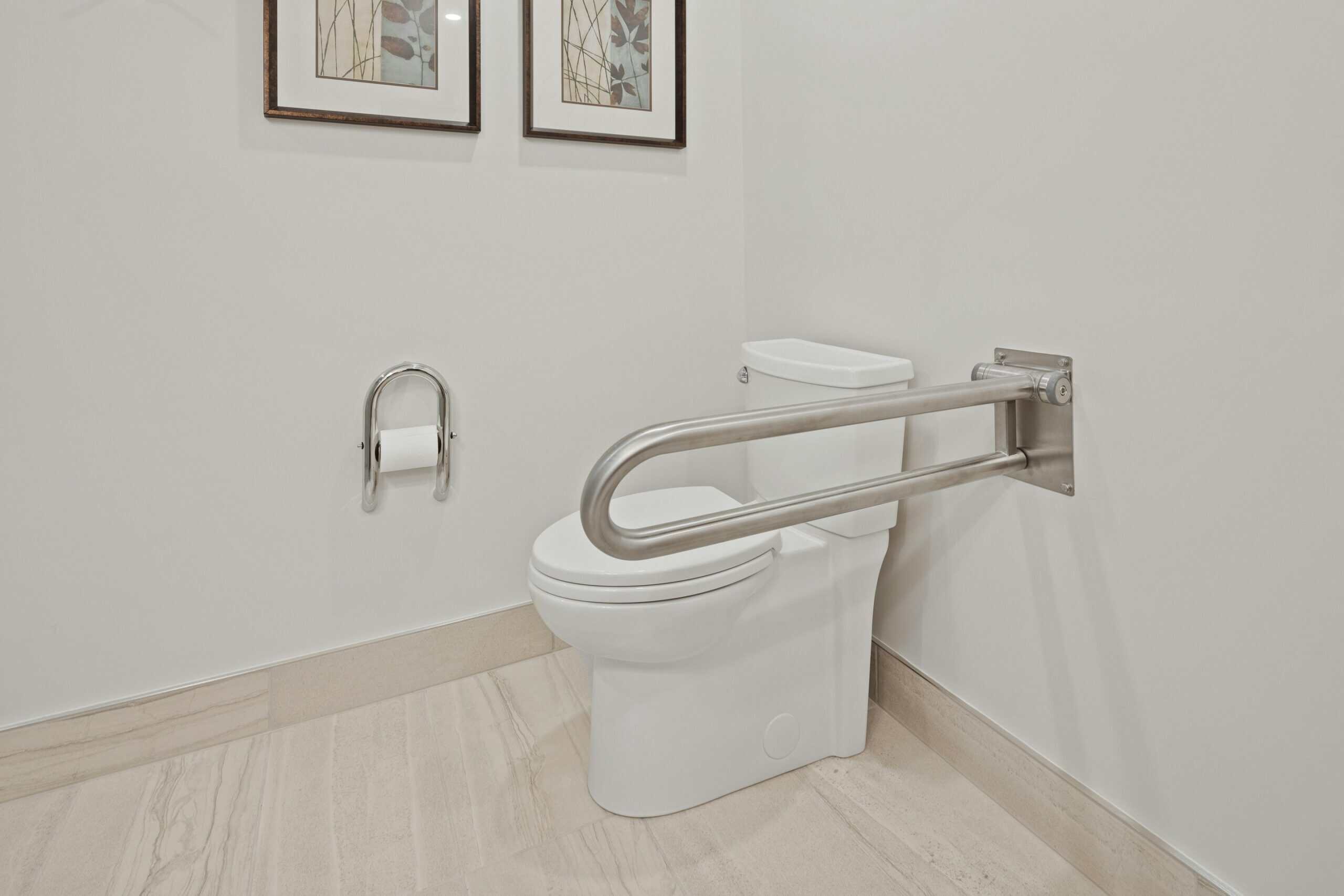
A grab bar is only as strong as what it is fastened to, which is why installation matters more than the bar itself. The best grab bars and bathroom safety rails split into six types, and the dividing line is whether a product bears body weight or merely provides balance. Suction-cup bars sit firmly on the wrong side of that line.
Bathrooms concentrate the risk because wet, hard surfaces meet the transitions that cause falls: standing from a toilet, stepping over a tub wall, turning in a shower. Those three moments are where bars earn their place. Sitting removes the balance problem rather than supporting it, which our shower chair and transfer bench guide covers.
Night trips are the other pattern worth designing for. Our guide to night lights covers the lighting half of the same problem.
Quick Verdict
Wall-mounted stainless bars anchored into studs or with proper hollow-wall anchors are the only true weight-bearing option and should be the default. Toilet safety frames and tub-mounted clamp rails solve specific transitions without drilling. Floor-to-ceiling poles suit rooms with no suitable wall, and suction bars are balance aids only.
Key Takeaways
- Anchoring decides load capacity, so the fastening method matters more than the bar’s finish or brand.
- Suction-cup bars are not weight-bearing and should never be used to arrest a fall.
- Placement is specific to the movement: standing from the toilet, entering the tub, turning in the shower.
- Diagonal, vertical and horizontal orientations each suit different transitions.
- Textured or knurled finishes hold better in wet hands than smooth polished chrome.
- Falls concentrate around transitions and at night, which is where bars and lighting work together.
How We Picked
We compared bar and rail types rather than individual units, because lineups turn over while the underlying designs stay stable. Each section covers one type and the transition it supports.
We ranked types on four things: whether they genuinely bear weight, what installation they require, which transition they suit, and how well the grip surface performs wet.
We excluded anything marketed as weight-bearing without a fastening method that justifies it, and we have not stated load ratings, since those come from the manufacturer and from the wall you mount into.
1. Wall-Mounted Stainless Steel Bars
Why It Stands Out
A stainless bar bolted into wall structure is the reference standard for this category. Nothing else offers the same confidence when someone’s full weight arrives suddenly.
Length and orientation are the two choices. A longer bar covers more of a movement, and the angle should follow the direction the hand travels.
Worth Knowing
Anchoring is the whole job. Into studs is best, and where studs are not where you need the bar, heavy-duty hollow-wall anchors rated for the load are the alternative. Ordinary drywall plugs are not.
Tile adds a drilling step that goes wrong easily. This is the category where paying someone competent is usually the right call, and the National Institute on Aging includes installing grab bars among its home fall-prevention measures1.
Best for: Every bathroom where someone is unsteady, as the primary safety fitting. Skip it only if you cannot drill at all, in which case a pole or a frame applies.
Check Price on Amazon2. Toilet Safety Frames and Surround Rails
Why It Stands Out
A frame that mounts to the toilet itself, or stands around it, gives support on both sides for the sit-to-stand movement. Two-handed support is meaningfully more stable than one bar on one wall.
Most install without drilling, which matters in rentals and in bathrooms where the wall beside the toilet is tile or glass.
Worth Knowing
Fit varies with toilet shape, so check whether a frame suits an elongated or a round bowl before ordering.
Height adjustment is the useful feature here. Set the arms so the forearms rest naturally rather than reaching up or down, and see our guide to lift chairs for the same principle applied to seating.
Best for: Anyone who struggles with sit-to-stand, and rentals where drilling is not an option. Skip it if the bathroom is too tight for the frame’s footprint.
Check Price on Amazon3. Tub-Mounted Clamp Rails
Why It Stands Out
A clamp rail grips the tub wall and gives a handhold exactly where the step over happens. That transition is one of the highest-risk movements in the house.
No drilling is required, and the rail can be removed and repositioned, which suits a temporary need after surgery.
Worth Knowing
The clamp needs a tub wall of suitable thickness and material. Thin acrylic surrounds and tiled tub decks often will not take one securely.
Check the tension every few weeks, because clamps loosen. A rail you assume is tight is worse than no rail at all.
Best for: Stepping into and out of a bathtub, and temporary post-surgery needs. Skip it if the tub wall is thin, curved, or tiled over.
Check Price on Amazon4. Floor-to-Ceiling Support Poles
Why It Stands Out
A tension or bolted pole provides a vertical handhold in the middle of a space, which is where no wall exists. Beside a bed or next to a shower entry, that solves a problem bars cannot.
A vertical grip also suits pulling up to stand better than a horizontal bar does.
Worth Knowing
Ceiling structure decides whether a pole is safe. A tension pole against a suspended or thin ceiling panel is not reliable, and bolted installation is the stronger option.
Some designs add a pivoting handle, which helps for transfers and adds a moving part to check. Our guide to bed rails covers the bedside version of the same need.
Best for: Open floor areas with no usable wall, and bedside transfers. Skip it where the ceiling cannot take the load.
Check Price on Amazon5. Shower Seats and Transfer Benches
Why It Stands Out
Sitting removes the balance problem rather than supporting it. A seat turns showering from a standing balance task into a seated one, which is a larger change than any bar delivers.
Transfer benches extend over the tub wall, so the step over becomes a slide across while seated.
Worth Knowing
A seat still needs a bar within reach. Getting on and off the seat is itself a transition.
Check the feet, since rubber tips are what stop a seat sliding on wet tile. Worn tips are a common and easily missed failure.
Best for: Anyone who cannot stand safely for the length of a shower. Skip it if the shower enclosure is too small for the seat to sit level.
Check Price on Amazon6. Suction-Cup Balance Handles
Why It Stands Out
These attach in seconds with no tools, move between surfaces, and give a light handhold for steadying yourself. For a traveller who wants something in a hotel bathroom, that convenience is the entire appeal.
They also suit someone who is steady but wants reassurance at a specific spot.
Worth Knowing
They are not weight-bearing, and this is the most important sentence in this article. Suction fails without warning, particularly on textured tile, grout lines and wet surfaces.
Never position one where a fall would be arrested by it, and never present one to someone unsteady as though it were a grab bar. If body weight might land on it, it needs to be bolted.
Best for: Light balance assistance for a steady person, and travel. Skip it entirely for anyone at genuine risk of falling.
Check Price on AmazonGrab Bars and Rails at a Glance
| Type | Bears body weight | Installation | Transition it suits |
|---|---|---|---|
| Wall-mounted stainless | Yes, when anchored properly | Drilling into structure | Shower, tub, toilet |
| Toilet safety frame | Yes, within its rating | None or bolt to toilet | Sit to stand |
| Tub clamp rail | Yes, if clamped correctly | Clamp, check regularly | Stepping over a tub wall |
| Floor-to-ceiling pole | Yes, bolted installation | Tension or bolted | Standing up, open areas |
| Shower seat or bench | Yes, as seating | None | Showering seated |
| Suction handle | No | None | Light balance only |
What to Look For in a Grab Bar
What will it be fastened to?
Answer this before choosing a bar. Studs, solid blocking, tile over cement board and tile over drywall all demand different hardware.
Where the wall cannot take a bar, the answer is a different product rather than a lighter fastening.
Which movement does it support?
Bars are placed for a specific transition, not for general reassurance. Watch the movement, note where the hand reaches, and put the bar there.
Vertical suits pulling up, horizontal suits steadying along a path, and diagonal suits stepping up or over.
How does the surface behave wet?
Polished chrome is slippery with wet or soapy hands. Knurled, textured or coated finishes hold noticeably better.
Diameter matters too, since a bar too thick to close a hand around is harder to hold in a slip.
Is it the right height for the person?
Standard heights are a starting point rather than a rule. Fit the bar to the person who needs it, and to their reach when seated if that is the relevant position.
For someone recovering from surgery, our guide to back surgery recovery products covers the same principle across the house.
What else is within reach?
A bar works as part of a route, not as a single fixture. Walk the path from bed to toilet to shower and note every point where someone reaches for something.
Towel rails, sink edges, and shower valves all take that load today. Each one marks a place where a real bar probably belongs.
Lighting belongs in the same walk. A bar nobody can see at 3am solves half the problem.
Doorways deserve a second look as well. People grab the frame to steady themselves on the way in, and a short vertical bar handles that better than the trim does.
Drilled Bars vs No-Drill Options
Why drilled bars win on safety
Load capacity comes from the fastening, and only a mechanical fixing into structure provides it reliably. The Centers for Disease Control and Prevention lists grab bars among home modifications used to reduce fall risk2.
The cost is a permanent hole, a competent installation and a tile job done carefully.
When no-drill genuinely applies
Rentals, temporary needs after surgery, and travel. Toilet frames, clamp rails and shower seats all deliver real support without drilling.
Suction handles are the exception within that group and should be treated as balance aids rather than safety equipment. That distinction is not a technicality.
Common Misconceptions
“A suction bar is a grab bar”
It is not, and it can release without warning. Anything expected to hold body weight needs a mechanical fixing.
“Towel rails work in a pinch”
Towel rails are not rated for body weight and their fixings are not either. They fail in exactly the moment they are grabbed.
“One bar is enough”
Different transitions need different bars. A shower bar does nothing for standing from the toilet.
“Grab bars are only for the very frail”
They suit anyone recovering from surgery, managing arthritis, or simply moving around a wet bathroom at night. Waiting until after a fall is the common regret.
Medical Disclaimer
This article is general information about products, not medical or engineering advice. Load capacity depends on the specific bar, the fastening hardware and the wall structure, so follow manufacturer instructions and consider professional installation. Anyone with balance problems, dizziness, or a history of falls should be assessed by a clinician or an occupational therapist, who can also recommend placement for a particular person.
Recommended Reading
- Helping seniors sleep better covers the night-time routine around bathroom trips.
- Bed step stools cover the other common transition in a bedroom.
- Bedroom rugs cover the trip hazards a rug can create or solve.
- Hospital bed alternatives cover the same safety thinking applied to the bedroom.
Frequently Asked Questions
What are the best grab bars and bathroom safety rails?
Wall-mounted stainless bars anchored into structure are the primary choice, because only a mechanical fixing bears body weight reliably. Toilet safety frames and tub clamp rails cover specific transitions without drilling, and a shower seat removes the standing balance problem entirely. Suction handles are balance aids only.
Are suction-cup grab bars safe?
Not as fall protection. Suction can release without warning, especially on textured tile, across grout lines, or when wet, so they should never be positioned where someone’s weight might land on them. They are reasonable as a light steadying handle for a person who is already stable.
Do grab bars have to go into studs?
Into studs or solid blocking is the strongest option, and heavy-duty hollow-wall anchors rated for the load are the alternative where studs are not where you need the bar. Ordinary drywall plugs are not suitable. If you are not confident about the wall, professional installation is worth the cost.
Where should grab bars be placed in a shower?
At the entry point for stepping in, and within reach of wherever the person stands or sits to wash. Watch the actual movement and place the bar where the hand naturally reaches rather than at a standard height. A second bar for a different transition is common rather than excessive.
Is a shower seat better than a grab bar?
They solve different problems, and many bathrooms need both. A seat removes the need to balance while washing, while a bar supports the transitions of getting in, sitting down and standing up. Getting on and off the seat is itself a moment that needs a handhold.
Can you install grab bars in a rental?
Drilling usually needs permission, which is why toilet frames, tub clamp rails and shower seats exist. Those provide genuine support without permanent fixings. Ask before assuming, since many landlords allow safety modifications.
What finish works best on a grab bar?
A textured, knurled or coated surface, because wet and soapy hands slip on polished chrome. Diameter matters too, since a bar you can close a hand around is easier to hold in a slip. Appearance is worth considering after grip, not before it.
When should you involve a professional about fall risk?
After any fall, and whenever there is dizziness, unsteadiness, or a change in mobility. An occupational therapist can assess a home and recommend both equipment and placement for a specific person, and a clinician can look for treatable causes of unsteadiness. Equipment chosen without that assessment can miss the real problem.
Sources
- National Institute on Aging, Preventing Falls at Home: Room by Room. nia.nih.gov
- Centers for Disease Control and Prevention, Older Adult Fall Prevention. cdc.gov
