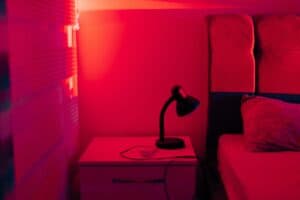
Best Red Light Bulbs in 2026: Evening Wind-Down Picks for a Sleep-Friendly Bedroom
A red light bulb swaps the bright, blue-heavy light of a normal bulb for a warm, dim glow that is easier on…
Your pillow and mattress are only part of your sleep environment. Light, sound, temperature, and humidity all affect how quickly you fall asleep and how often you surface during the night, and they are usually cheaper to fix than the bed itself.
Temperature is the one most people get wrong. A room that feels comfortable when you get in is often too warm by the middle of the night, since your body drops its core temperature as you sleep. Light is the next, and very few bedrooms are as dark as their owners believe once you account for standby indicators and gaps at the curtain edges.
This category covers white noise machines and earplugs, blackout curtains and sleep masks, fans and cooling gear, humidifiers and dehumidifiers, air purifiers, lighting, and alarm clocks that do not jolt you awake.
Environmental fixes work best in combination and none of them substitutes for the basics. If you are lying awake in a dark, quiet, cool room, the problem is not equipment, and persistent insomnia is worth raising with a doctor rather than solving with another purchase.
A red light bulb swaps the bright, blue-heavy light of a normal bulb for a warm, dim glow that is easier on…

Comparing options? See our best blackout curtains for sleep roundup. For the darkest possible bedroom and the easiest path to it, blackout…
Why does sleep feel like a fight some nights, with no position ever quite right? Tossing and turning usually comes from one…

Two people, one mattress, and a long list of small frictions: a partner who runs hot, rolls over at 2 a.m., hogs…
It feels uncanny, like some part of you is counting the minutes in the dark. The real reason why do I wake…

You wake up to a damp patch on the pillow and a wet cheek, and wonder what is going on. Why do…

You jolt awake with your heart pounding, the images already fading but the unease still there. When you ask why you have…

You wake knowing you dreamed something, but the details slip away before your feet hit the floor. The question why can’t I…

If the same dream keeps returning, you are probably asking why do I have recurring dreams. Recurring dreams usually point to unresolved…

It is easy to assume a chin strap and a mouthpiece do the same job, but they work in opposite ways. The…