
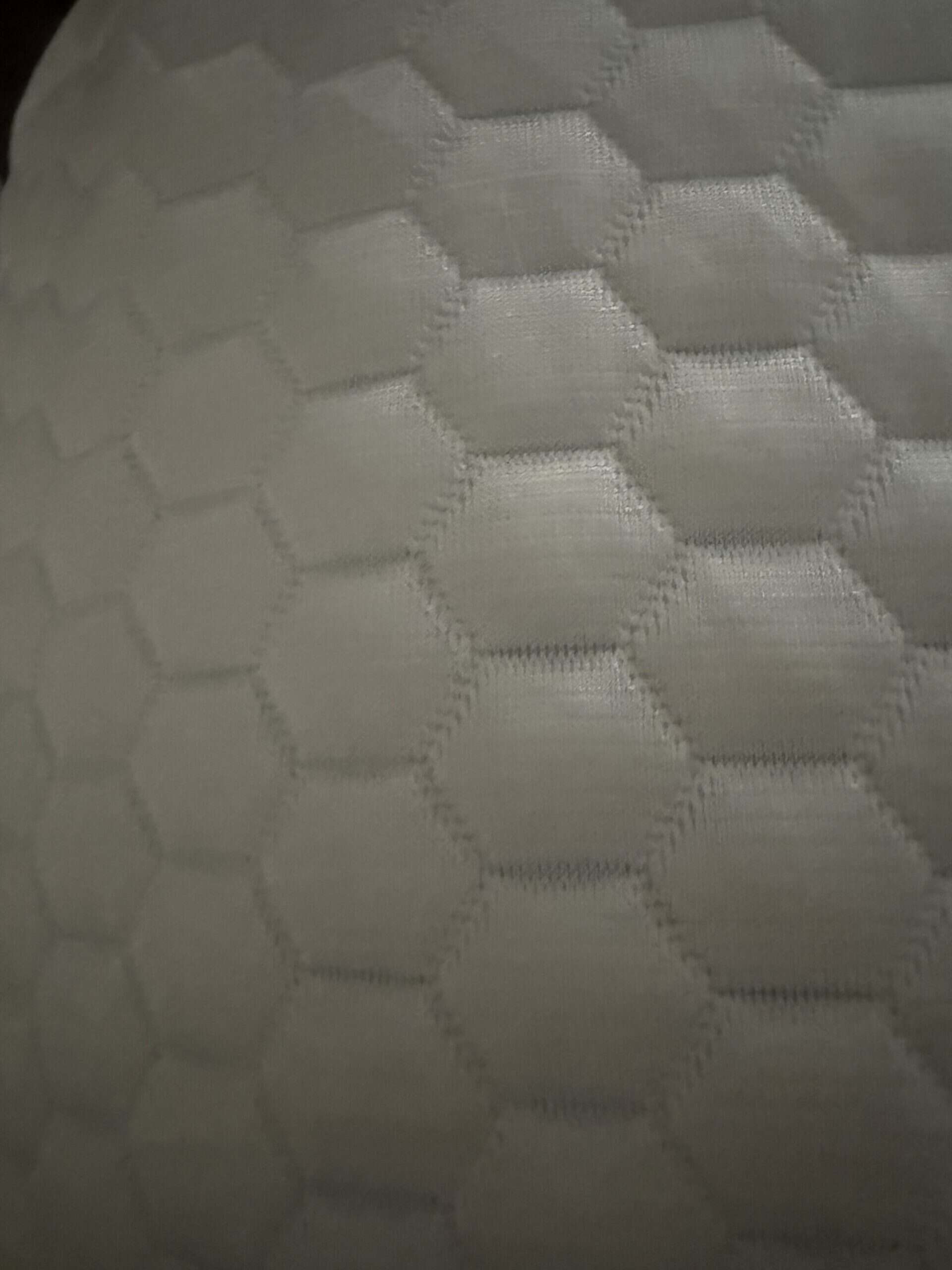
Yes, and almost always softer. A topper adds a layer your body sinks into before it reaches the mattress at all, so the first thing you feel is the topper rather than the bed underneath it.
Mine makes my mattress feel softer, and it is not a subtle difference. The topper is three or four years old and the mattress underneath is memory foam about a year old.
A Quick Note
This covers feel rather than medical advice. Back or joint pain that persists or worsens after changing your sleep surface is worth discussing with a doctor.
Quick Answer
Toppers make a mattress feel softer at the surface without changing its support. Thickness and density decide how much. A topper cannot make a mattress firmer, and it cannot fix sagging, because both come from the layers underneath.
How Much Difference to Expect
| Topper | Typical effect on feel |
|---|---|
| 1 inch, dense foam | Slight, surface texture more than firmness |
| 2 inch, medium foam | Noticeably softer |
| 3 inch, soft foam | Substantially softer, mattress less apparent |
| 4 inch or more | Dominates the feel entirely |
| Latex, any thickness | Softer surface with more bounce back |
| Fiberfill or down | Plush at first, compresses quickly |
Thickness matters considerably more than any other specification here. Below about two inches, a topper mainly changes the surface feel. Above three inches, it effectively becomes the dominant layer of the bed.
Softer Is Not the Same as Less Supportive
This is the distinction that causes the most confusion around toppers. Comfort is what the surface feels like against you, and support is whether your spine stays properly aligned through the night.
A topper changes the first of those without touching the second at all. The mattress underneath is still doing all of the structural work regardless.
That can work in your favor or against it. On a mattress that was slightly too firm, softening the surface improves pressure relief without giving up any support.
On a mattress that was already too soft to begin with, adding a topper only deepens the sink and can push your alignment further out than it was, covered in whether mattress toppers are worth it.
What Mine Does
It makes the bed feel noticeably softer, clearly enough that I would never describe the difference as marginal or subtle.
The mattress underneath is memory foam and about a year old, and the topper went on from the very start, so I have never actually slept on that mattress on its own.
That means I cannot cleanly separate what the topper contributes from what the mattress is doing. I know the combination works for me, and I could not tell you how it would feel without.
The topper is older than the mattress by a couple of years, having moved across from the bed I had before this one, and it still does what it always did, covered in whether you need a topper on a new mattress.
Anyone wanting a genuinely clean comparison should sleep without the topper for a week before deciding, which is the one thing I never actually did.
Why Cooling Toppers Specifically
Cooling toppers are usually either gel-infused or open-cell foam, and both of those tend to be slightly denser than plain memory foam at the same thickness.
Denser foam compresses less under weight, so a cooling topper often softens a mattress slightly less than a plain foam topper of identical thickness would.
Some cooling toppers use a phase-change cover stretched over ordinary foam, in which case the cooling is coming from the cover while the feel comes entirely from the foam underneath it.
Latex cooling toppers behave differently again, pushing back against you rather than letting you sink in, which a lot of people read as firmer even though the surface itself is softer, covered in whether cooling toppers actually work.
What a Topper Cannot Do
Make a mattress firmer
Every topper adds a layer above the mattress, so the first thing you contact is softer. Firmness comes from below.
Fix sagging
A topper follows the contour of what it sits on, so it drapes into a dip rather than filling it.
Add support
Support is a function of the core. A topper changes pressure distribution at the surface and nothing structural.
Change how it isolates motion
Motion transfer comes from the mattress core, and a topper sits above it, so a partner moving still registers the same way.
Fix a foundation problem
A mattress on an unsuitable base performs badly regardless of what is on top of it, covered in whether toppers help a sagging mattress.
Why the Change Feels Larger at First
The difference a topper makes on the first night is usually bigger than the difference it makes a month later, and that is worth expecting.
Novelty accounts for some of it. Any change to a sleep surface registers strongly because your body has calibrated to the previous one, and that sensitivity fades within a couple of weeks.
Foam also settles. A new topper compresses slightly during its first weeks of use and reaches a stable state below where it started, so some of the initial plushness is genuinely lost rather than imagined.
Temperature plays a part on memory foam specifically, since it softens as it warms. A topper feels firmer when you first lie down and softer twenty minutes later, which makes first impressions unreliable.
Body position matters too. The change is most noticeable at pressure points, so side sleepers register it at the shoulder and hip more than back sleepers do anywhere.
The practical version is to judge after two weeks rather than after two nights, and to expect the settled feel to sit somewhere between the mattress alone and that first night.
Choosing for the Change You Want
For a small softening, one to two inches of denser foam is the right choice. Enough to change the surface without altering the whole feel of the bed.
For a noticeable change, two to three inches of medium foam. That is the range most people mean when they say a topper transformed how their bed felt.
For cooling without much softening at all, look for higher density combined with a thinner profile, since those two things together minimize how much the firmness changes.
And for a mattress that is already close to right, less is generally the better choice, since it is far easier to add more softness later than to recover support you have already buried, covered in how thick a mattress topper should be.
Related Reading
- are toppers worth it
- how thick should one be
- do cooling toppers work
- choosing a topper
- toppers for firm mattresses
- topper against pad
Frequently Asked Questions
Does a cooling topper change how firm a mattress feels?
Yes, softer. Your body sinks into the topper before reaching the mattress, so the surface feel comes from the topper rather than from the bed.
How much softer?
Thickness decides it. Under two inches changes surface feel, two to three inches is noticeably softer, and four or more dominates the feel entirely.
Can a topper make a mattress firmer?
No. Every topper adds a layer above the mattress, so the first thing you contact is softer than the mattress was. Firmness comes from the support beneath.
Do cooling toppers soften less than regular ones?
Often slightly, since gel-infused and open-cell foams tend to be denser than plain memory foam and compress less at the same thickness.
Will it affect my back?
It changes pressure at the surface without changing support. On a mattress that was slightly too firm that usually helps, and on one already too soft it can make alignment worse.
Can it fix a sagging mattress?
No. A topper follows the contour of whatever it sits on, so it drapes into a dip rather than filling it.
Why does it feel less soft after a few weeks?
Novelty fades, the foam settles below where it started, and memory foam softens as it warms so first impressions are unreliable. Judge after two weeks.
What if I want cooling without changing the feel?
Look for a thinner, denser topper, or one where the cooling comes from a phase-change cover rather than from the foam itself.
Sources
- Sleep Foundation. Mattress Toppers. https://www.sleepfoundation.org/mattress-topper
- American Academy of Sleep Medicine. Healthy Sleep Habits. https://sleepeducation.org/healthy-sleep/healthy-sleep-habits/
Recommended Reading
See our note on choosing a mattress.
